After weeks of hot weather across Los Angeles and Southern California, outdoor living spaces have been working overtime. Patios, pool decks, terraces, and garden lounges are often the heart of summer at home, but the same sunshine that makes these spaces so inviting can be hard on furniture. Prolonged heat, UV exposure, dry air, and the occasional humid spell can fade fabrics, dry out wood, weaken finishes, and make even well-made pieces look tired before the season is over.
For luxury homeowners, knowing how to protect outdoor furniture is an essential part of preserving both comfort and curb appeal. With the right care, your outdoor pieces can stay polished, comfortable, and guest-ready through late summer and beyond.
Choose the Right Location for Each Piece
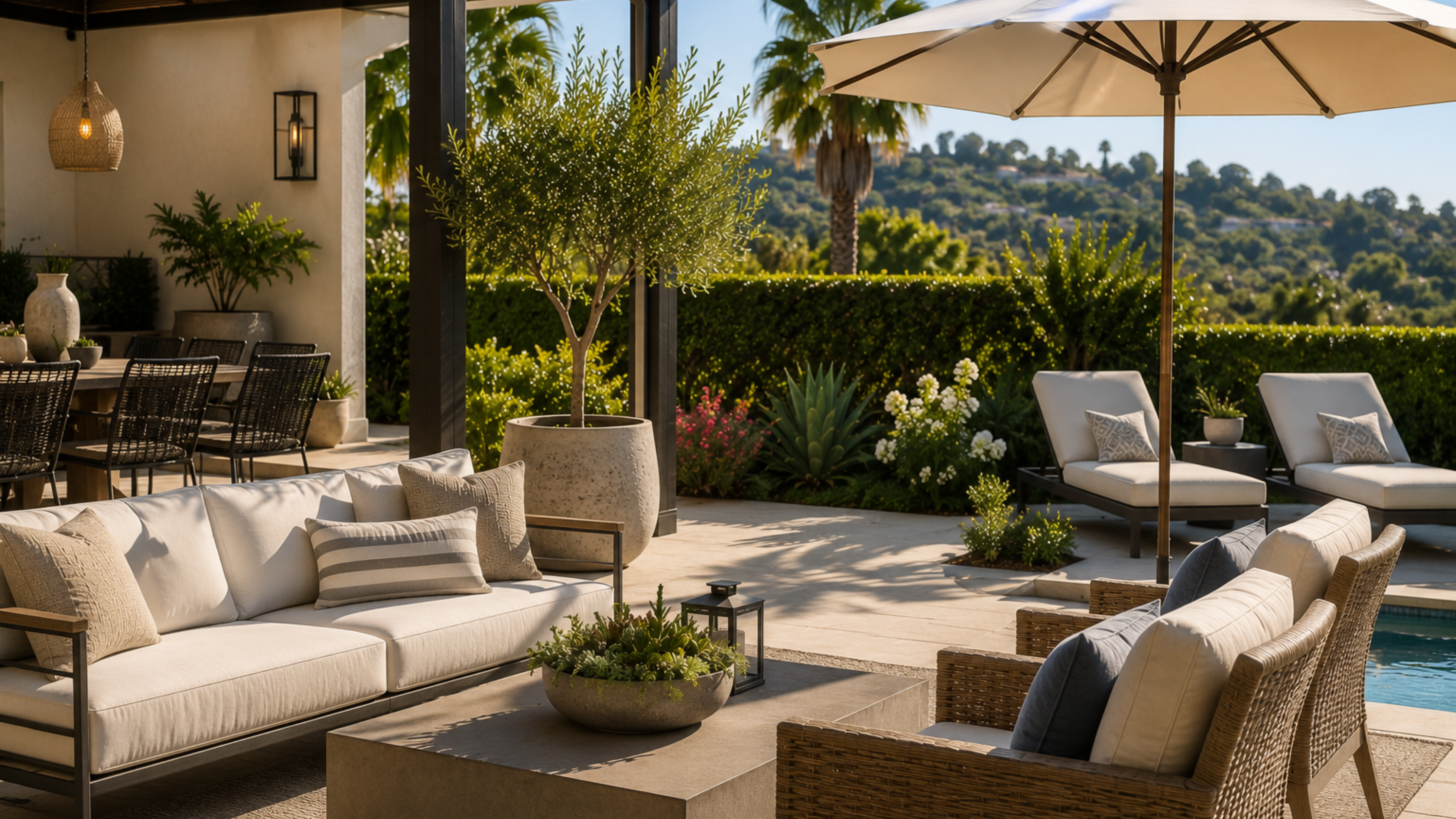
The first step in learning how to protect outdoor furniture is understanding where each piece performs best. Even high-quality outdoor furniture benefits from strategic placement.
If your patio receives full afternoon sun, consider moving lounge chairs, dining sets, or upholstered pieces into partial shade during the hottest hours of the day. Covered patios, pergolas, umbrellas, and cabanas provide valuable protection while still allowing the space to feel open and airy.
For homes in hillside, coastal, or canyon areas, wind exposure should also be considered. Lightweight furniture may need to be secured or moved when strong gusts are expected.
Use Covers That Actually Fit
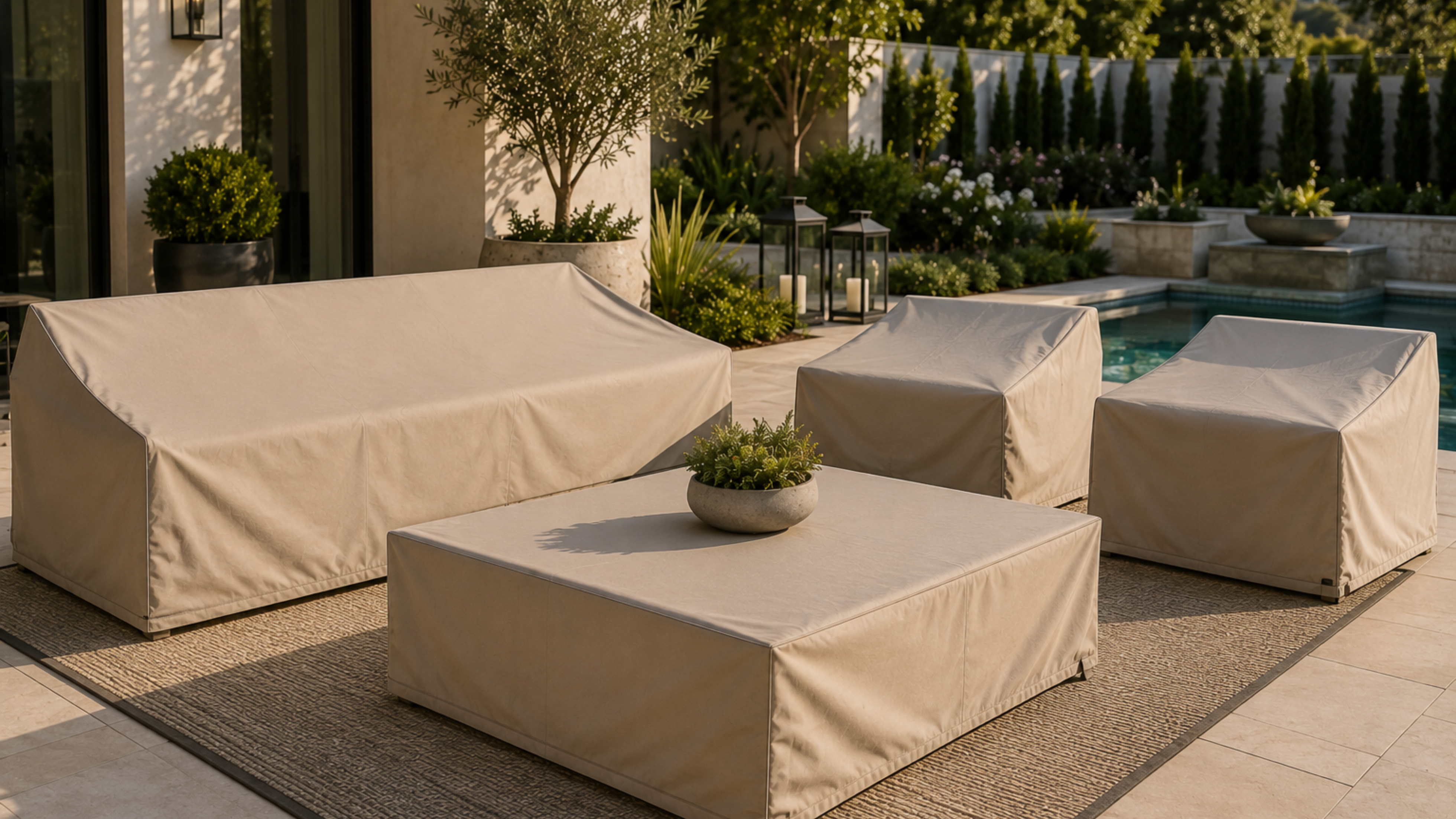
Furniture covers are not always the most glamorous accessory, but they are one of the most practical investments for outdoor care. Properly fitted covers protect against sun, dust, pollen, moisture, and debris.
Choose breathable, weather-resistant covers that fit closely without trapping heat or humidity. Covers that are too loose can blow away, while covers that do not allow airflow may encourage mildew. During heat waves, avoid covering damp cushions or freshly cleaned furniture. Let everything dry completely first.
For luxury outdoor spaces, custom covers may be worth the investment, especially for large sectionals, built-in lounge cushions, or designer pieces.
Protect Fabrics from Fading
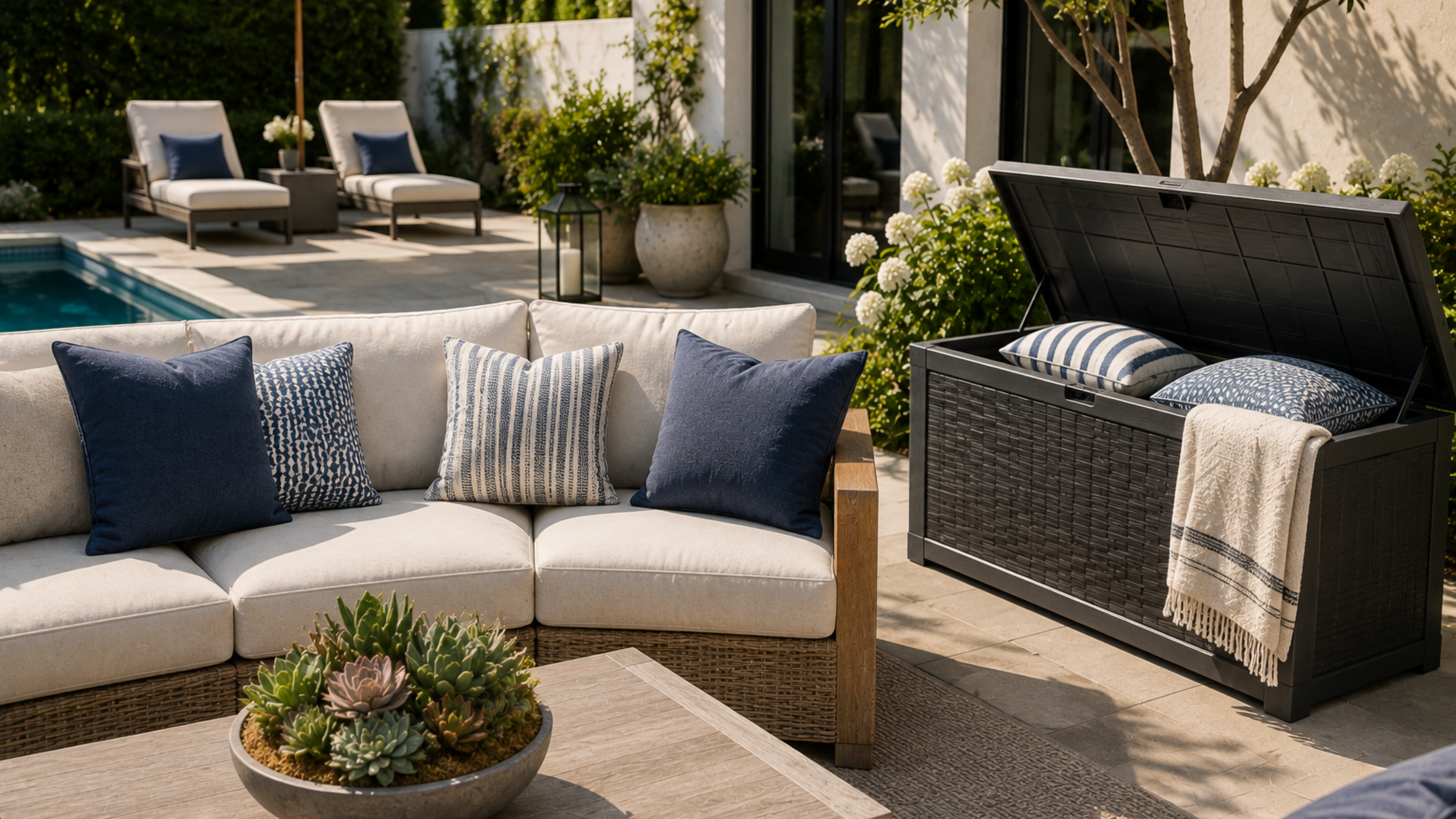
Outdoor cushions and pillows often show summer wear first. Even performance fabrics can fade over time when exposed to direct sunlight day after day.
One of the easiest ways to practice how to protect outdoor furniture is to rotate cushions regularly so fading happens evenly. Store decorative pillows when not in use, especially during long stretches of extreme heat. If possible, keep a ventilated storage bench nearby for quick cleanup before travel or during especially hot afternoons.
For future purchases, look for solution-dyed acrylic or high-performance outdoor fabrics, which are designed to resist fading and moisture more effectively than standard textiles.
Care for Wood, Metal, and Wicker Finishes
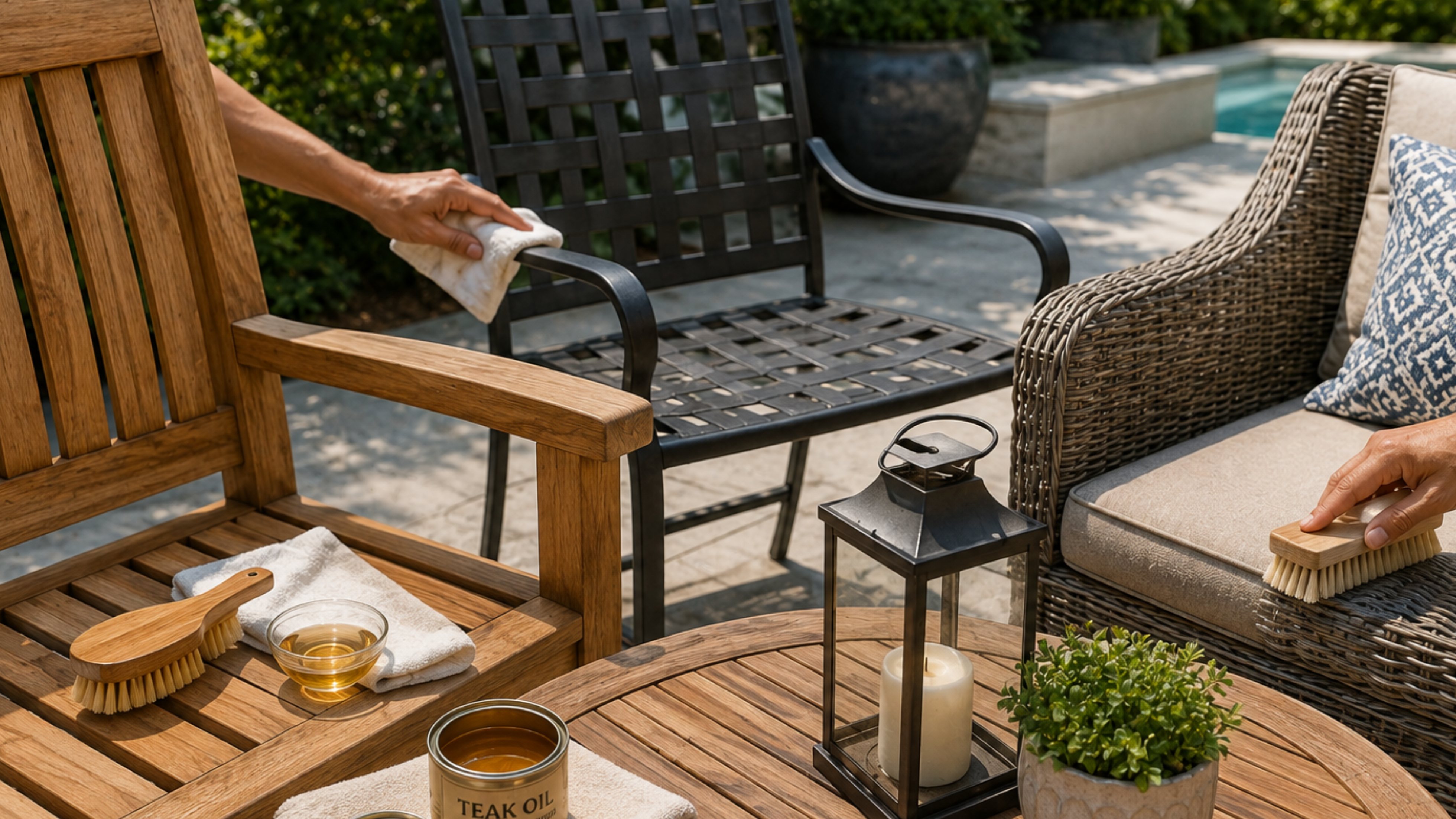
Different materials need different summer care. Teak and other hardwoods can dry out or change color under strong sun. Some homeowners love the natural silver patina, while others prefer to maintain the original warmth with periodic cleaning and oiling.
Metal furniture should be checked for scratches or exposed areas where rust may form. Wipe pieces regularly to remove dust, sunscreen residue, and pool chemicals. Synthetic wicker can handle summer conditions better than natural wicker, but it still benefits from shade and gentle cleaning.
Knowing how to protect outdoor furniture means treating each finish with the care it deserves.
Keep Poolside Furniture Clean
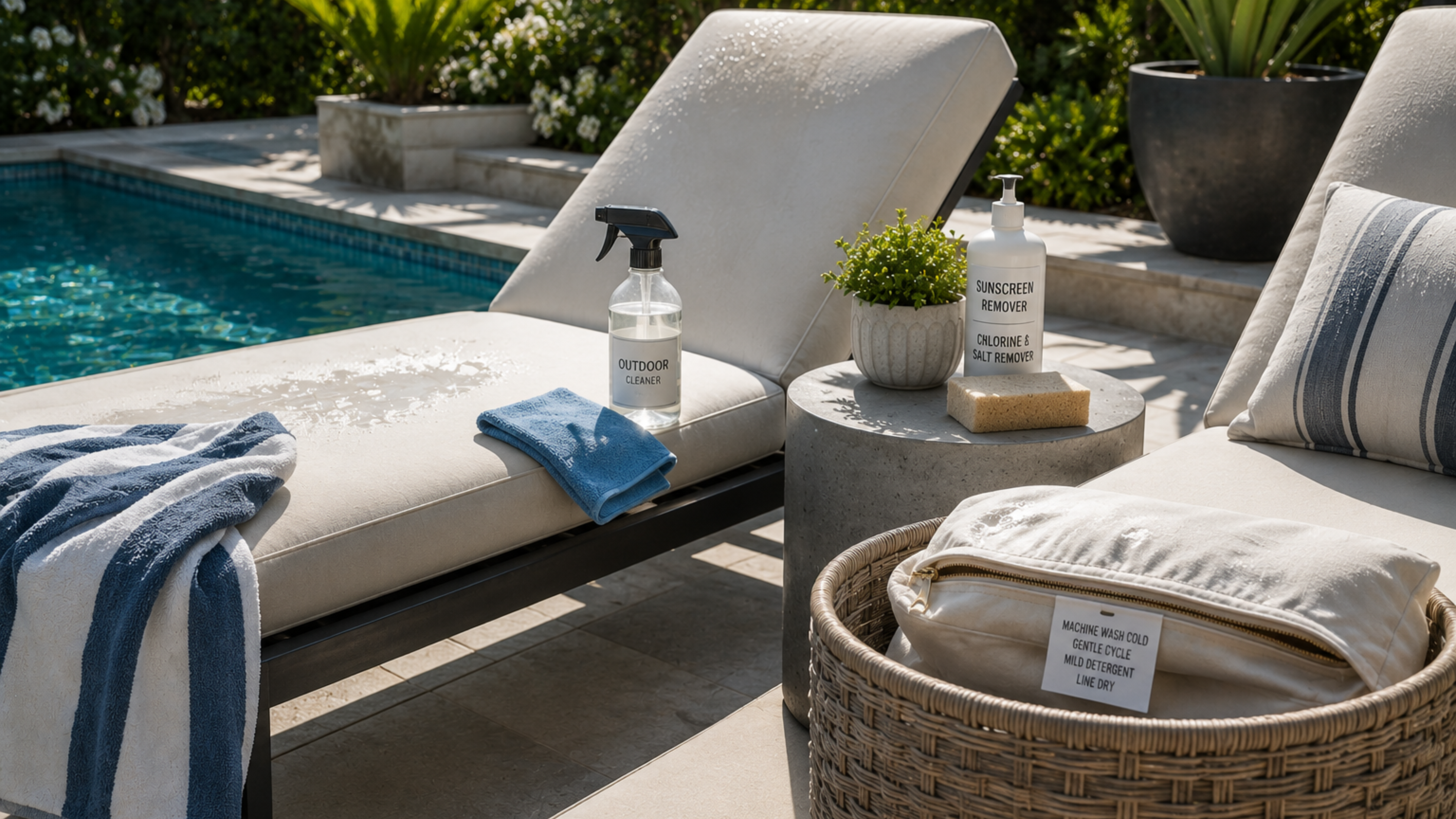
Poolside pieces often face an extra layer of wear. Chlorine, saltwater, sunscreen, and body oils can break down fabrics and finishes over time.
Rinse or wipe down chaise lounges and side tables regularly, especially after heavy use. Wash removable cushion covers according to the manufacturer’s instructions and allow them to dry fully before placing them back outside. A little consistency goes a long way in keeping pool areas looking crisp.
Store or Reset Before Travel
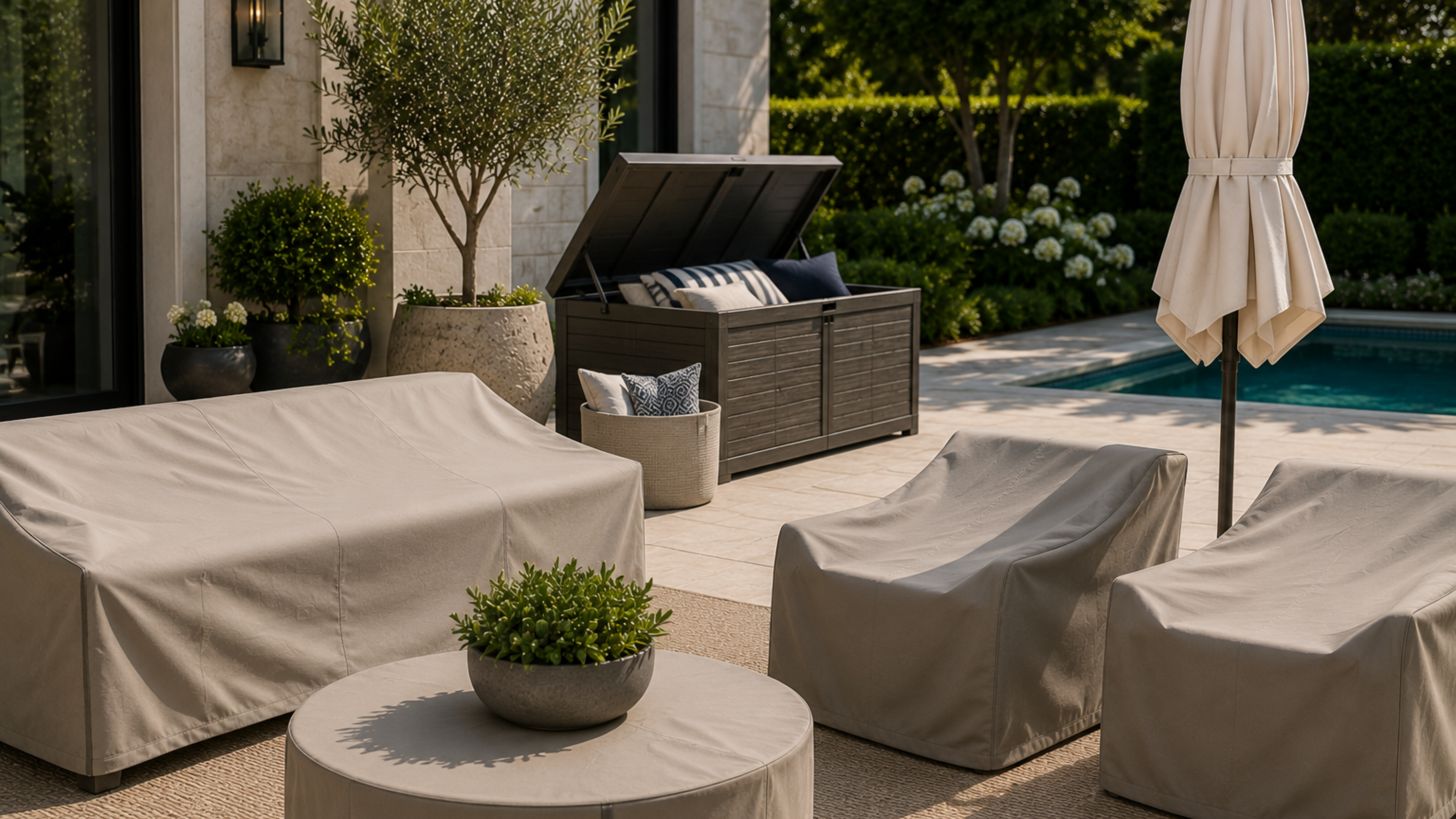
If you plan to leave town before the end of summer, take time to reset your outdoor areas before you go. Cover major pieces, store pillows, close umbrellas, and secure lightweight accessories.
This final step in how to protect outdoor furniture helps prevent sun damage, wind displacement, and unnecessary wear while your home is unattended.
Preserve Your Outdoor Living Investment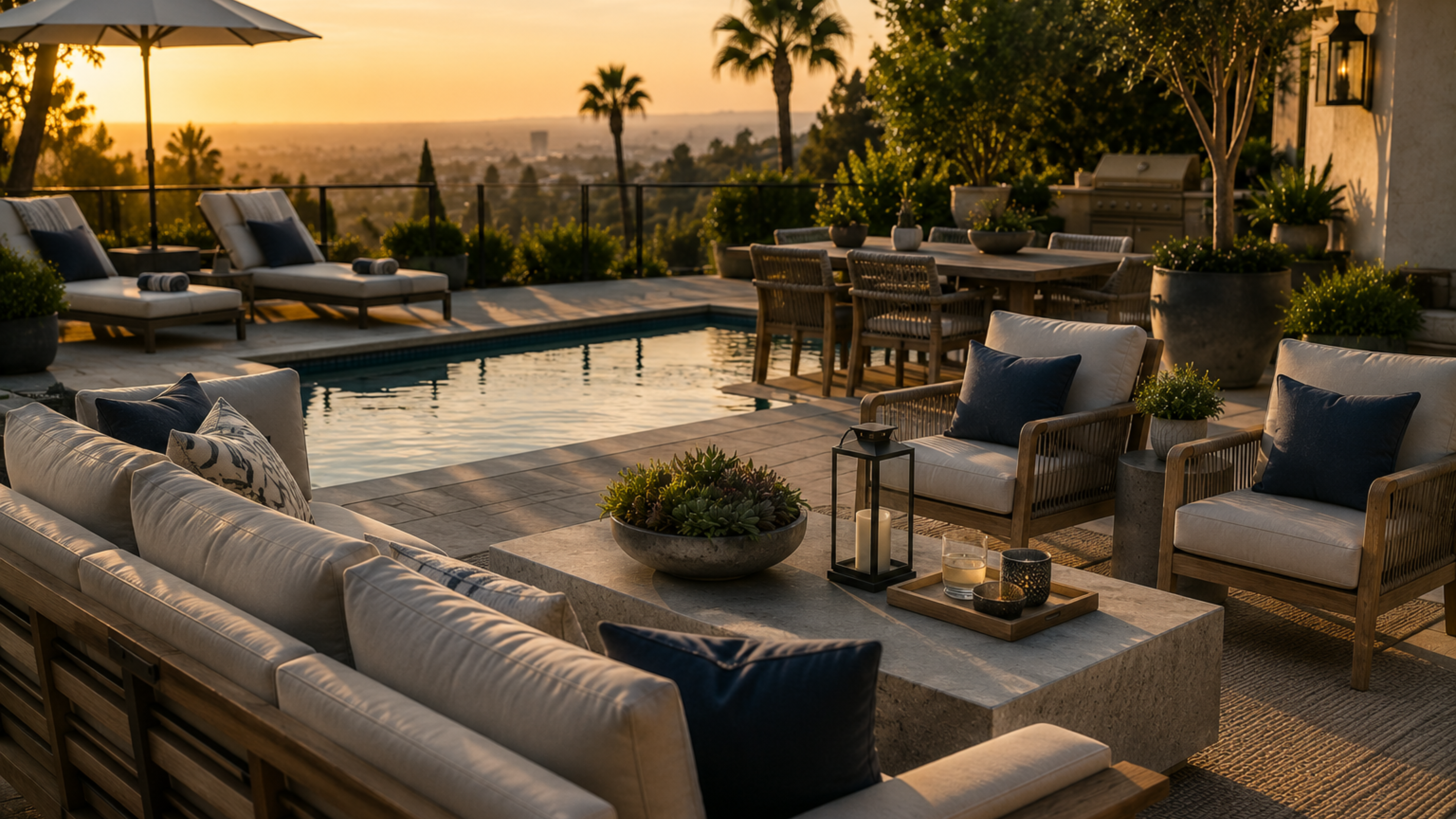
Outdoor furniture plays a major role in the way a luxury home lives during summer. It supports the long dinners, poolside afternoons, and quiet morning coffees that define Southern California living.
By managing sun exposure, using proper covers, caring for fabrics, cleaning finishes, and preparing before travel, Los Angeles homeowners can keep their outdoor spaces looking beautifully maintained all season long.