How to Protect Outdoor Furniture During Summer | Home Tips

After weeks of hot weather across Los Angeles and Southern California, outdoor living spaces have been working overtime. Patios, pool decks, terraces, and garden lounges are often the heart of summer at home, but the same sunshine that makes these spaces so inviting can be hard on furniture. Prolonged heat, UV exposure, dry air, and the occasional humid spell can fade fabrics, dry out wood, weaken finishes, and make even well-made pieces look tired before the season is over.

For luxury homeowners, knowing how to protect outdoor furniture is an essential part of preserving both comfort and curb appeal. With the right care, your outdoor pieces can stay polished, comfortable, and guest-ready through late summer and beyond.

Choose the Right Location for Each Piece

The first step in learning how to protect outdoor furniture is understanding where each piece performs best. Even high-quality outdoor furniture benefits from strategic placement.

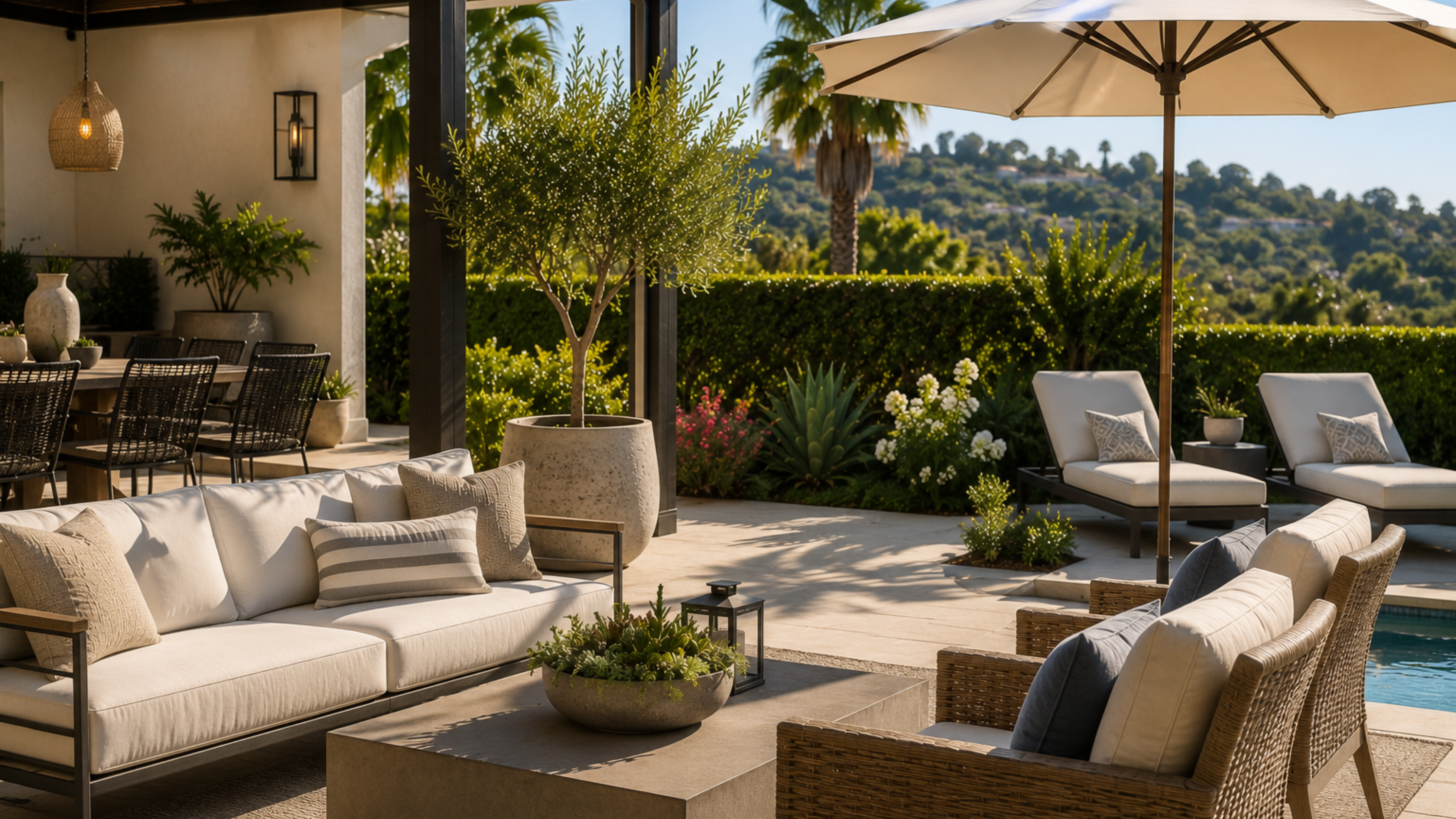
If your patio receives full afternoon sun, consider moving lounge chairs, dining sets, or upholstered pieces into partial shade during the hottest hours of the day. Covered patios, pergolas, umbrellas, and cabanas provide valuable protection while still allowing the space to feel open and airy.

For homes in hillside, coastal, or canyon areas, wind exposure should also be considered. Lightweight furniture may need to be secured or moved when strong gusts are expected.

Use Covers That Actually Fit

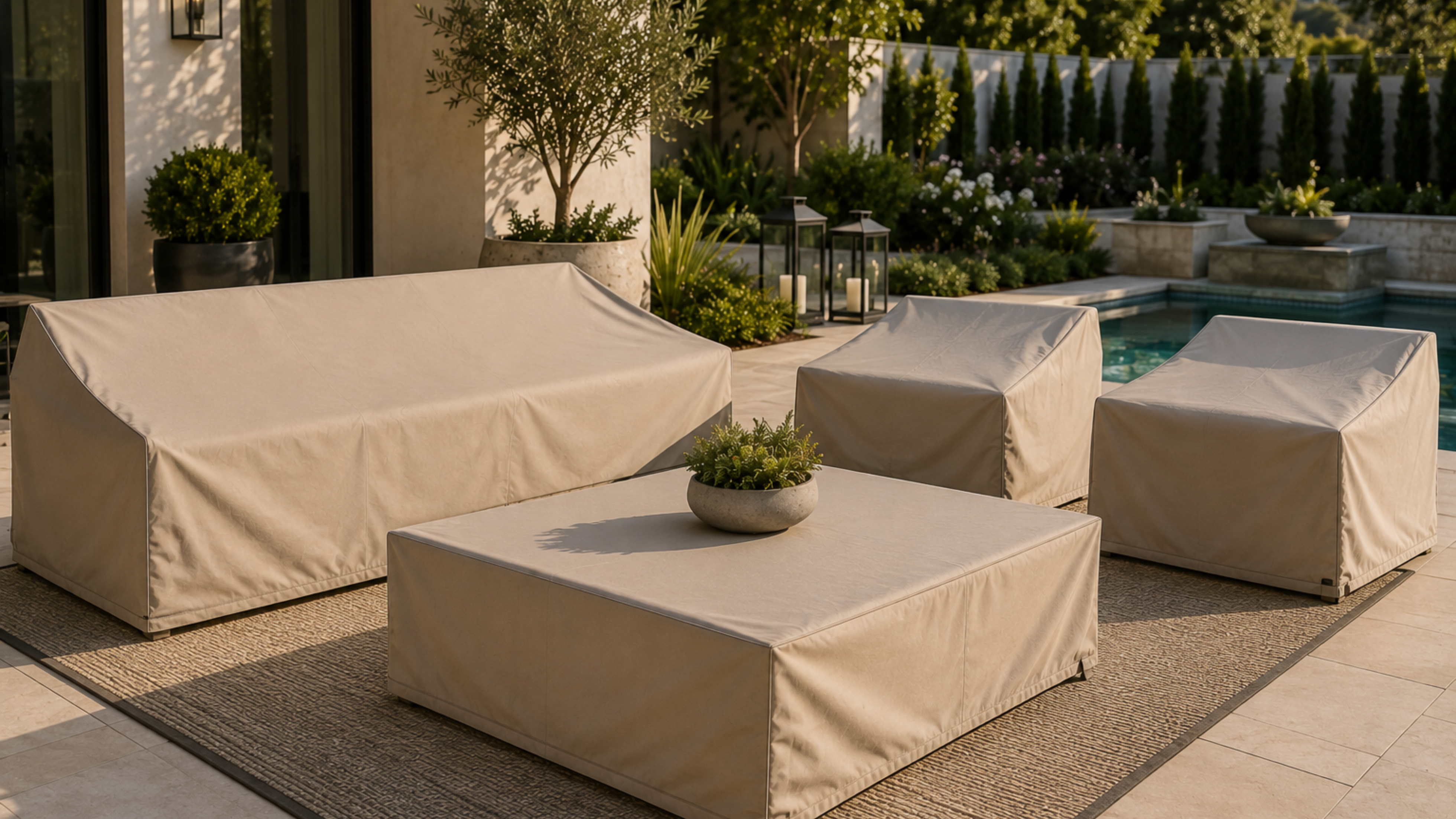
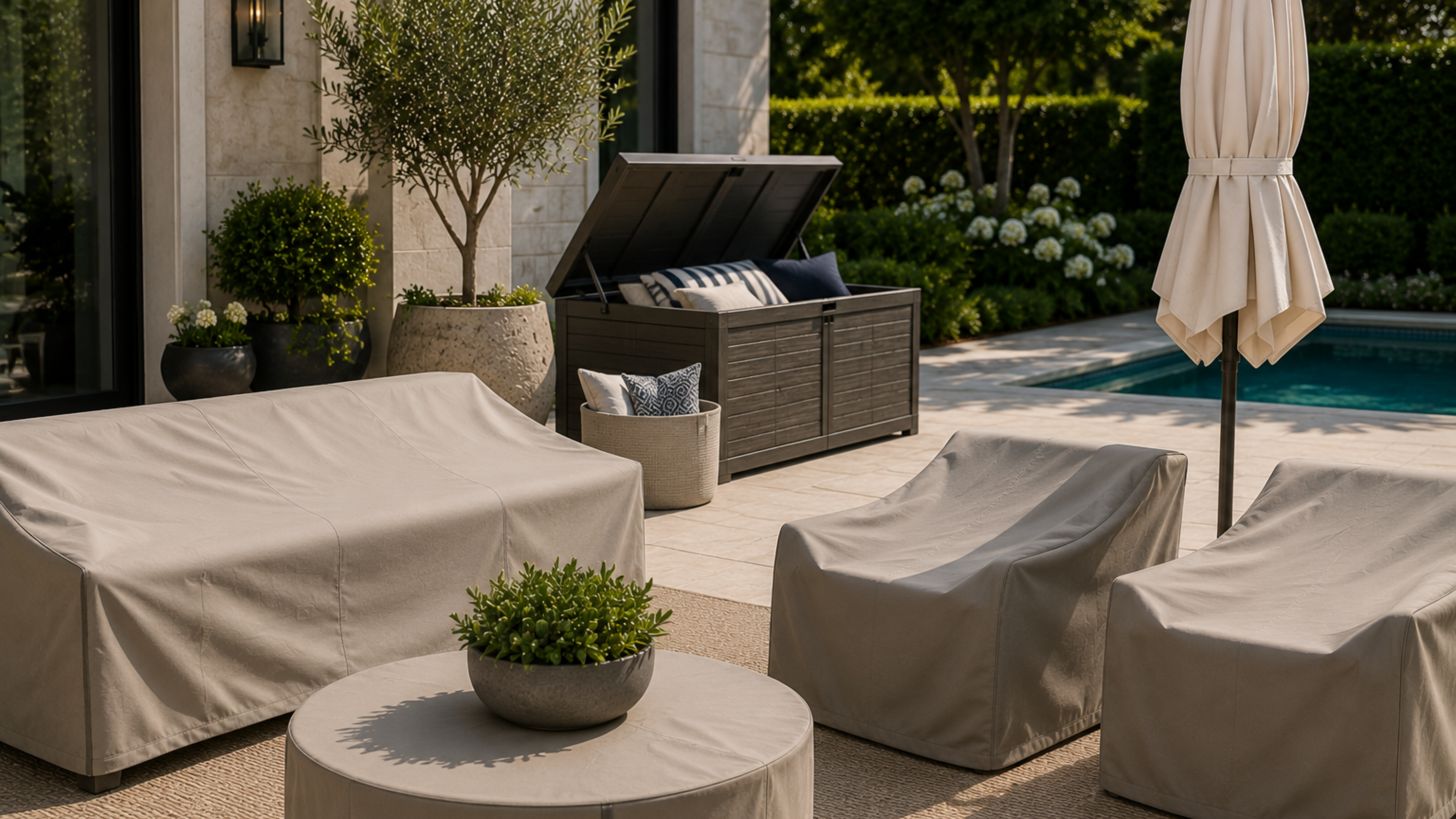
Furniture covers are not always the most glamorous accessory, but they are one of the most practical investments for outdoor care. Properly fitted covers protect against sun, dust, pollen, moisture, and debris.

Choose breathable, weather-resistant covers that fit closely without trapping heat or humidity. Covers that are too loose can blow away, while covers that do not allow airflow may encourage mildew. During heat waves, avoid covering damp cushions or freshly cleaned furniture. Let everything dry completely first.

For luxury outdoor spaces, custom covers may be worth the investment, especially for large sectionals, built-in lounge cushions, or designer pieces.

Protect Fabrics from Fading

Outdoor cushions and pillows often show summer wear first. Even performance fabrics can fade over time when exposed to direct sunlight day after day.

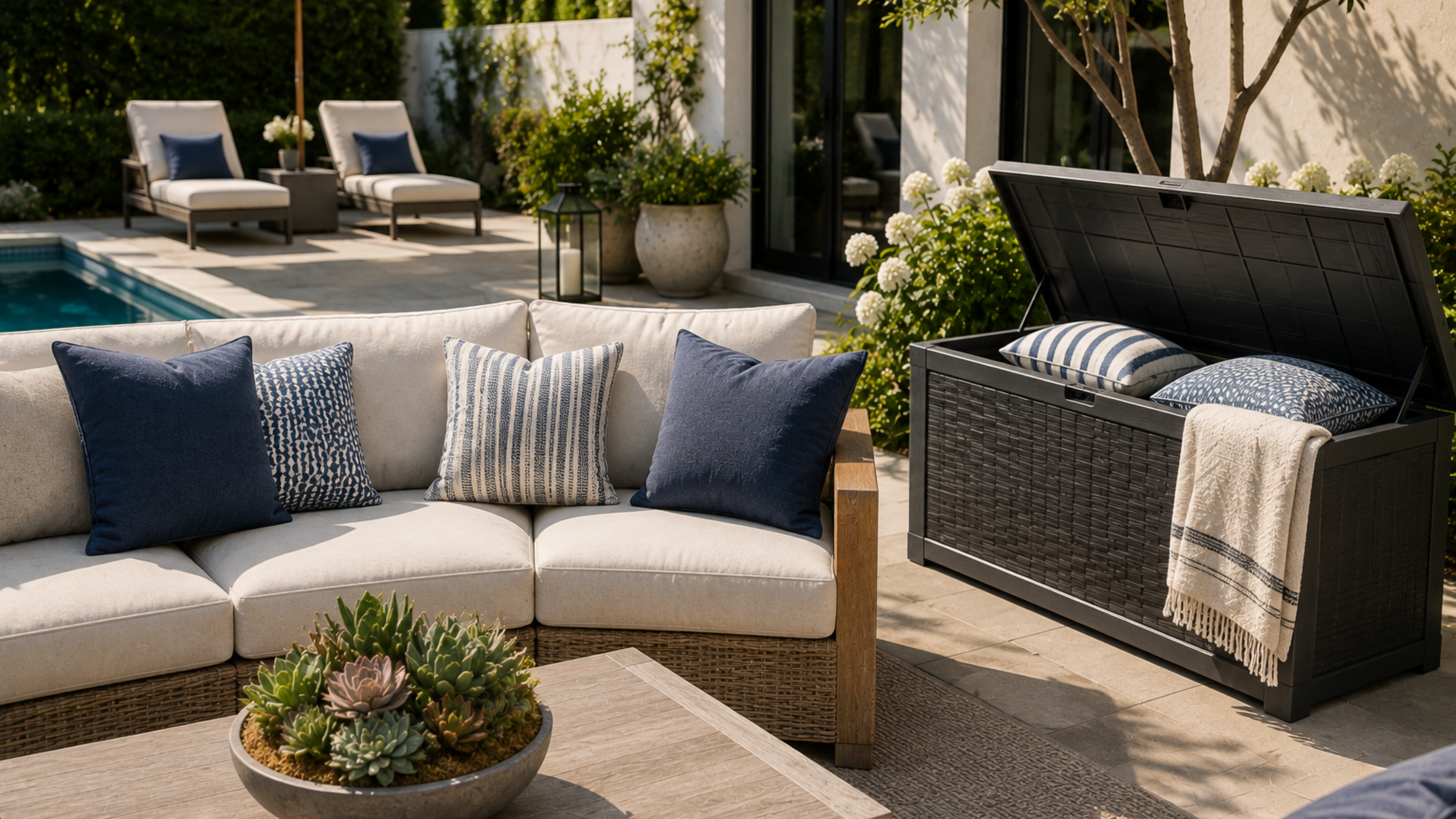
One of the easiest ways to practice how to protect outdoor furniture is to rotate cushions regularly so fading happens evenly. Store decorative pillows when not in use, especially during long stretches of extreme heat. If possible, keep a ventilated storage bench nearby for quick cleanup before travel or during especially hot afternoons.

For future purchases, look for solution-dyed acrylic or high-performance outdoor fabrics, which are designed to resist fading and moisture more effectively than standard textiles.

Care for Wood, Metal, and Wicker Finishes

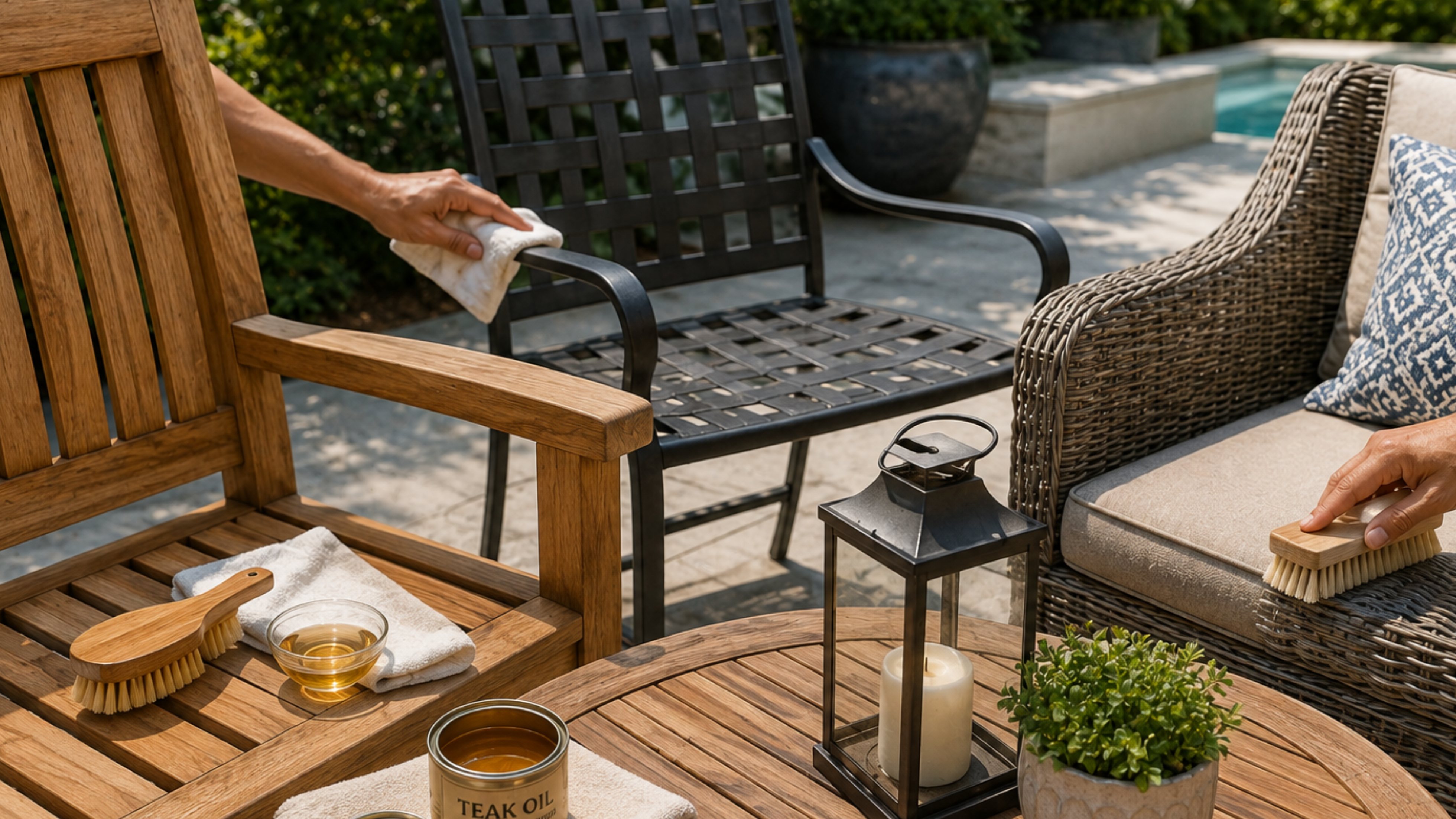
Different materials need different summer care. Teak and other hardwoods can dry out or change color under strong sun. Some homeowners love the natural silver patina, while others prefer to maintain the original warmth with periodic cleaning and oiling.

Metal furniture should be checked for scratches or exposed areas where rust may form. Wipe pieces regularly to remove dust, sunscreen residue, and pool chemicals. Synthetic wicker can handle summer conditions better than natural wicker, but it still benefits from shade and gentle cleaning.

Knowing how to protect outdoor furniture means treating each finish with the care it deserves.

Keep Poolside Furniture Clean

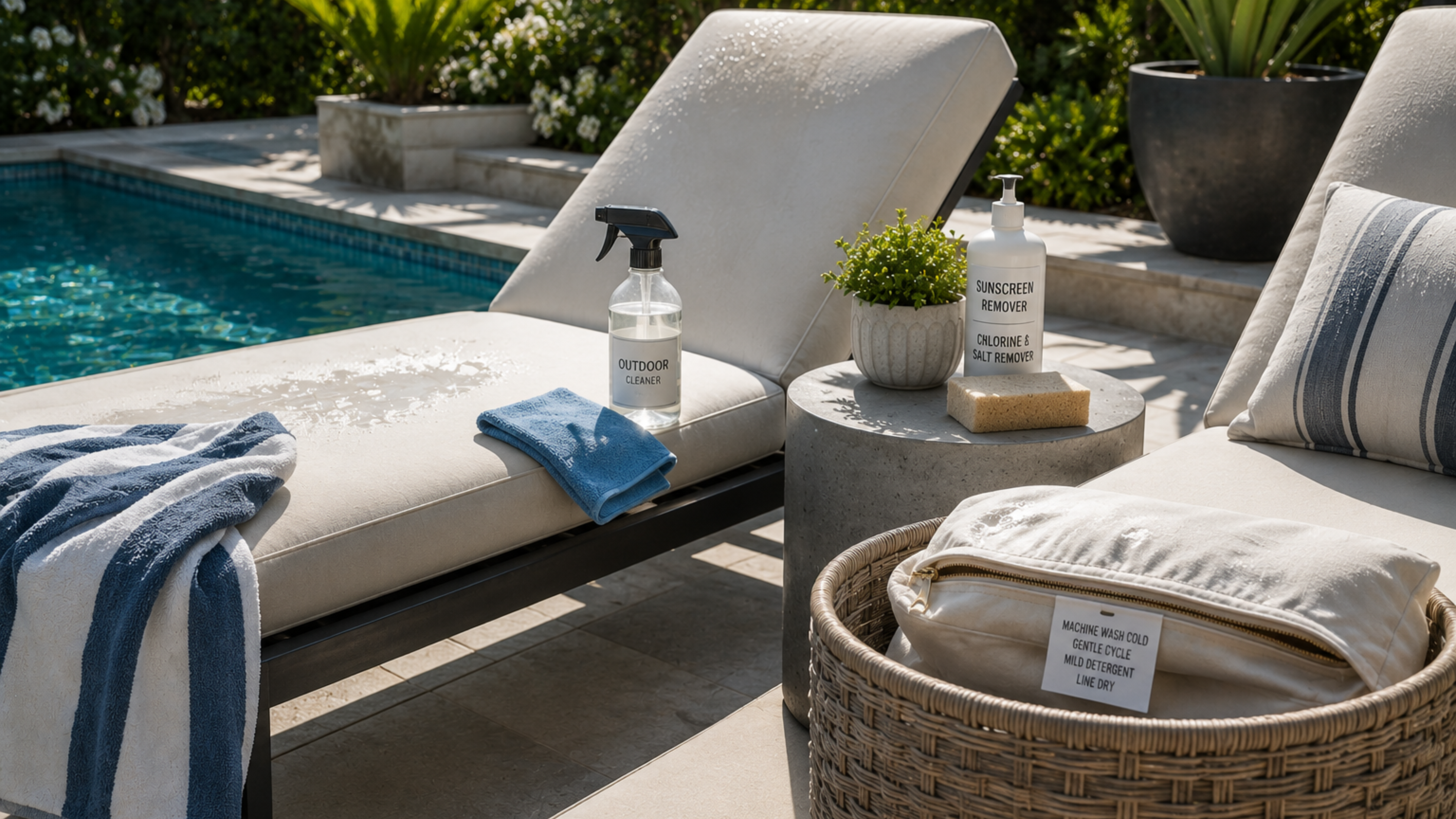
Poolside pieces often face an extra layer of wear. Chlorine, saltwater, sunscreen, and body oils can break down fabrics and finishes over time.

Rinse or wipe down chaise lounges and side tables regularly, especially after heavy use. Wash removable cushion covers according to the manufacturer’s instructions and allow them to dry fully before placing them back outside. A little consistency goes a long way in keeping pool areas looking crisp.

Store or Reset Before Travel

If you plan to leave town before the end of summer, take time to reset your outdoor areas before you go. Cover major pieces, store pillows, close umbrellas, and secure lightweight accessories.

This final step in how to protect outdoor furniture helps prevent sun damage, wind displacement, and unnecessary wear while your home is unattended.

Preserve Your Outdoor Living Investment

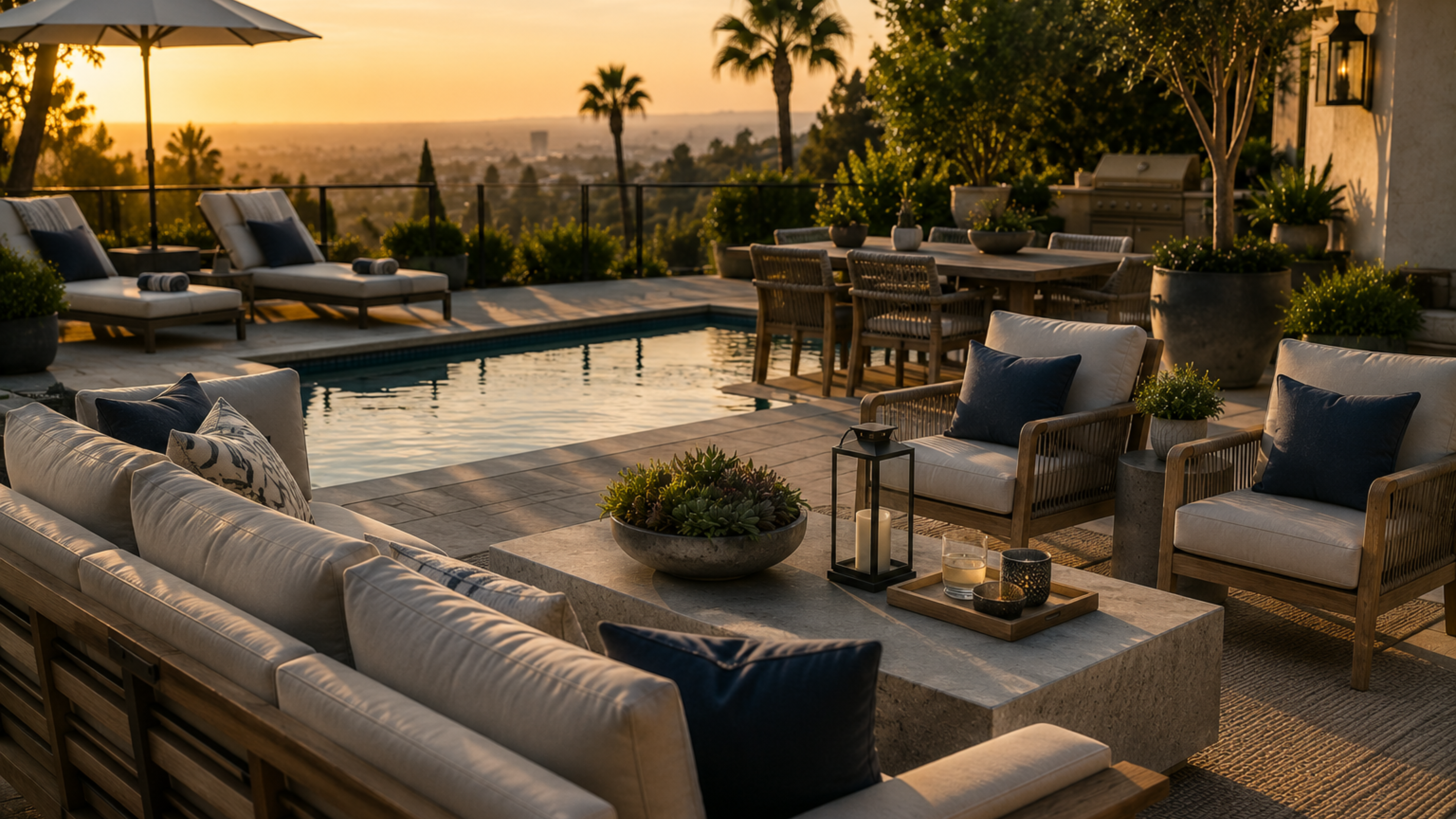
Outdoor furniture plays a major role in the way a luxury home lives during summer. It supports the long dinners, poolside afternoons, and quiet morning coffees that define Southern California living.

By managing sun exposure, using proper covers, caring for fabrics, cleaning finishes, and preparing before travel, Los Angeles homeowners can keep their outdoor spaces looking beautifully maintained all season long.

The Best Museums in Los Angeles for Art and Architecture Enthusiasts | Out & About

There is a quiet wonder in surrounding oneself with curated beauty. In Southern California, the art of living well extends far beyond the walls of a private sanctuary. Likewise, this extension is into the cultural landmarks that define our most coveted neighborhoods. For connoisseurs of fine design and modern masterpieces, there is much to marvel over in LA. As such, visiting the best museums in Los Angeles offers endless inspiration for cultivating an elegant home. A beauty that’s seen in hilltop sanctuaries framed by Italian travertine to contemporary urban structures bathed in natural light. Viewing these cultural treasures showcases how world-class architecture and fine art elevate our daily lives.

Architectural Marvels of the Westside

When exploring the best museums in Los Angeles for breathtaking design and hilltop tranquility, the Westside offers unmatched architectural splendor.

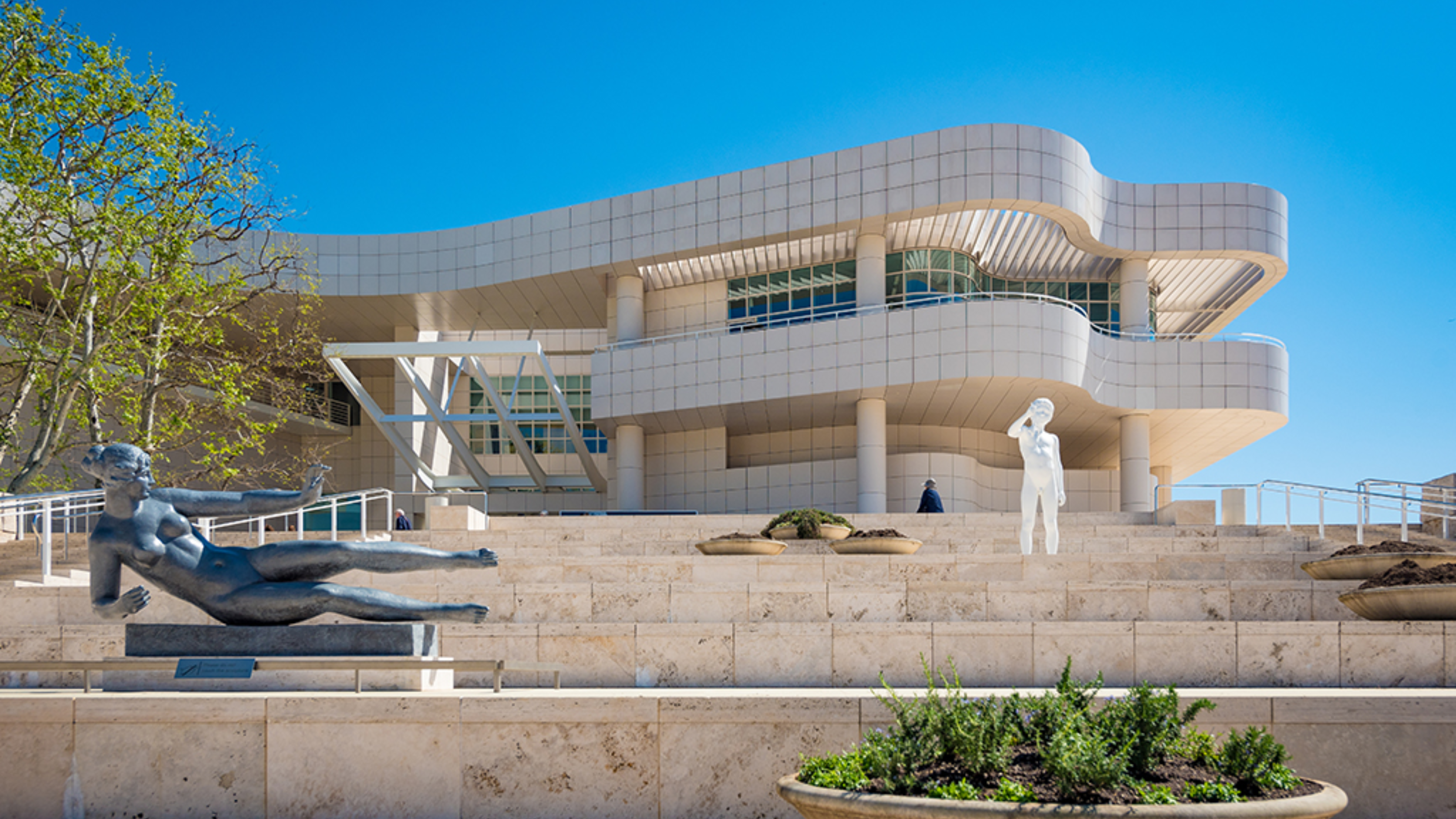
  • The Getty Center: Perched high above Brentwood, Richard Meier’s travertine-clad masterpiece seamlessly blends modernist precision with terraced garden rooms and ocean breezes. Patrons enjoying after-hours access can savor private views of Impressionist masterpieces before strolling through Robert Irwin’s vibrant Central Garden at sunset.

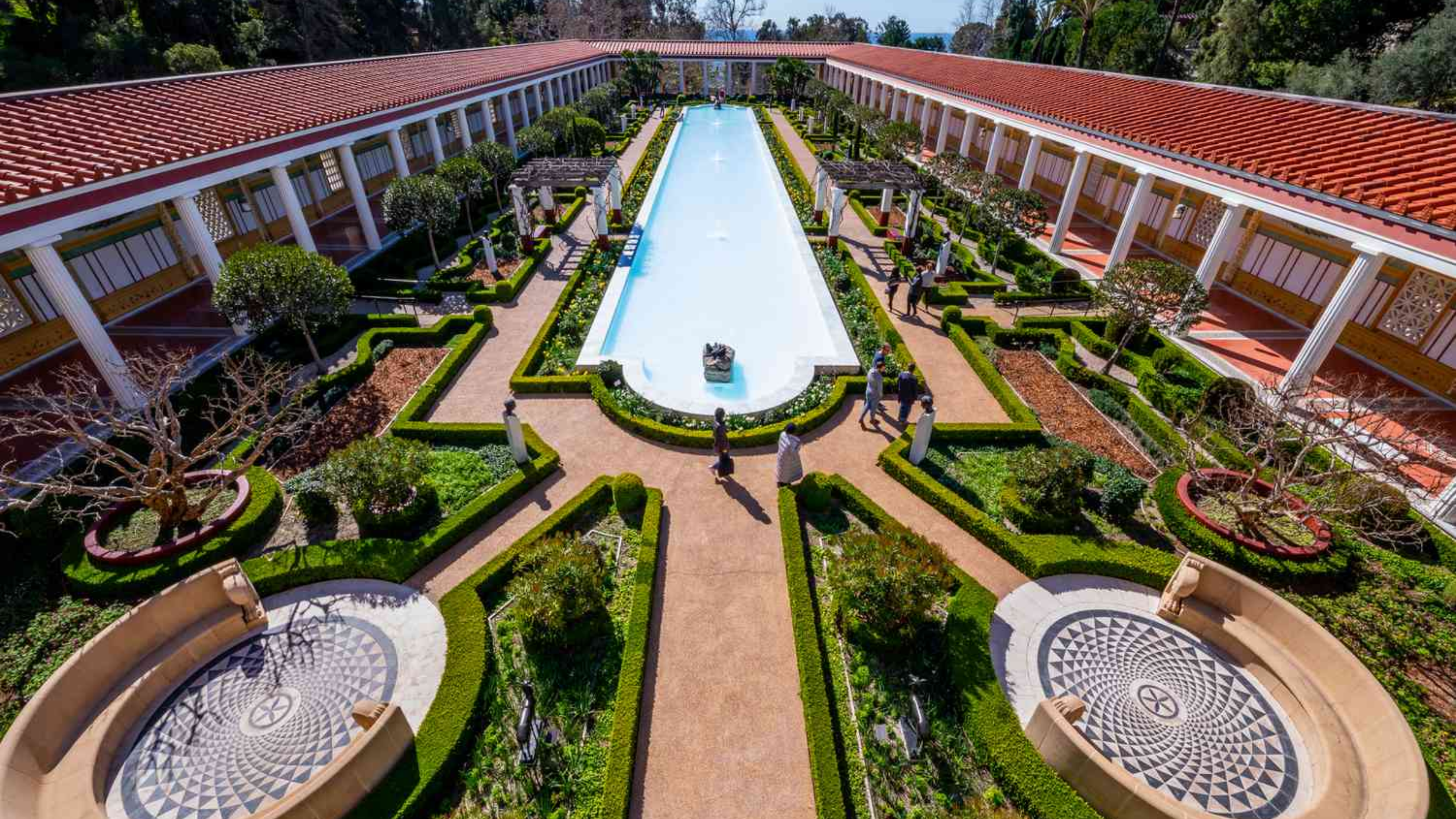
  • The Getty Villa: Tucked quietly along the Pacific Palisades coast, this re-created ancient Roman country house celebrates classical antiquities amidst fragrant herb gardens, bronze sculptures, and courtyard reflecting pools.

Living near these Westside enclaves allows discerning homebuyers to cultivate a lifestyle where timeless architectural craft and serene landscape design meet right at your doorstep.

Contemporary Masterpieces and Private Tours Downtown

In the dynamic heart of Downtown Los Angeles, cutting-edge structures transform the urban skyline. Here, the best museums in Los Angeles serve as vibrant inspiration for modern art collectors.

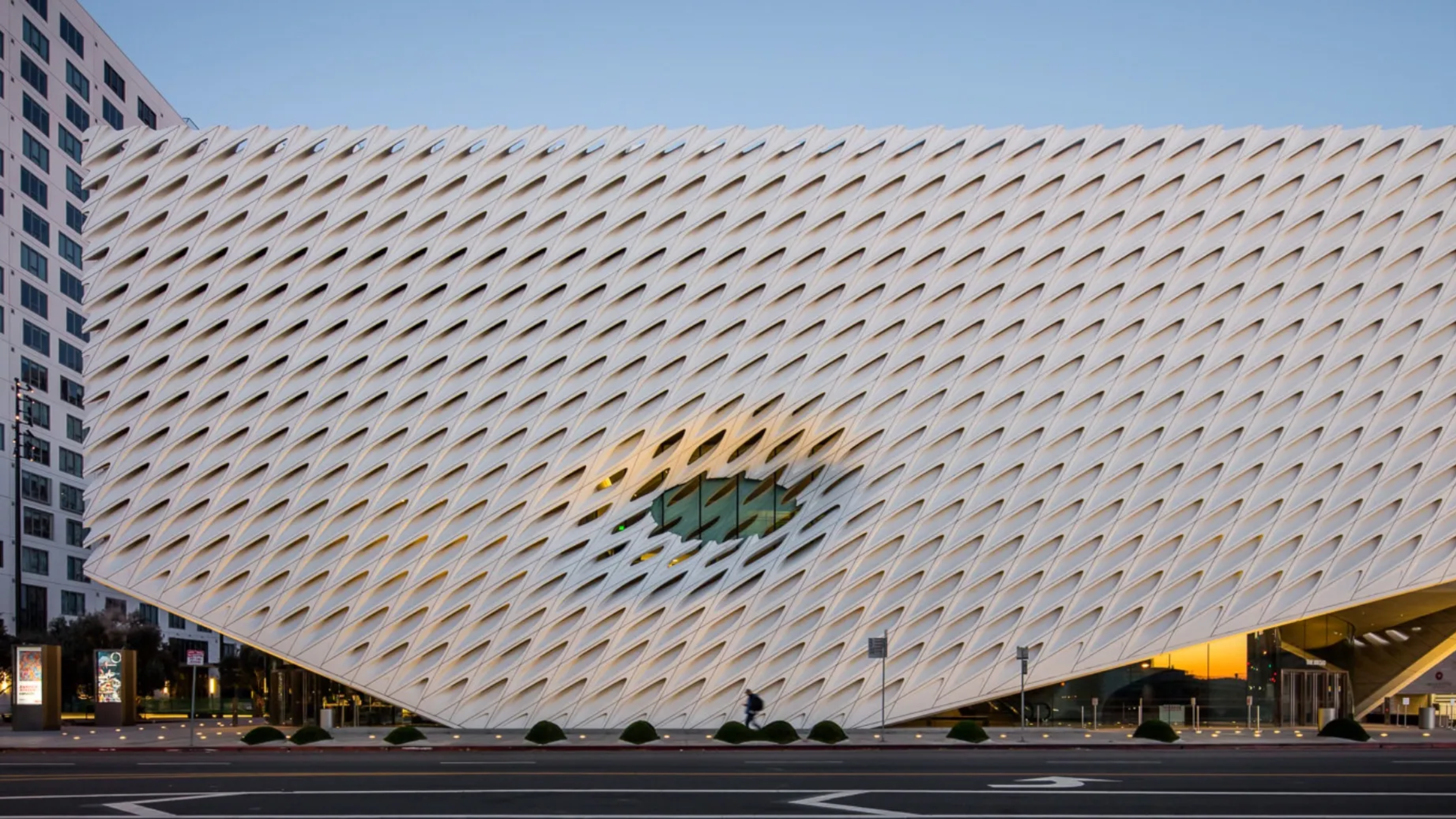
  • The Broad: Designed by world-renowned firm Diller Scofidio + Renfro, this contemporary marvel features a striking “veil-and-vault” design. Its honeycomb exterior filters natural daylight over a column-free gallery space. Exclusive private gallery tours offer collectors intimate access to postwar and contemporary masterpieces.

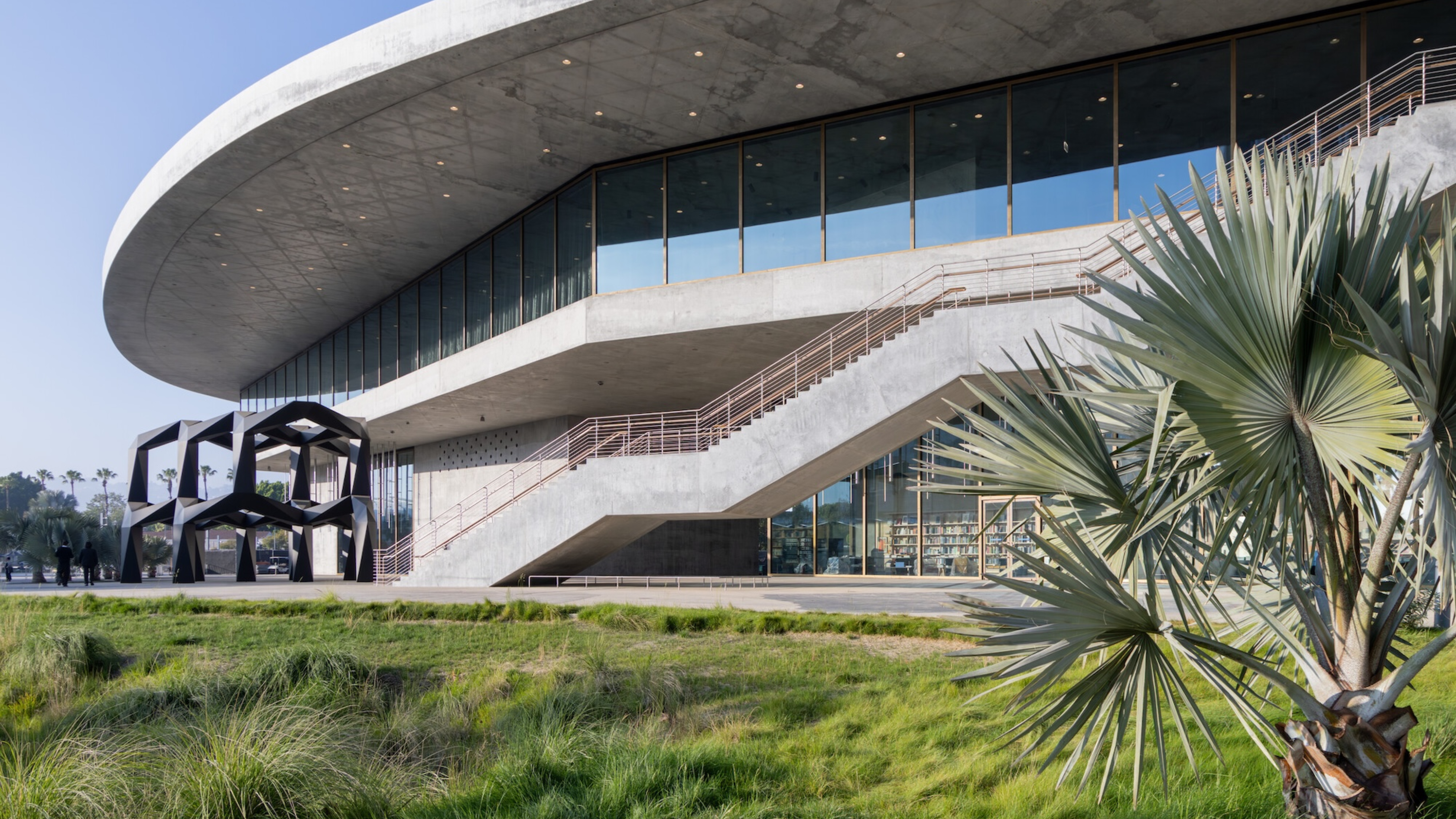
  • LACMA: Situated along Wilshire Boulevard, the Los Angeles County Museum of Art bridges classical heritage with bold modern innovation. Its dramatic exhibition pavilions and iconic light installations remain an essential destination. For design enthusiasts seeking the best museums in Los Angeles for contemporary culture, LACMA is where it’s at.

For collectors who cherish city energy, penthouse residences and restored Mid-Century Modern lofts nearby offer effortless access to high-profile gallery openings and private collector salons.

Historic Splendor and Botanical Craftsmanship in Pasadena

Further east, you’ll find the Huntington Library and Botanical Gardens. A hidden gem where historic estates line tree-shaded avenues. The classic cultural institution reflects a rich heritage of traditional craftsmanship and garden design.

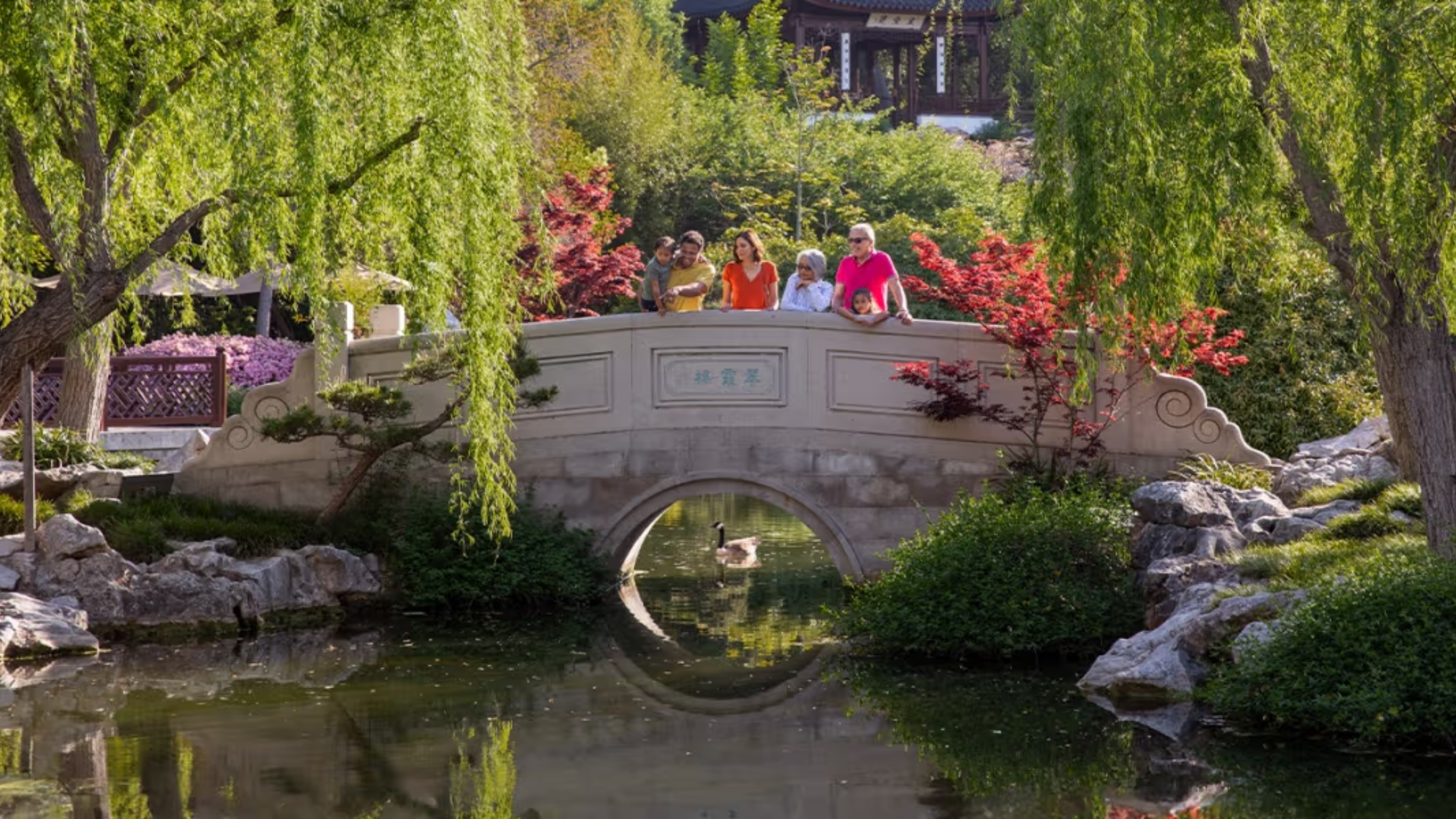
  • The Huntington Library, Art Museum, and Botanical Gardens: Resting on 130 expansive acres in San Marino near Pasadena, Myron Hunt’s Mediterranean Revival architecture houses extraordinary British and American art collections. Wandering through the serene gardens feels like visiting a private estate built for quiet reflection and creative thought.

For homebuyers who appreciate fine art and architectural history, living near the best museums in Los Angeles brings daily access to world-class culture. From Mid-Century Modern estates in Pasadena to hillside architectural sanctuaries in Bel-Air. The best museums in Los Angeles are cultural institutions that enrich both our homes and our daily lives.

The Best Golf Courses in Los Angeles for Country Club Living | Out & About

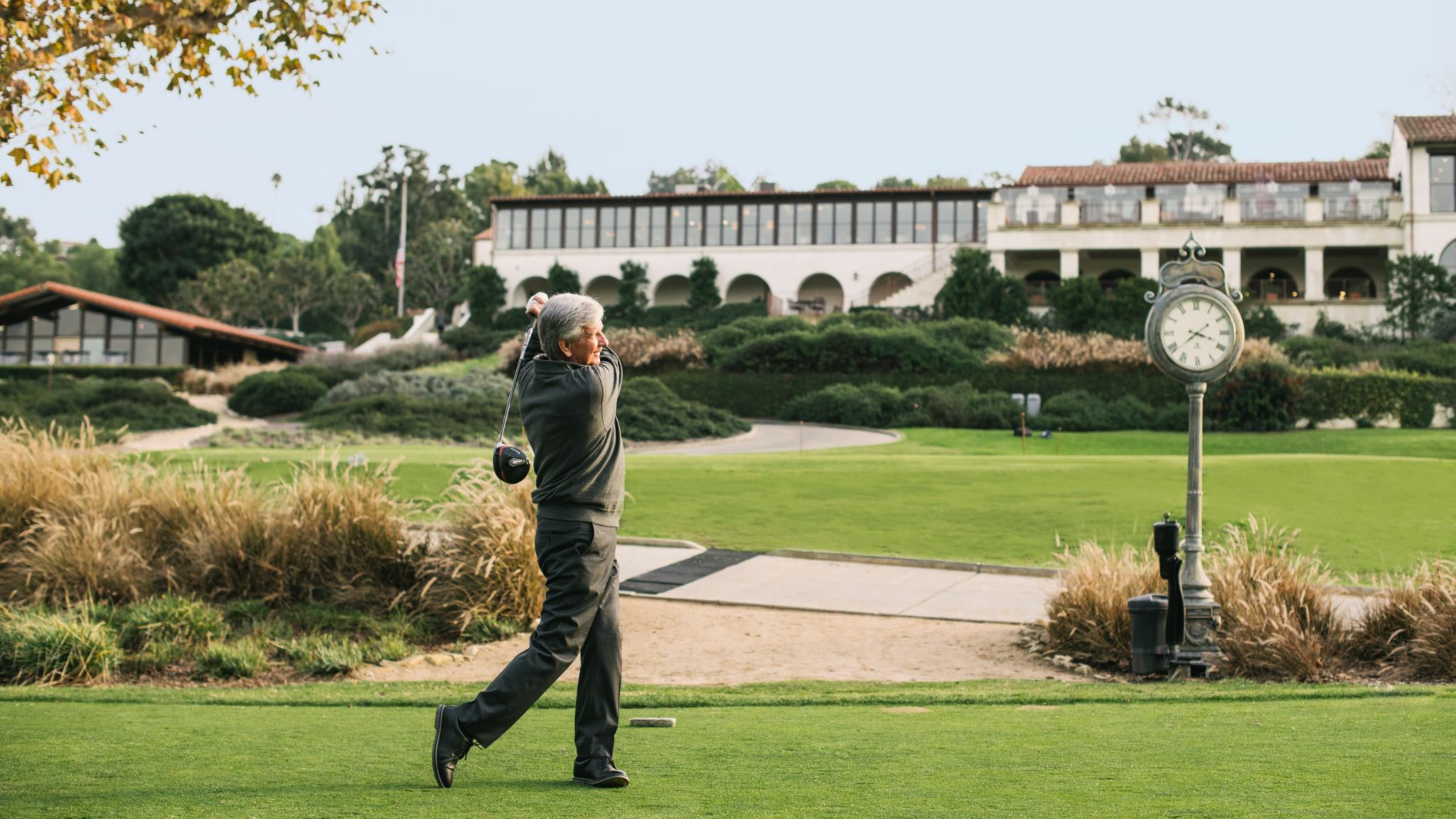
There is a distinct, serene rhythm to morning in Southern California. Long before the city fully awakens, a gentle coastal mist lingers in the canyons, dew glistens across velvet fairways, and the quiet, crisp crack of a driver echoes through the air. In Southern California, golf is far more than a pastime—it is a cherished lifestyle woven directly into the fabric of refined coastal living. For discerning homebuyers, residing near premier golf courses in Los Angeles represents the ultimate expression of personal leisure, architectural elegance, and an exclusive sense of community.

Legendary Private Clubs of the Westside

When exploring the most storied golf courses in Los Angeles, conversation inevitably turns to the Golden Age masterpieces that anchored the city’s premier residential enclaves. Nestled within rolling hillsides and shaded by towering eucalyptus trees, these historic private havens offer architectural brilliance alongside an incomparably sophisticated social scene.

  • Bel-Air Country Club: Designed by George C. Thomas in 1925, this iconic course weaves through four private canyons connected by suspension bridges and picturesque tunnels. Living along its perimeter means waking to sweeping verdant views from your morning terrace.

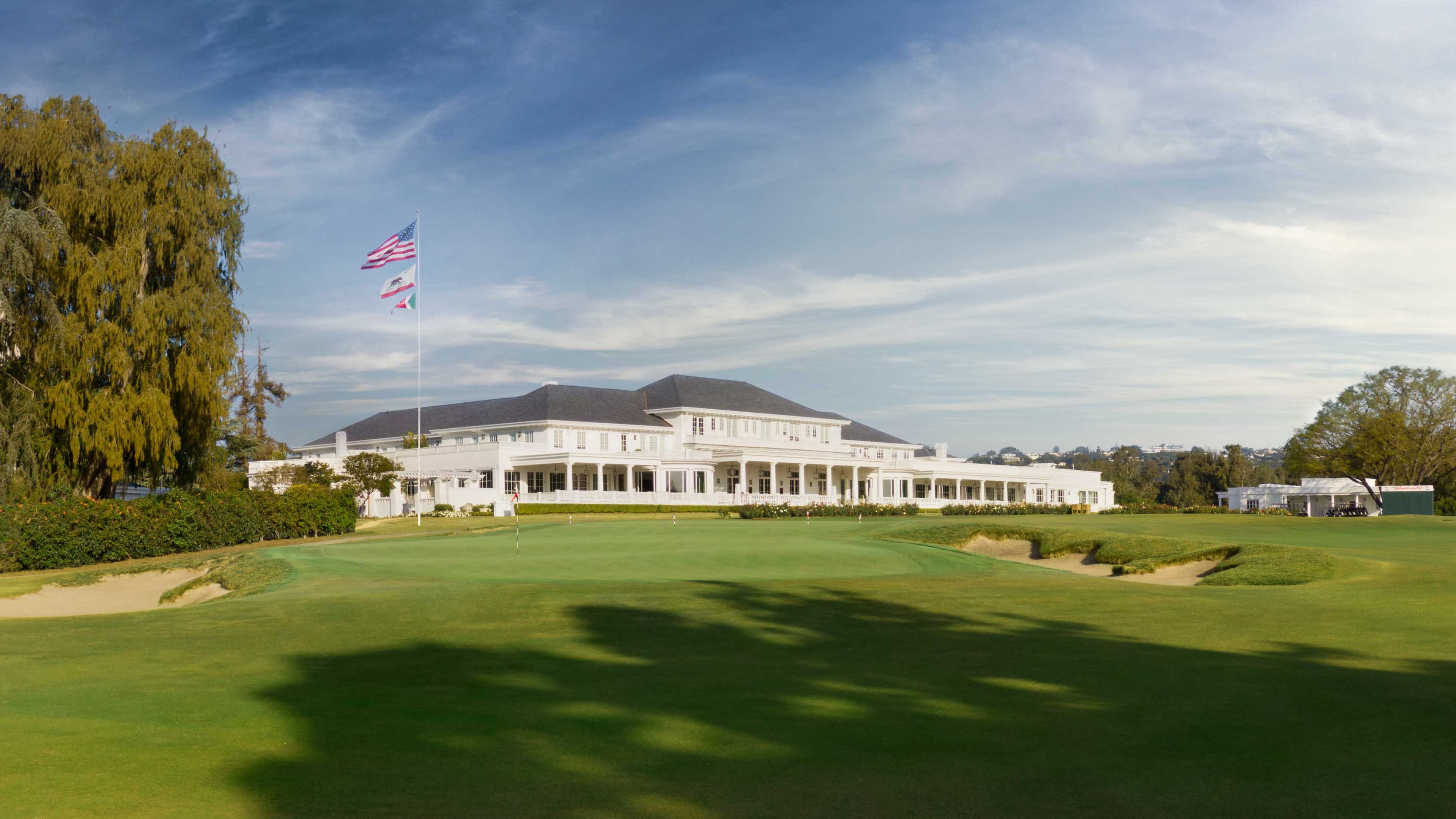
  • The Los Angeles Country Club: Positioned along the border of Beverly Hills, LACC’s North Course is globally revered. Its classic layout offers members a secluded sanctuary of historic prestige and quiet grandeur amidst the vibrant energy of West Los Angeles.

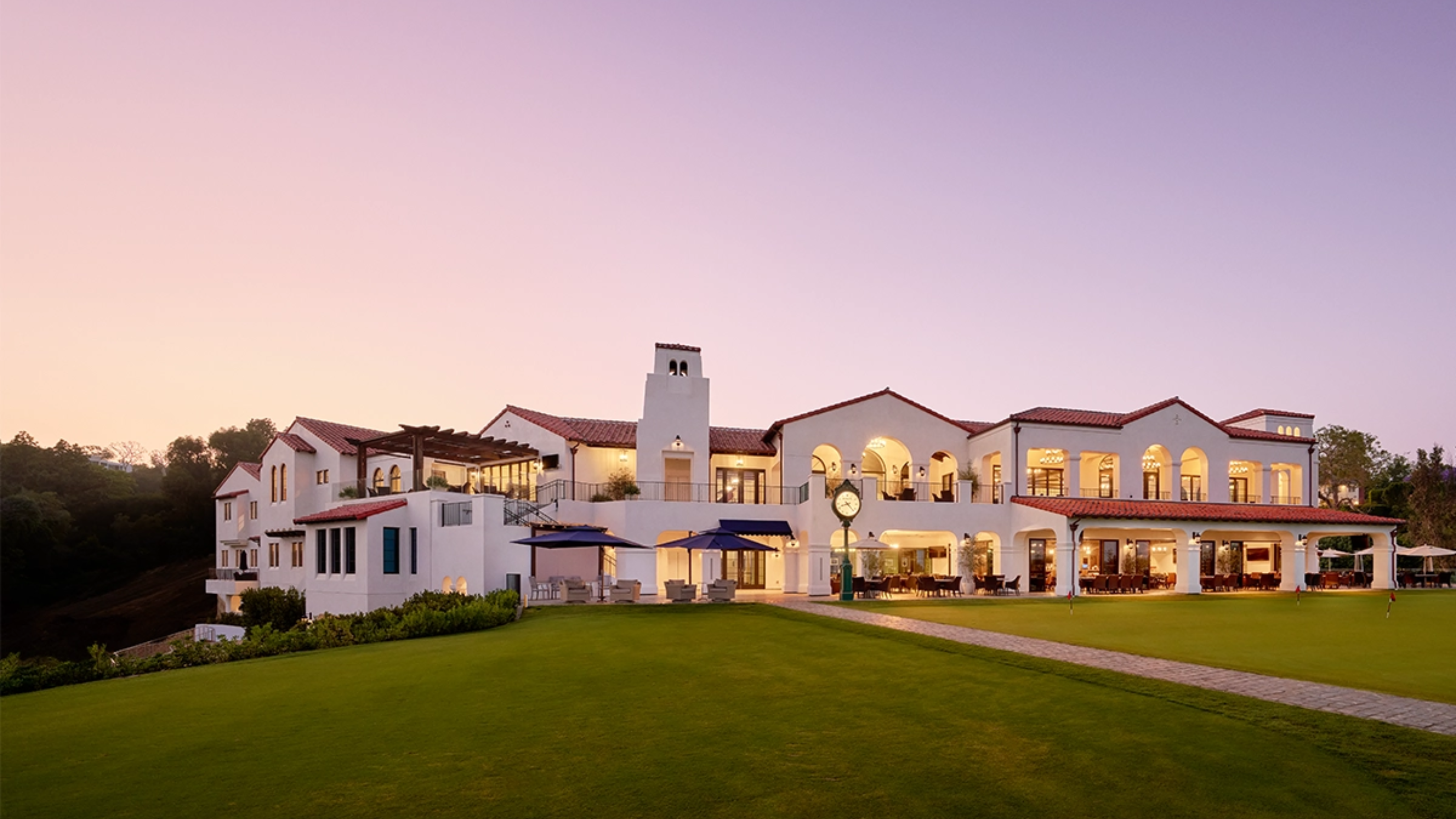
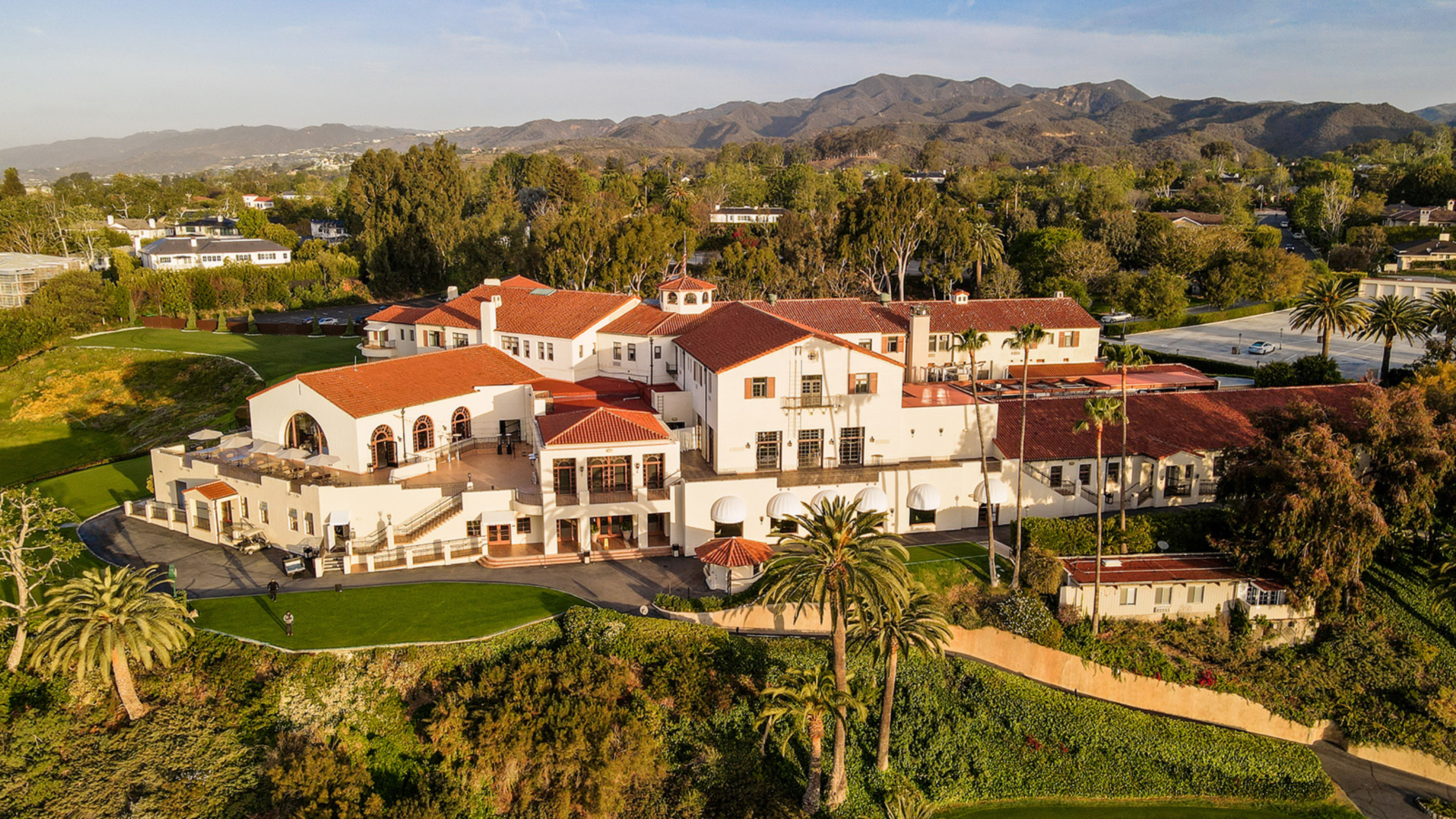
  • The Riviera Country Club: Tucked into Pacific Palisades, Riviera combines ocean breezes with world-class tournament heritage. Its grand Spanish Revival clubhouse remains a cherished centerpiece for multi-generational gatherings, Sunday brunches, and relaxed afternoon dining.

Coastal Drama and Public Splendor

Exclusivity is not confined solely behind private gates. For those who seek sweeping Pacific vistas alongside world-class play, Southern California offers remarkable semi-private and public destinations that celebrate the region’s dramatic natural topography.

Among the standout golf courses in Los Angeles for breathtaking scenery is Palos Verdes Golf Club in Palos Verdes Estates. Co-designed by George C. Thomas and William P. Bell, this 1924 ocean-view masterpiece winds through pine-lined barrancas, offering panoramic vistas of Santa Monica Bay. Its classic Mediterranean clubhouse serves as a historic social hub for the Peninsula’s most discerning homeowners.

Embracing the Country Club Lifestyle

For luxury buyers, purchasing a residence near these iconic grounds is about far more than convenience to the first tee. It is about embracing a daily ritual defined by architectural craftsmanship, lush greenery, and effortless entertaining.

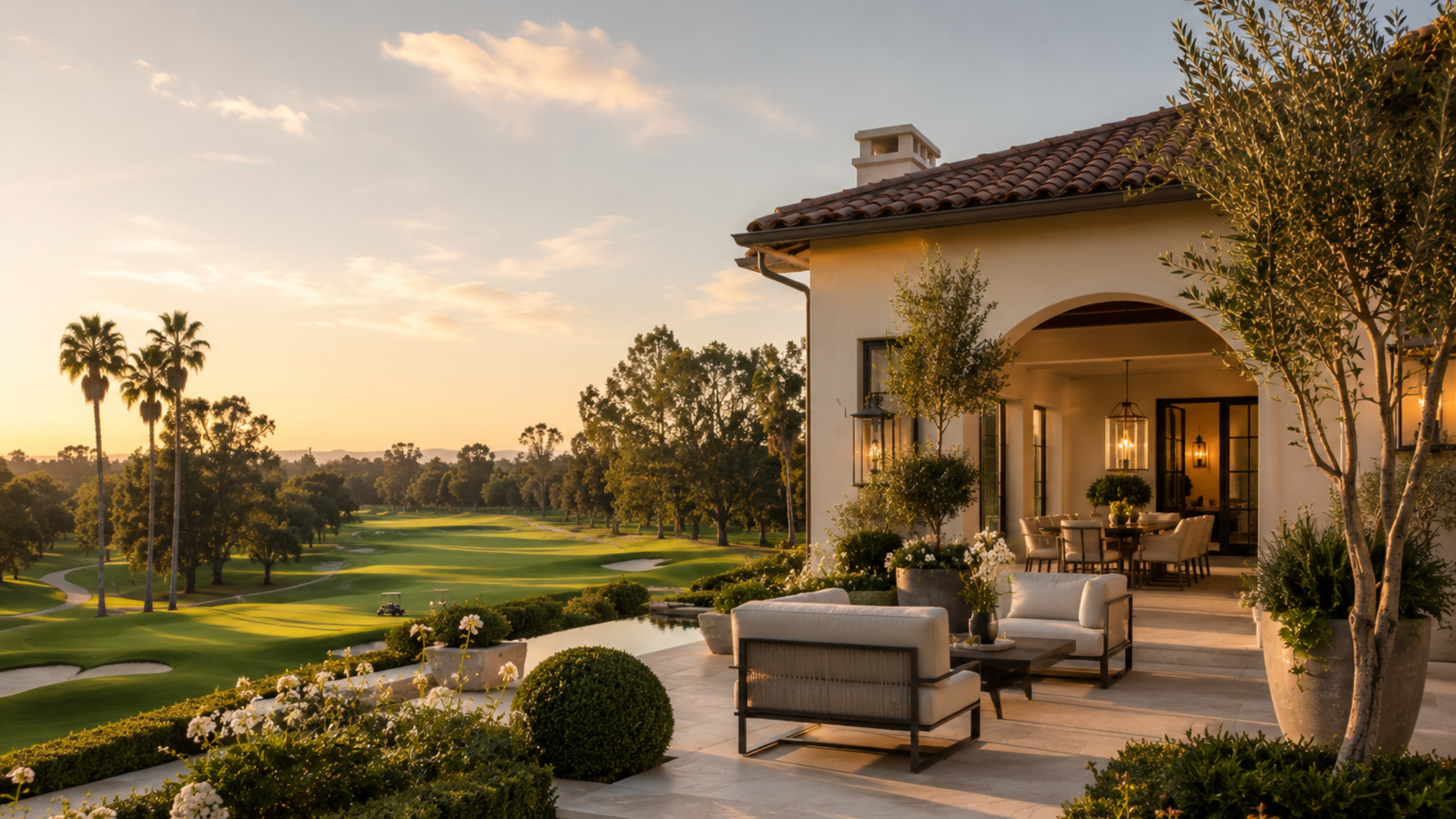
From restored 1920s Spanish Revival estates overlooking the greens in Pacific Palisades to a contemporary glass sanctuary in Brentwood. Guard-gated estates in Bel-Air and a new modern twist. All of the latter prove one thing: homes adjacent to top golf courses hold timeless appeal and enduring value. These properties offer expansive grounds, sun-drenched verandas, and a seamless connection to nature. Here, weekend alfresco lunches and twilight rounds of golf blend effortlessly into the art of living well.

Entryway Decor Ideas That Give Your Space a Summer Refresh | Home Tips

Summer in Los Angeles has a way of turning every home visit into an occasion, making fresh entryway decor ideas essential for welcoming seasonal visitors. Friends stop by before dinner reservations, family arrives for long weekends, and neighbors linger a little longer after sunset. Before anyone steps into the living room or out toward the patio, your entry sets the tone for the entire home.

For luxury homeowners, the entry should feel polished, relaxed, and elevated. The best entryway decor ideas balance beauty, function, and a sense of effortless welcome. With a few thoughtful seasonal updates, your front door, foyer, or covered porch will feel fresh, inviting, and perfectly prepared for summer guests.

Seasonal Planter Entryway Decor Ideas

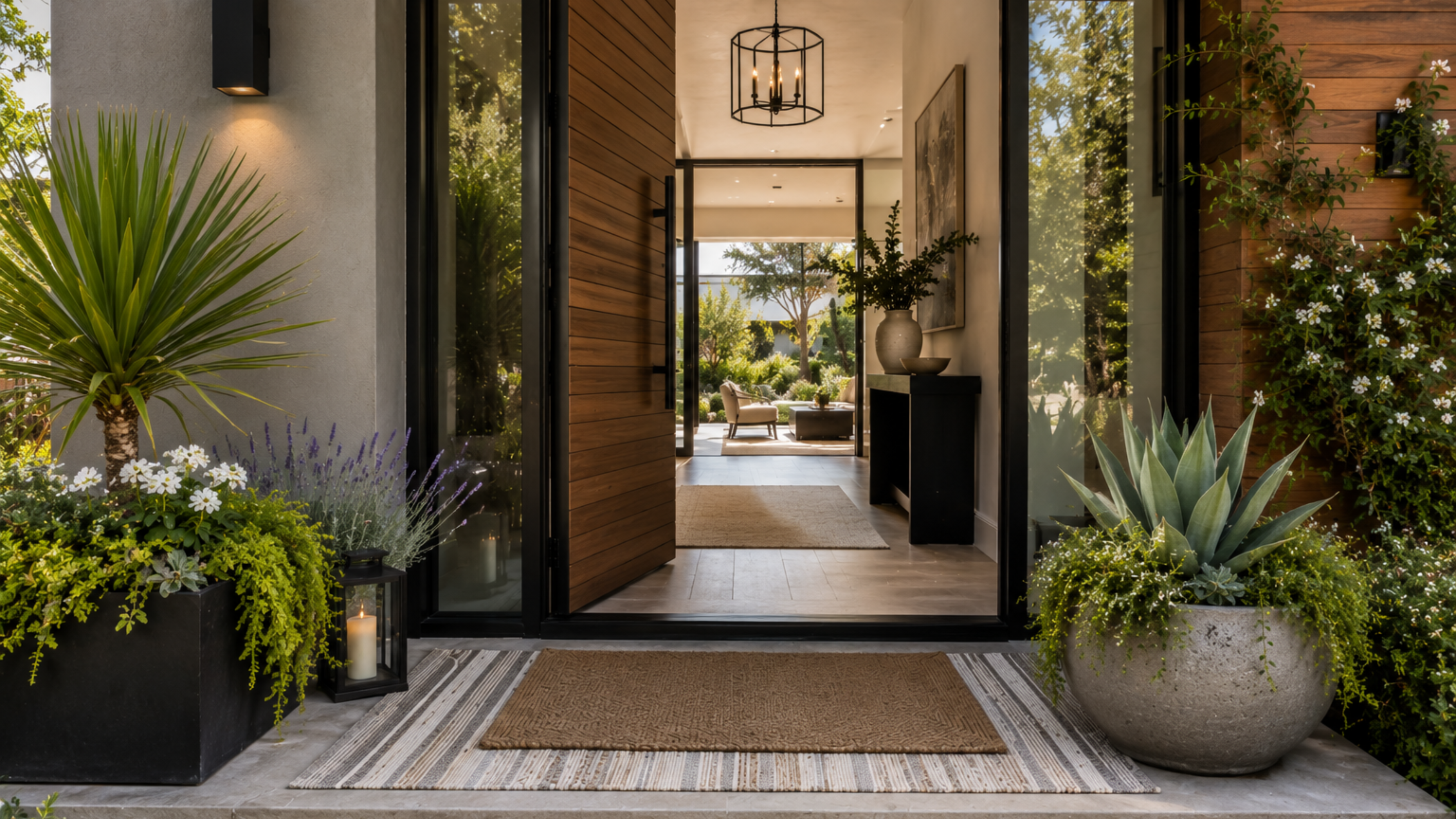
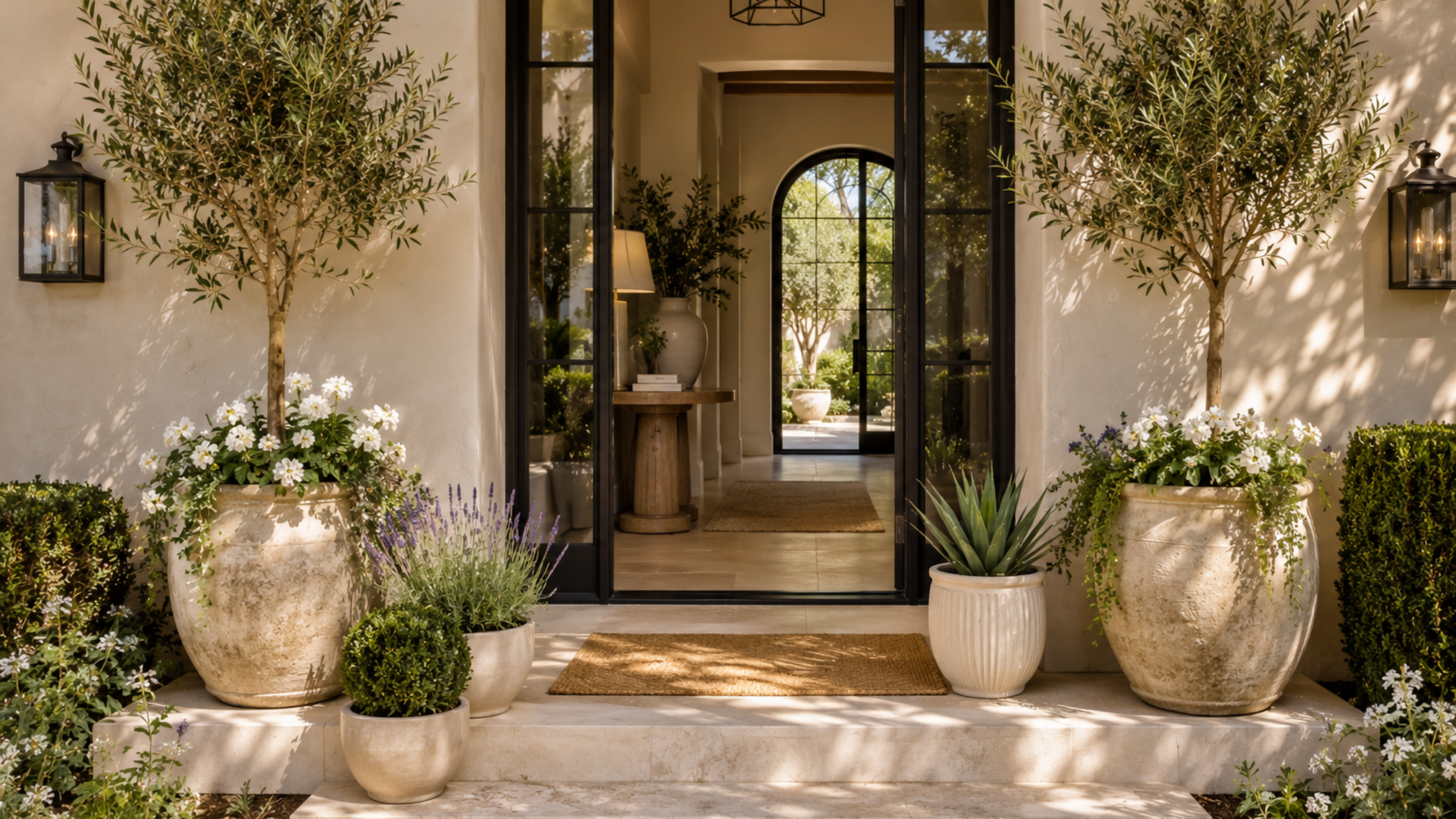
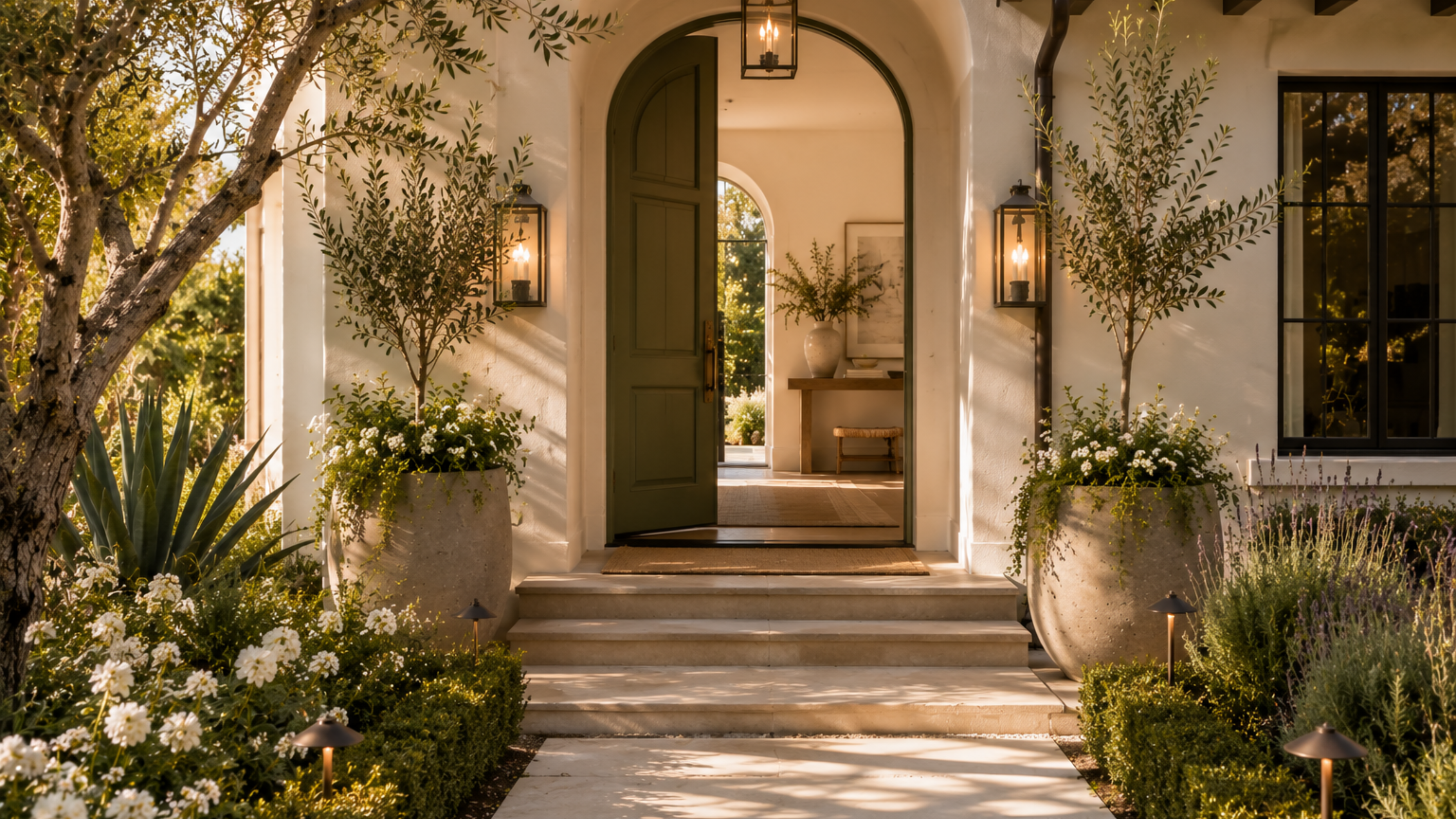
A pair of well-placed planters can instantly elevate your foyer and porch. When exploring entryway decor ideas for Southern California homes, choose greenery that can handle summer heat while maintaining a refined aesthetic. Olive trees, boxwood, lavender, rosemary, and sculptural succulents all bring organic texture without requiring constant care.

For a softer look, mix in white blooms, trailing greenery, or pale seasonal flowers. Large ceramic, stone, or terracotta planters feel far more sophisticated than lightweight plastic options and add grounding weight to the overall design. Planters remain one of the easiest entryway decor ideas to build curb appeal before guests even reach the door.

Refresh Your Porch with Modern Entryway Decor Ideas

A worn doormat can quietly age an otherwise beautiful entrance. Summer is the ideal time to swap in a clean, simple mat that complements your broader entryway decor ideas.

Natural coir mats remain a classic choice, especially when layered over a larger outdoor rug in a subtle stripe or woven texture. Keep the palette neutral or coastal rather than overly themed. A fresh mat ensures your entryway decor ideas remain practical while offering guests a clean place to wipe off shoes after walking through garden paths, driveways, or poolside areas.

Lighting Entryway Decor Ideas to Upgrade Your Atmosphere

Lighting is one of the most overlooked ways to style your entryway, yet it can completely transform the mood of a home’s exterior. During summer, guests often arrive later in the evening, making soft, flattering illumination essential.

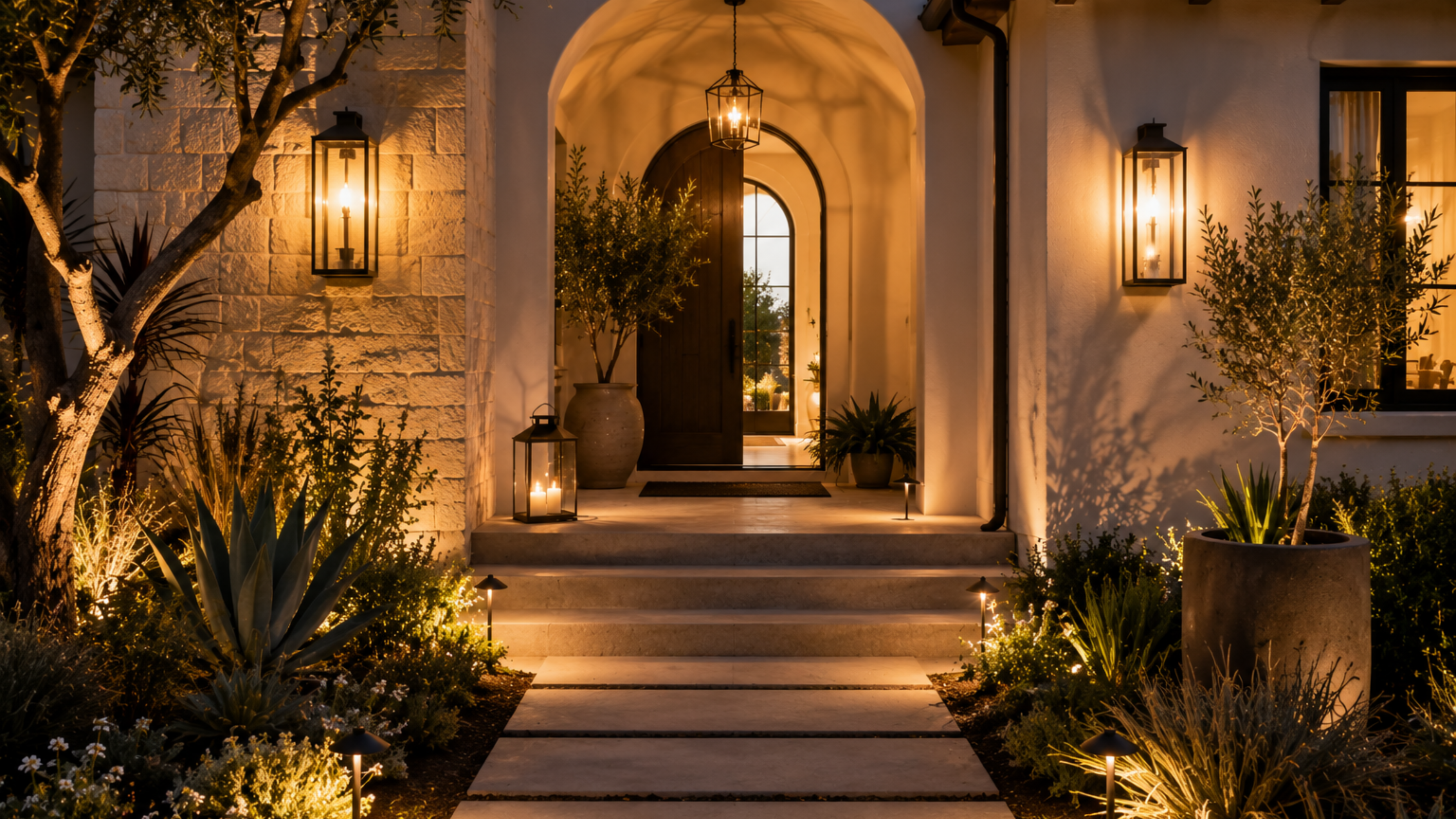
Clean existing sconces, replace dim bulbs, and opt for warm-toned lighting to create an inviting glow. Lanterns near the front door, pathway lights along the walkway, or a statement pendant in a covered entry are versatile entryway decor ideas that make the approach feel intentional. The goal is not brightness alone, but rather it’s pure atmosphere.

Console Table Ideas Styled with Intention

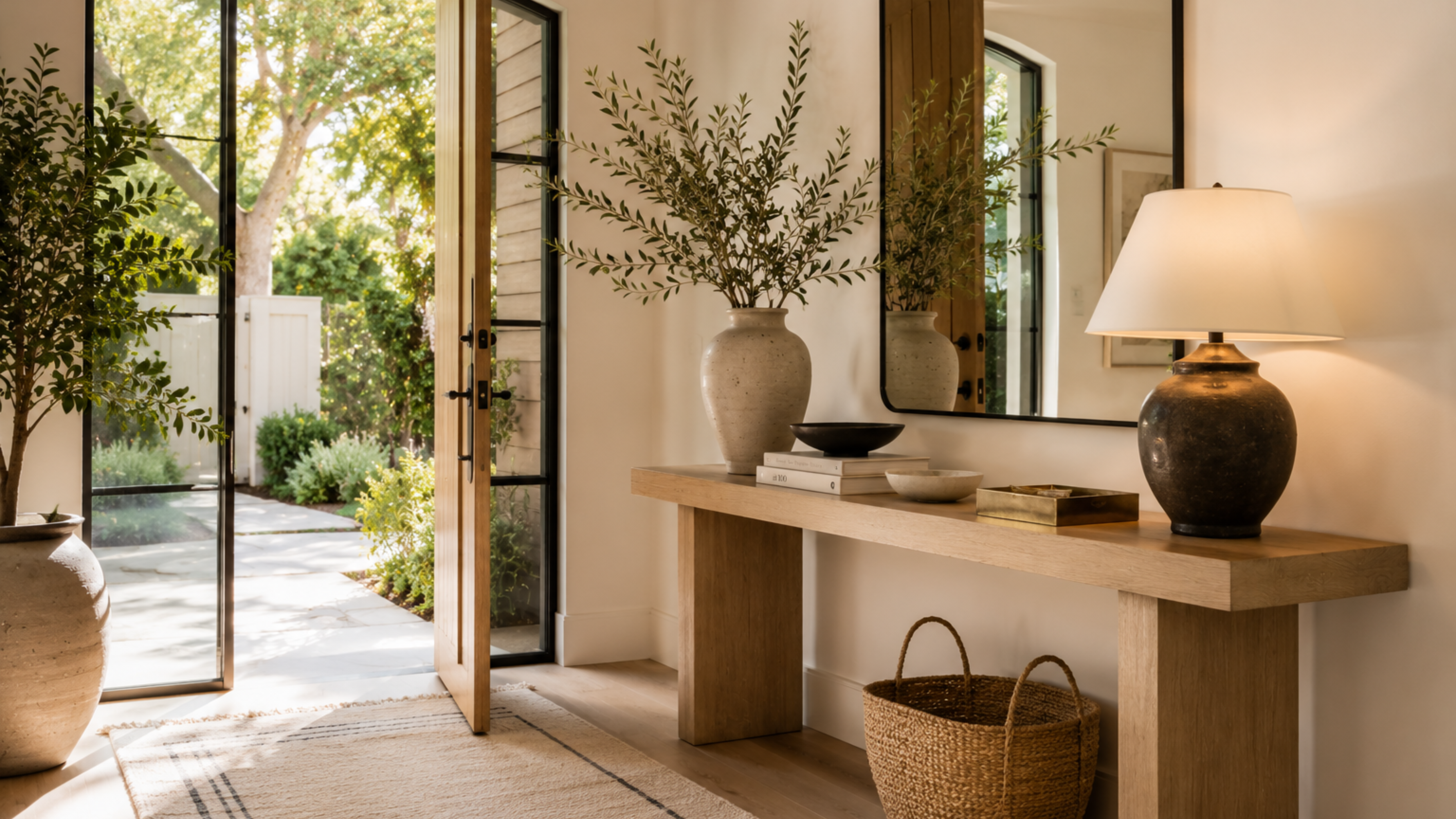
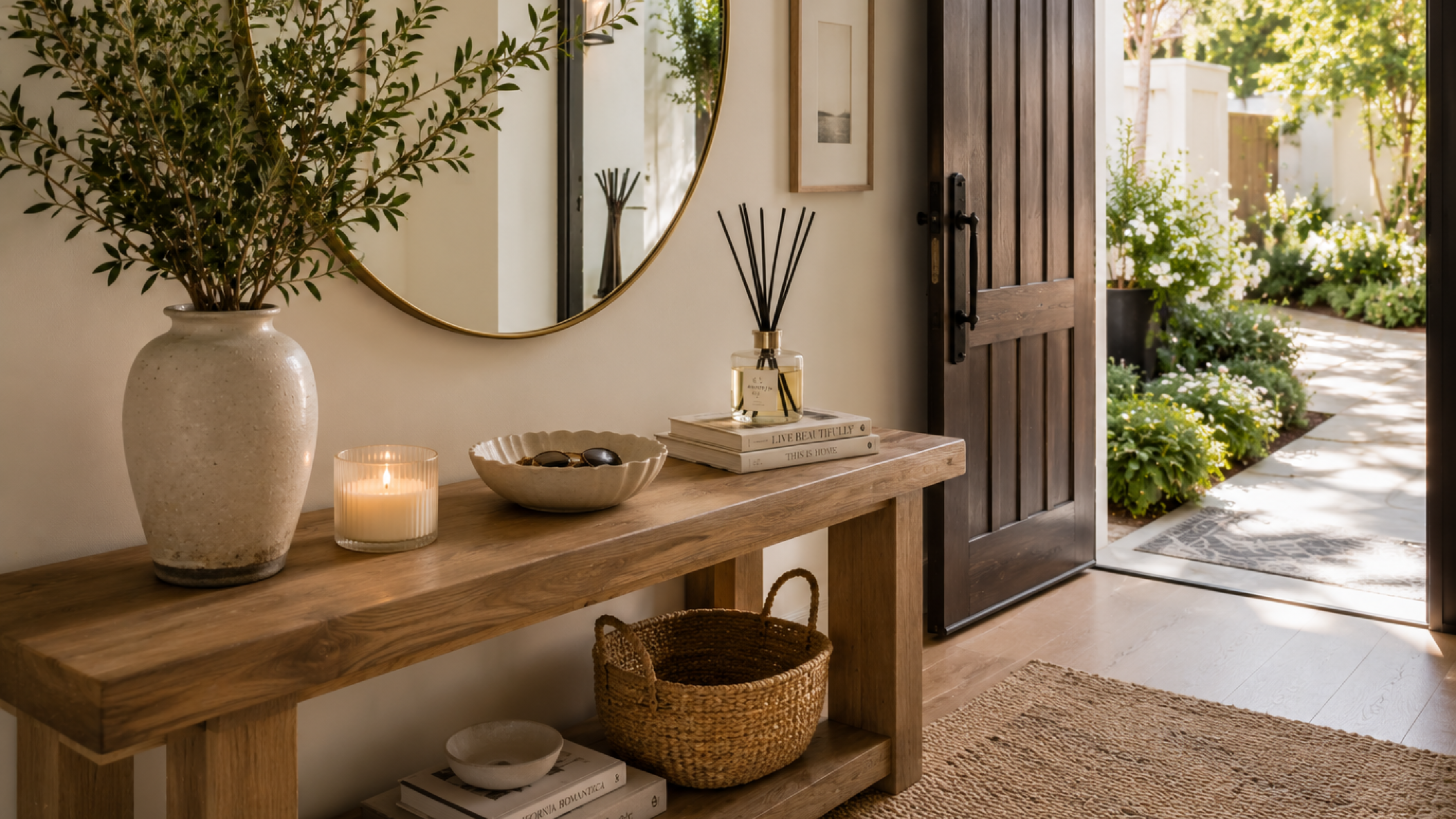
If your entry includes a console table, keep the styling simple, functional, and seasonal. A ceramic bowl for keys, a sculptural lamp, a small tray, and fresh greenery can make the space feel curated without becoming cluttered.

For summer, try adding a tall vase with branches, garden clippings, or fresh white flowers. A framed piece of art or a mirror above the console helps reflect natural light and opens up the foyer. The most effective concepts are often those that feel effortless, as though every piece naturally belongs in the space.

Scent-Based Entryway Decor Ideas for Summer

Scent is a subtle but unforgettable component of welcoming guests. Incorporating clean fragrances into your entryway instantly makes a home feel more luxurious and inviting.

Choose notes that feel light and seasonal, such as citrus, white tea, fig, jasmine, or fresh herbs. A reed diffuser works well for consistent fragrance, while a candle can be lit just before guests arrive. Avoid anything overpowering during warmer months, as the best scent-focused entryway decor ideas offer a subtle whisper, not a loud announcement.

Effortless Styling for Maximum Curb Appeal

A refreshed entryway does not require a complete architectural overhaul. Small, deliberate updates, from planters and lighting to mats and scents, can make a meaningful difference in how your home is experienced.

For Los Angeles luxury homeowners, the styling ideas are rooted in ease, elegance, and a strong sense of place. A beautiful entry should feel like the beginning of summer itself: warm, relaxed, and ready to welcome everyone in.

Home Security Tips While on Vacation | Home Tips

Late July and August are peak travel months in Southern California. Whether you are heading to the coast, spending a week in wine country, or leaving Los Angeles for an extended summer escape, preparing your property before departing is just as vital as packing your luggage.

For luxury homeowners, an empty residence requires a thoughtful approach that goes beyond simply turning a key. Modern estates feature complex smart infrastructure, expansive outdoor living areas, irrigation systems, swimming pools, routine deliveries, and high-value interiors. Integrating proven home security tips while on vacation ensures your estate remains safe, pristine, and ready for your return.

Upgrade Smart Locks and Access Controls

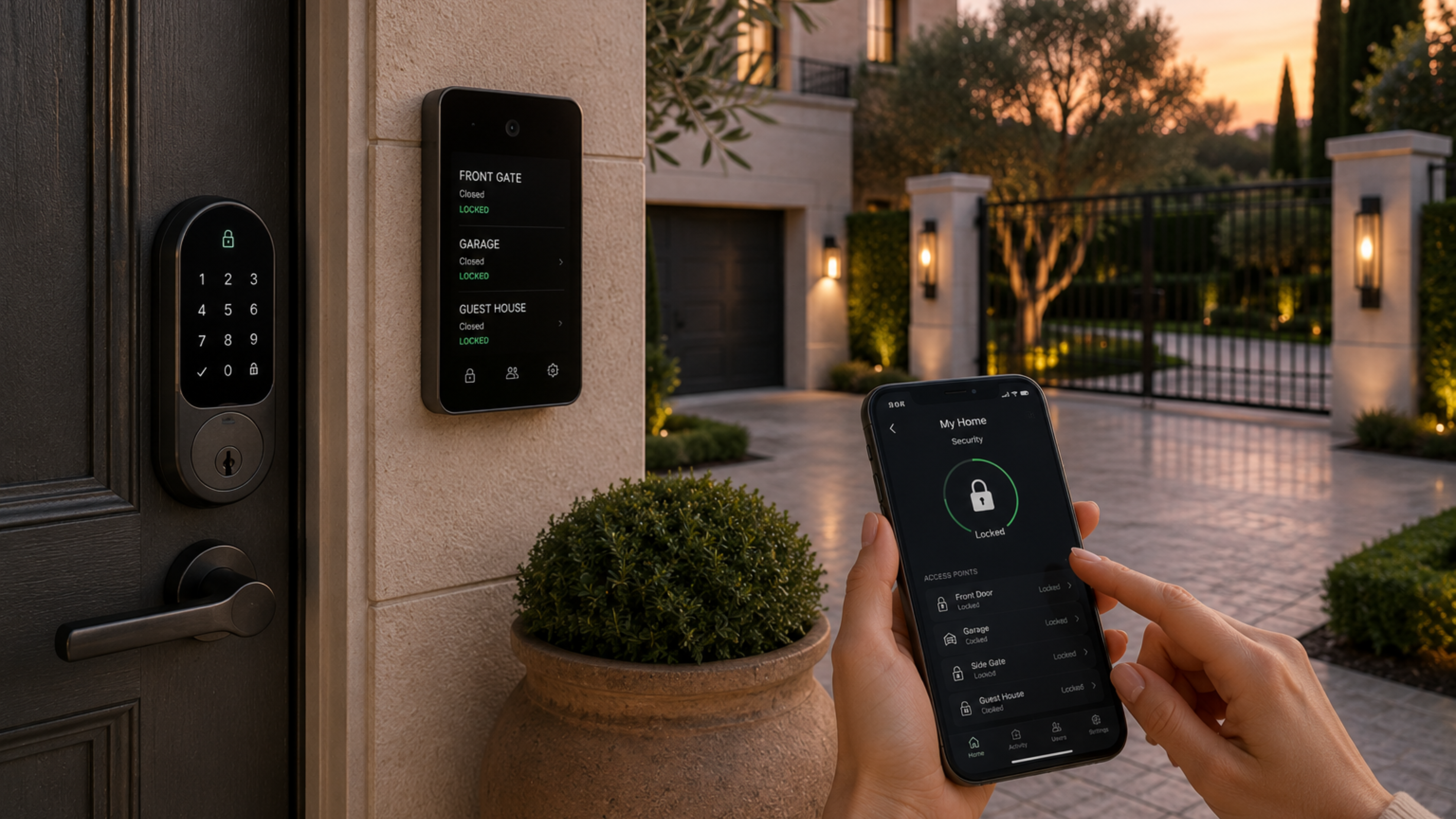
One of the most foundational home security tips while on vacation is reviewing your smart entry systems. Before leaving, confirm that all exterior doors, automated gates, garage access points, and side entries are fully secured and operational.

Smart lock technology allows homeowners to monitor access remotely while generating temporary passcodes for trusted staff, pet sitters, landscapers, or property managers. Rather than leaving physical keys on site, you can issue time-restricted access codes and revoke them once a visit is complete.

For sprawling luxury estates, ensure detached guest houses, cabanas, and secondary garages are integrated into your security walkthrough. These auxiliary spaces are easily overlooked, yet they are equally critical to secure.

Deploy Cameras for Real-Time Monitoring

Installing and calibrating security cameras is among the most essential home security tips while on vacation, offering continuous peace of mind through remote visibility.

Prior to departure, verify that each camera is online, fully charged if wireless, and aimed at key access zones. Focus coverage on main entrances, driveways, perimeter walkways, package delivery areas, and outdoor entertaining spaces. Adjust motion-sensitivity settings to receive actionable alerts without unnecessary notifications from passing traffic or moving foliage.

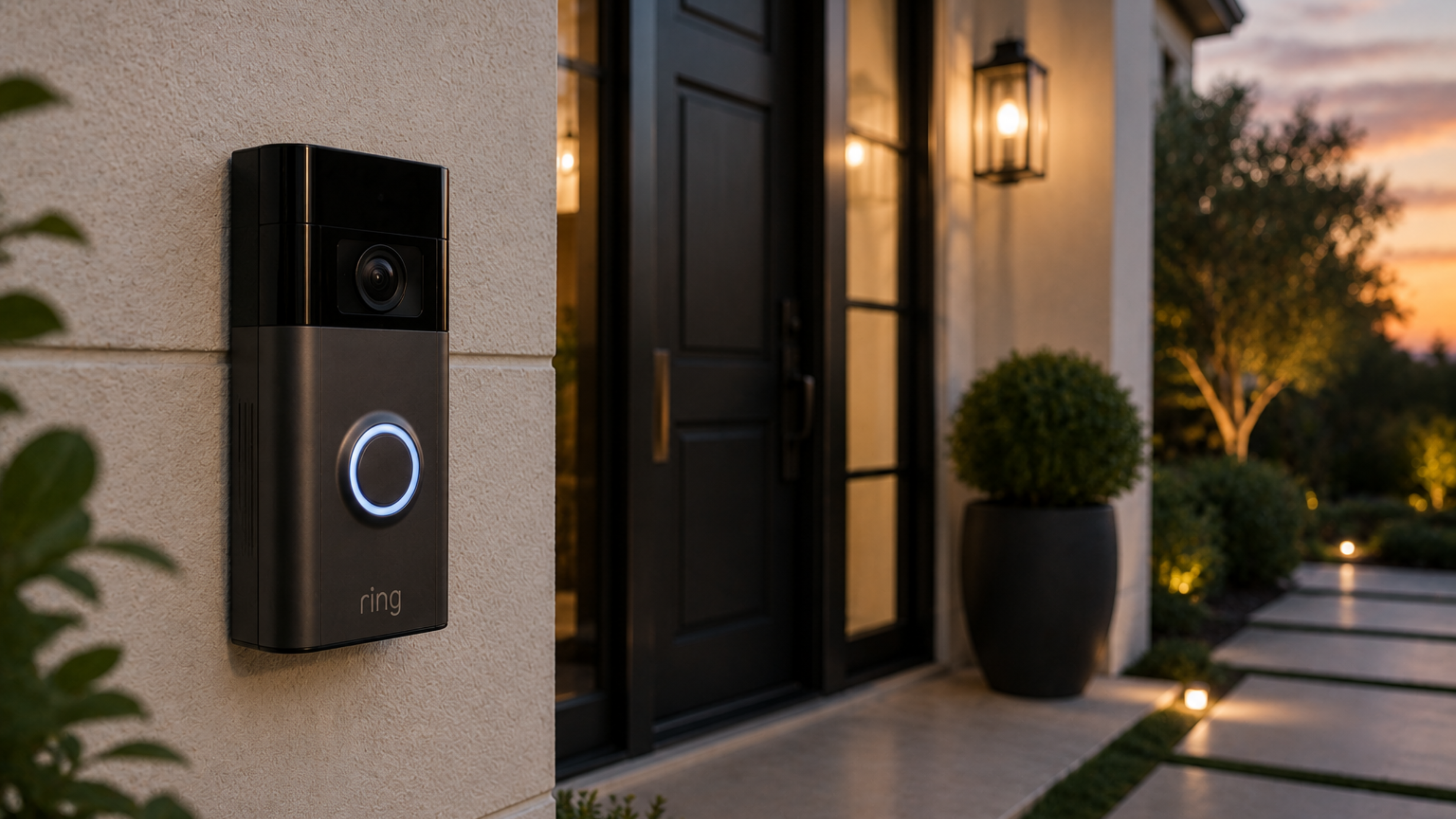
Video doorbells provide added oversight for unexpected visitors and deliveries. They enable instant, two-way communication from anywhere in the world, maintaining the appearance that the home is currently occupied.

Automate Lighting to Maintain an Occupied Appearance

A property that remains dark night after night is a clear sign of an unoccupied residence. Automated lighting systems create a realistic, lived-in rhythm that deters unwanted attention.

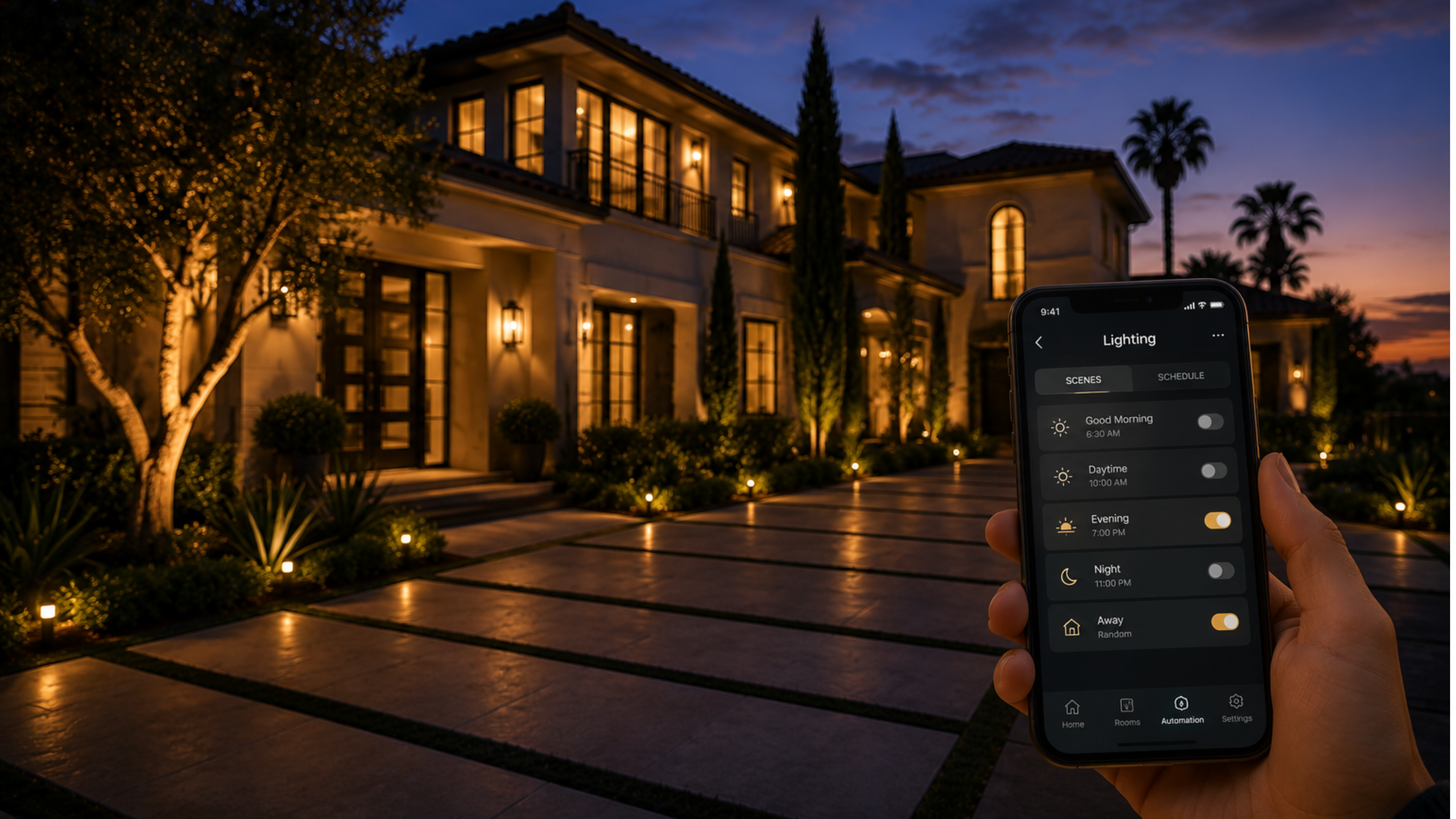
Set smart interior lighting to cycle on and off across different rooms throughout the evening. Exterior landscape lighting should also follow automated schedules to illuminate entry paths, architectural features, and darker corners of the property. Smart platforms allow you to adjust these schedules remotely if your travel itinerary changes.

For luxury residences with multi-layered lighting design, configure specific lighting scenes that reflect your daily routines rather than keeping every room continuously lit.

Oversee Mail, Packages, and Deliveries

Accumulated mail or packages left at gates or entryways instantly signal an empty house. Pausing regular mail delivery or coordinating with a dedicated property manager to clear packages daily is a critical step in your travel preparation.

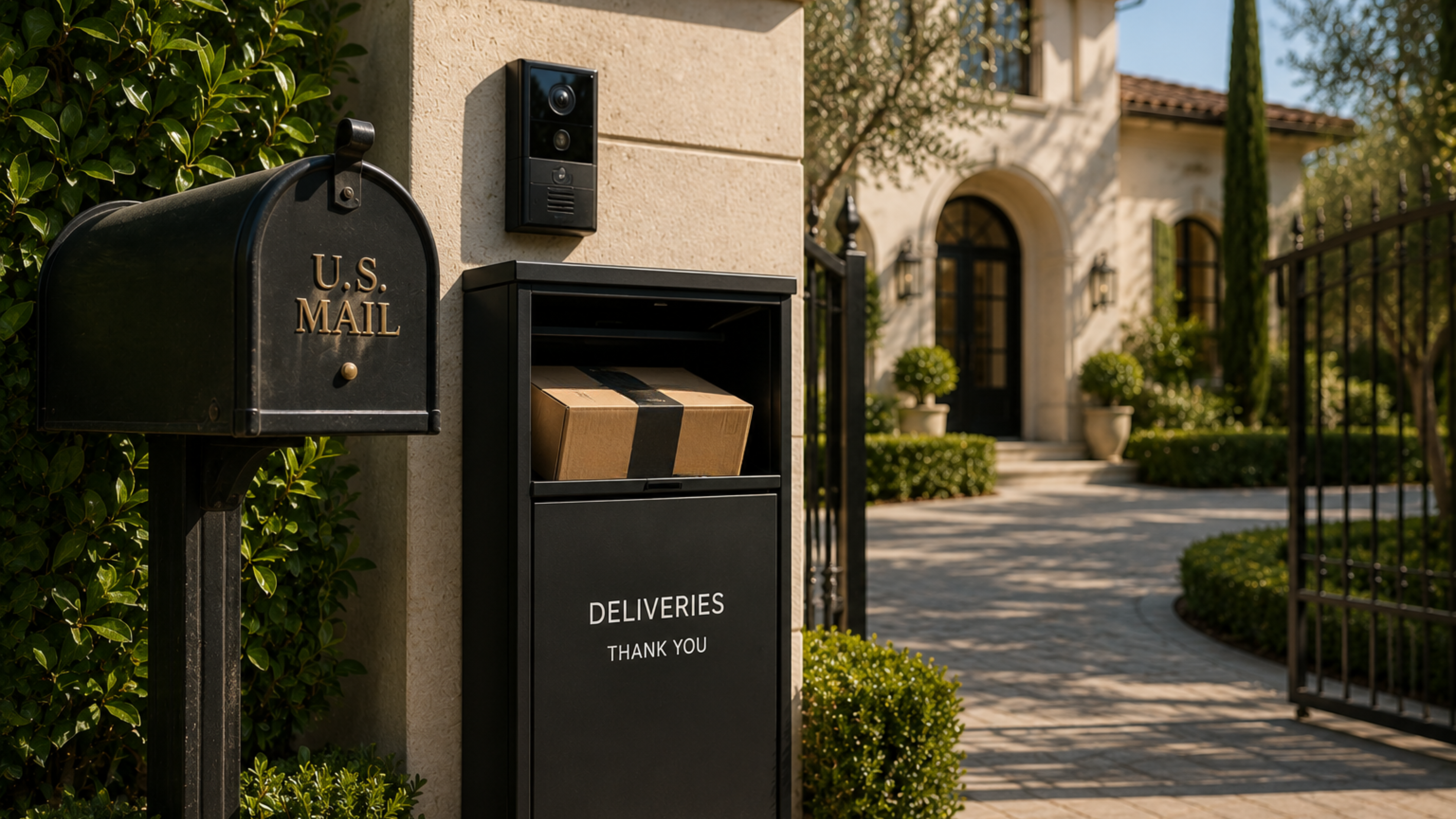
If your estate receives frequent parcel shipments, utilize secure package drop boxes or provide specific delivery instructions to keep items out of public view. For high-value deliveries, reschedule shipments to arrive after your return.

This simple operational detail keeps your property looking meticulously maintained and minimizes the risk of theft.

Keep Estate Landscaping on Schedule

Exterior presentation matters just as much as interior security. Overgrown lawns, fallen debris, or dry plantings suggest that a residence is vacant.

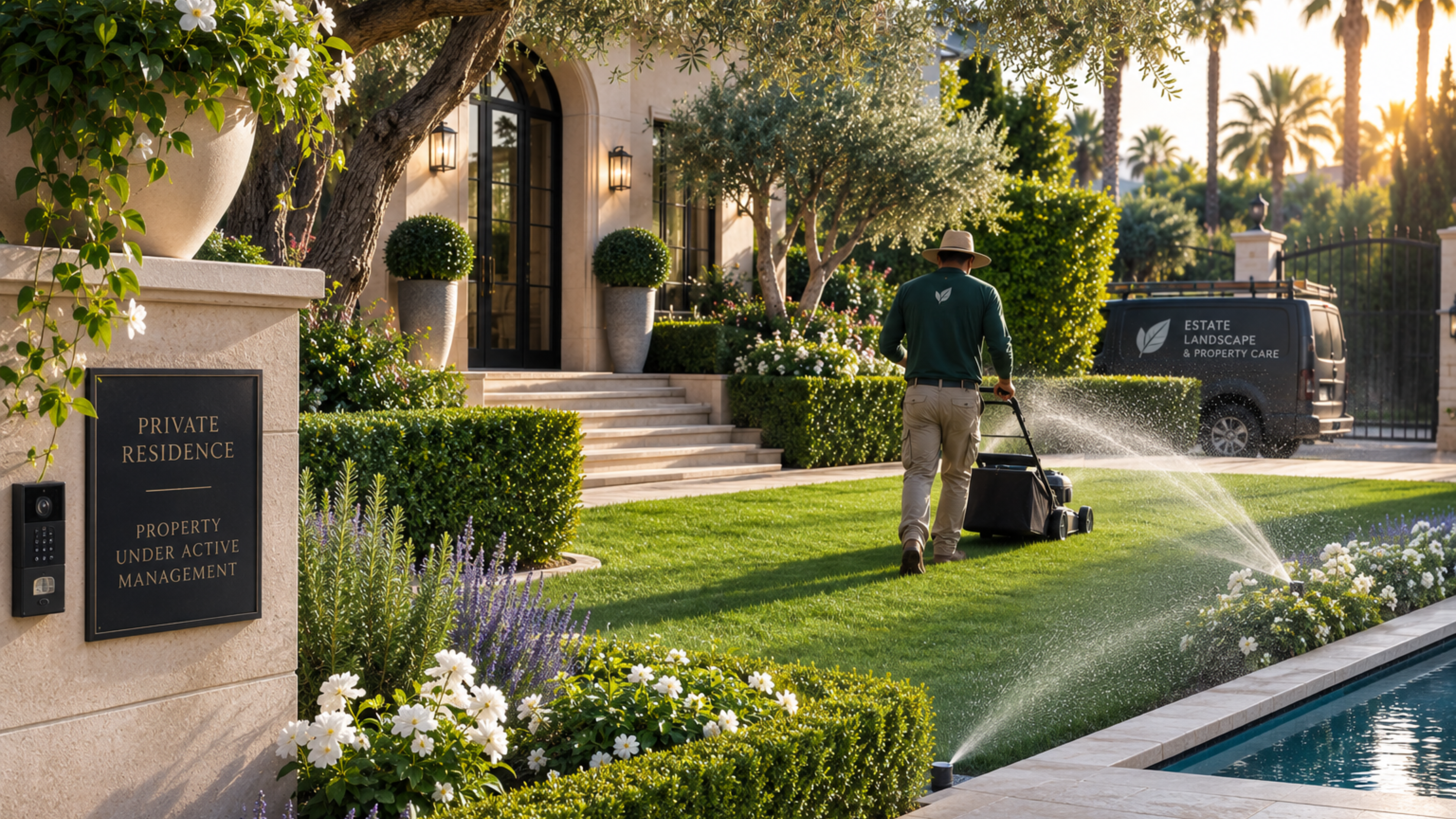
Maintain routine landscaping, pool service, and irrigation schedules throughout your trip. Late-summer heat can be demanding on manicured gardens, so inspect smart irrigation controls before departure. If you maintain potted plants near entrances or outdoor living areas, ensure your estate staff or house sitter attends to them regularly.

A well-tended exterior confirms that the property is actively managed and monitored.

Install Smart Water Leak Sensors

Property security extends beyond intrusion prevention. Water damage is one of the most costly issues a homeowner can return to after an extended absence.

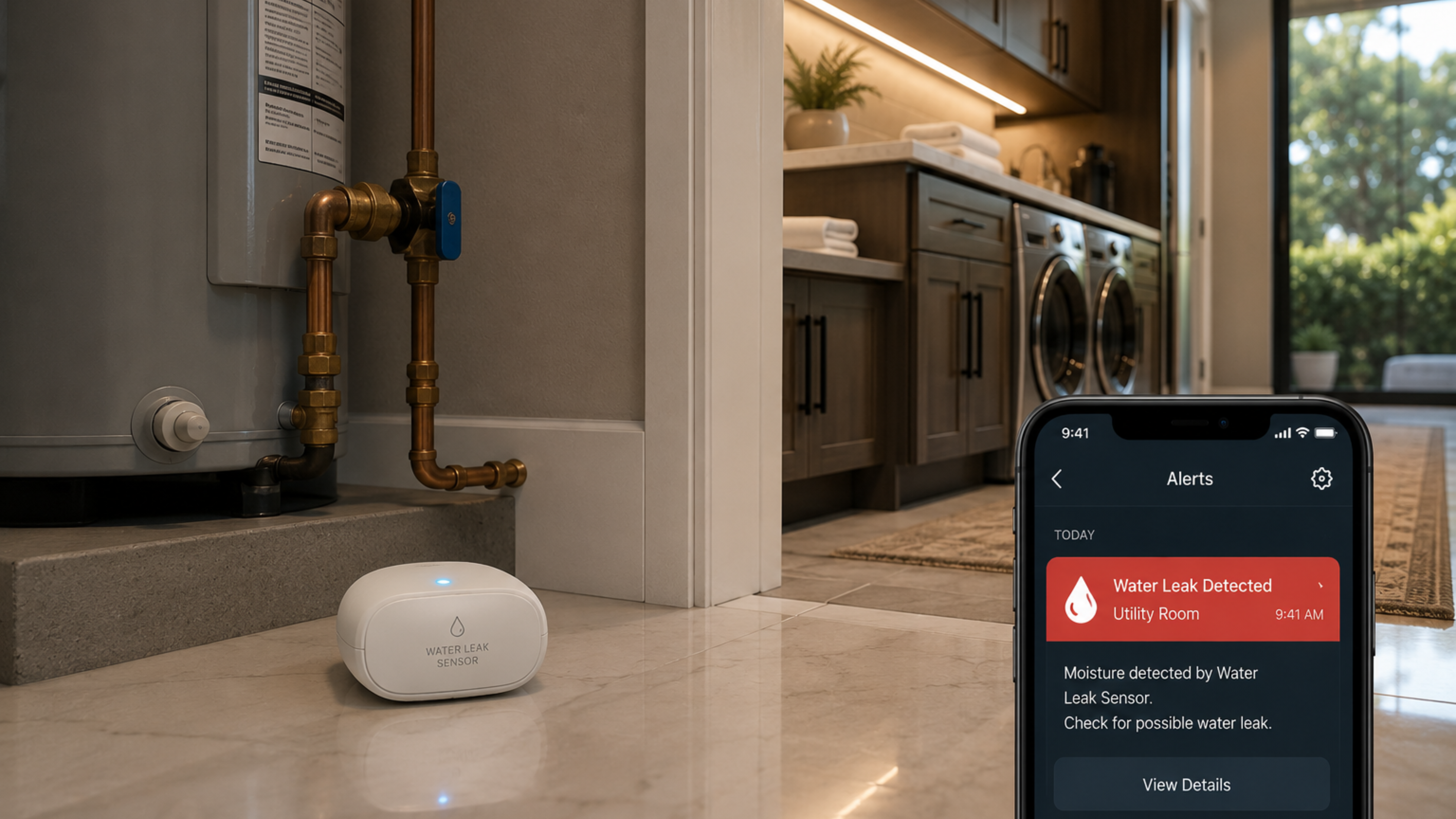
Positioning smart water leak sensors near appliances, water heaters, laundries, and secondary bath areas provides invaluable protection. These sensors send instant mobile alerts if moisture or plumbing anomalies are detected, allowing you to notify your property manager immediately before minor leaks escalate into significant damage.

Travel with Complete Confidence

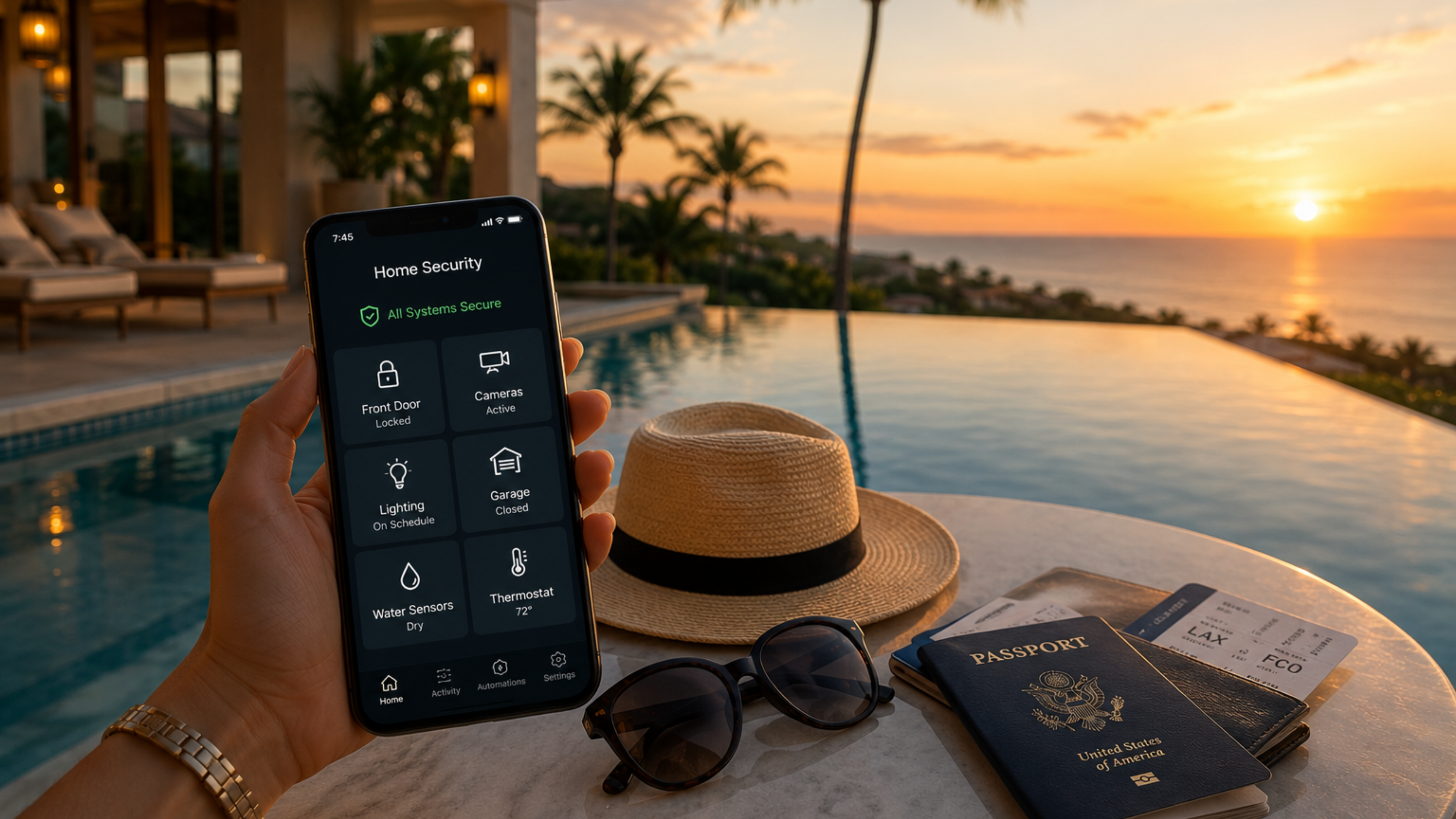
Applying these strategic home security tips while on vacation ensures your property remains protected through proactive, sophisticated planning. By auditing access controls, activating remote surveillance, scheduling automated lighting, coordinating deliveries, keeping landscaping pristine, and monitoring for water leaks, you can enjoy your travels with total tranquility.

A luxury home is a significant investment. With the right security measures in place, your estate will remain secure, polished, and perfectly prepared for your return.

Weekend Events | July 17 – July 19

Say, hello to the weekend! From Hollywood bike rides to World Cup Watch parties and more, we have you covered on summer fun! Check out what’s happening in your neck of the woods July 17 through July 19. 

Los Angeles Weekend Events | July 17 – July 19 

CicLAvia—Meet the Hollywoods

When: Until July 19

Where: Various Locations – Los Angeles

What: Explore Los Angeles on two wheels during CicLAvia, the city’s beloved open-streets festival that transforms major roads into a car-free playground for cyclists, skaters, runners, walkers, and families. This edition features a scenic 6.6-mile route connecting East Hollywood and West Hollywood, with local restaurants and businesses offering specials along the way. Whether you’re biking, skating, or simply taking a leisurely stroll, it’s a fun and active way to experience L.A. from a whole new perspective.

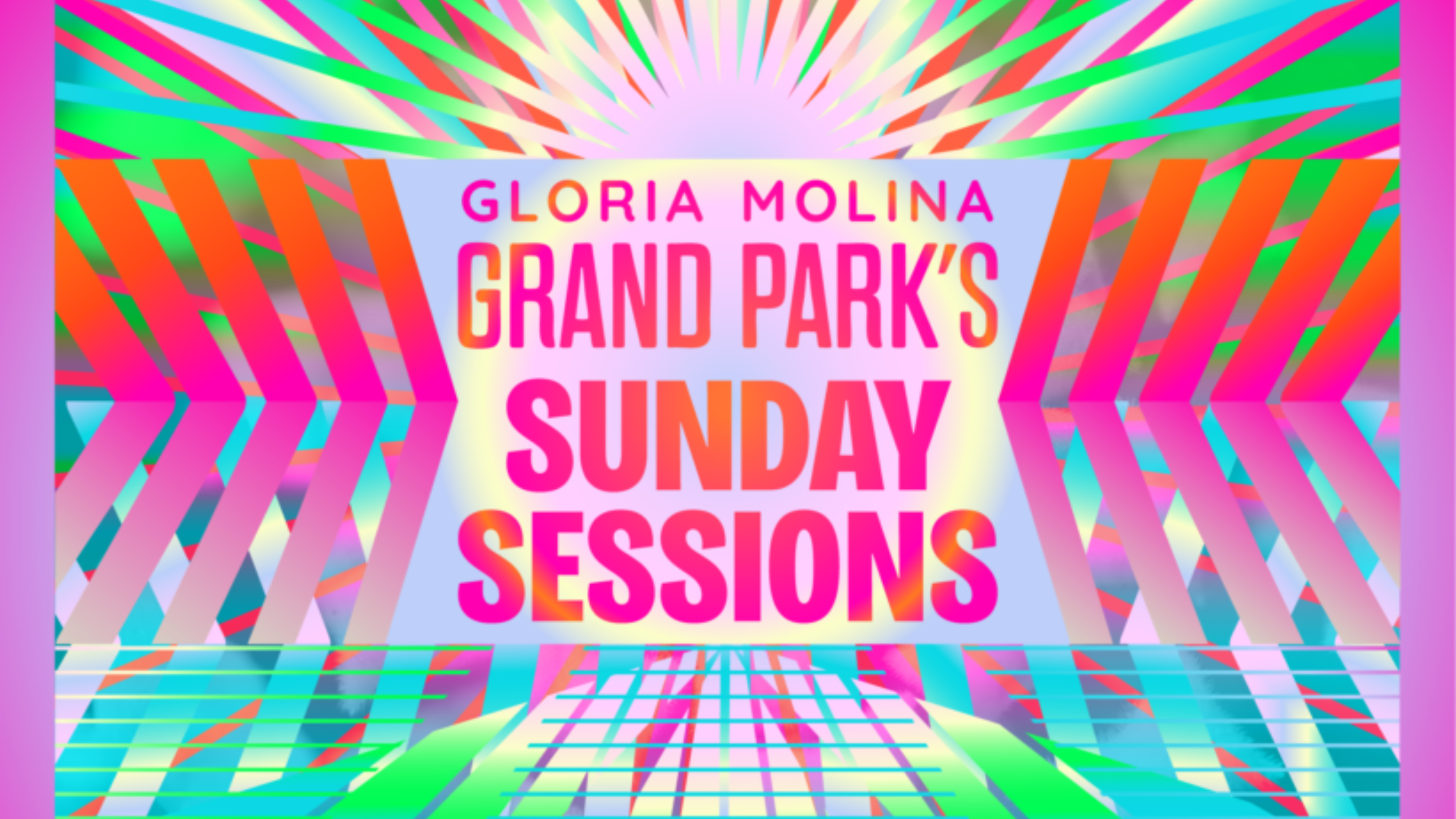
Gloria Molina Grand Park’s Sunday Sessions

When: Until August 16 

Where: Downtown LA

What: Close out the weekend at Gloria Molina Grand Park during this free summer dance party celebrating the rich history and evolution of house music. Held on select Sundays, the event features live DJ sets, food trucks, a local makers market, arts and crafts activities, and a beer garden, creating the perfect atmosphere for an afternoon of music and community. Bring a blanket and picnic or simply relax on the lawn while enjoying one of Downtown L.A.’s signature summer traditions.

Fútbol for the People: Live Final Game Screening

When: July 19 

Where: Griffith Park

What: Catch the excitement of the FIFA World Cup 2026 final at the Autry Museum of the American West during the return of Fútbol for the People. Co-presented by Councilmember Nithya Raman and the Los Angeles Parks Foundation, this free community watch party features a giant outdoor screening, food trucks, local vendors, photo opportunities, and a lively, family-friendly atmosphere. Bring a blanket, gather with fellow fans, and experience the World Cup finale surrounded by one of Los Angeles’ most spirited soccer crowds.


Westside and Beach Communities Weekend Events | July 17 – July 19 

COAST Open Streets Festival

When: July 19 

Where: Santa Monica

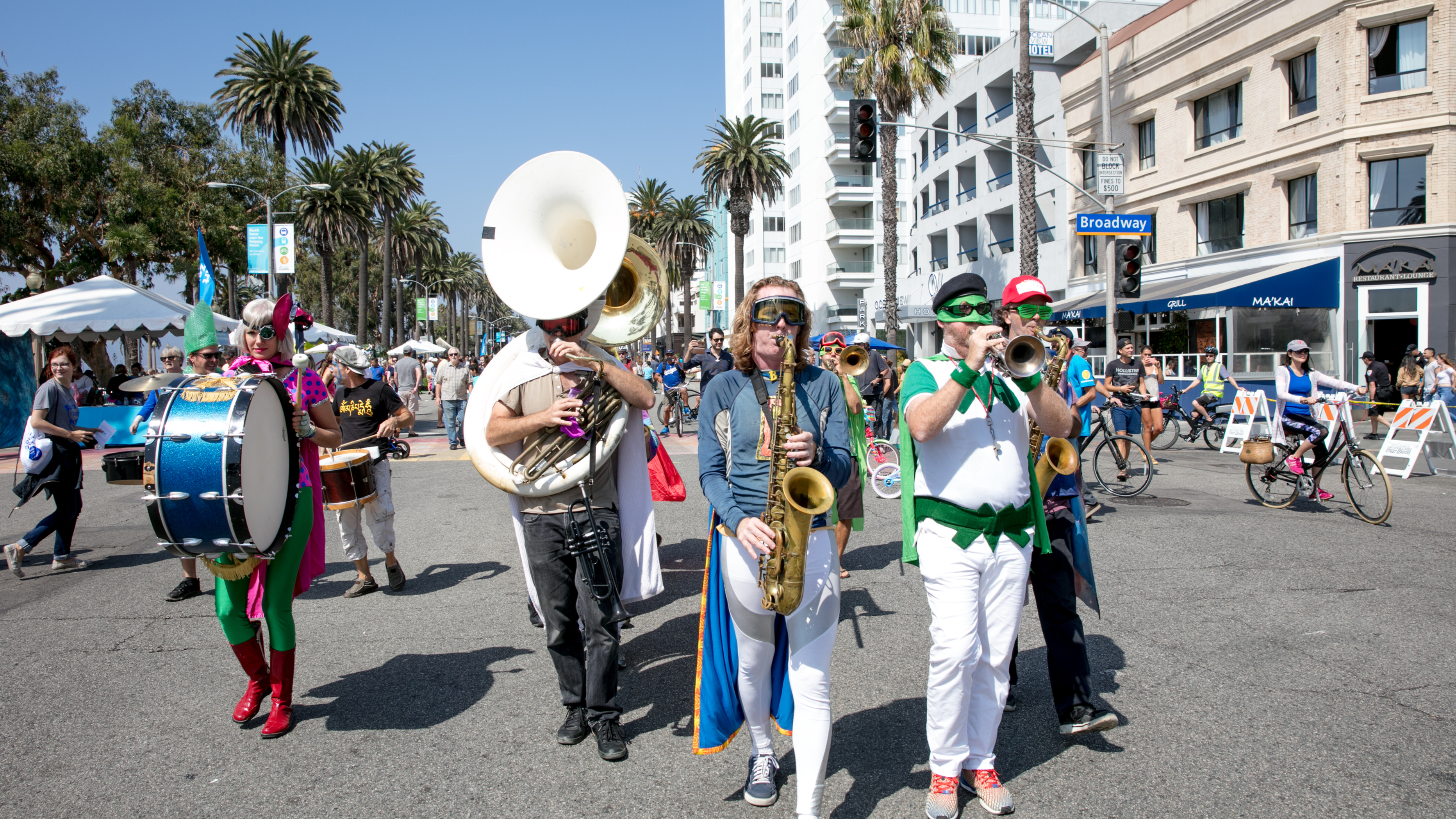
What: Explore Santa Monica without the traffic during COAST Open Streets, a free community festival that transforms the city’s streets into a pedestrian-friendly celebration. Stretching from the Third Street Promenade to the Santa Monica Pier, the event features live music, public art, performances, family-friendly activities, food trucks, beer gardens, and plenty of space to bike, walk, skate, or roll through the city. This year’s event also coincides with the final match of the FIFA World Cup 2026, adding to the festive atmosphere along the coast.

Off the 405

When: Until August 22 

Where: Westside

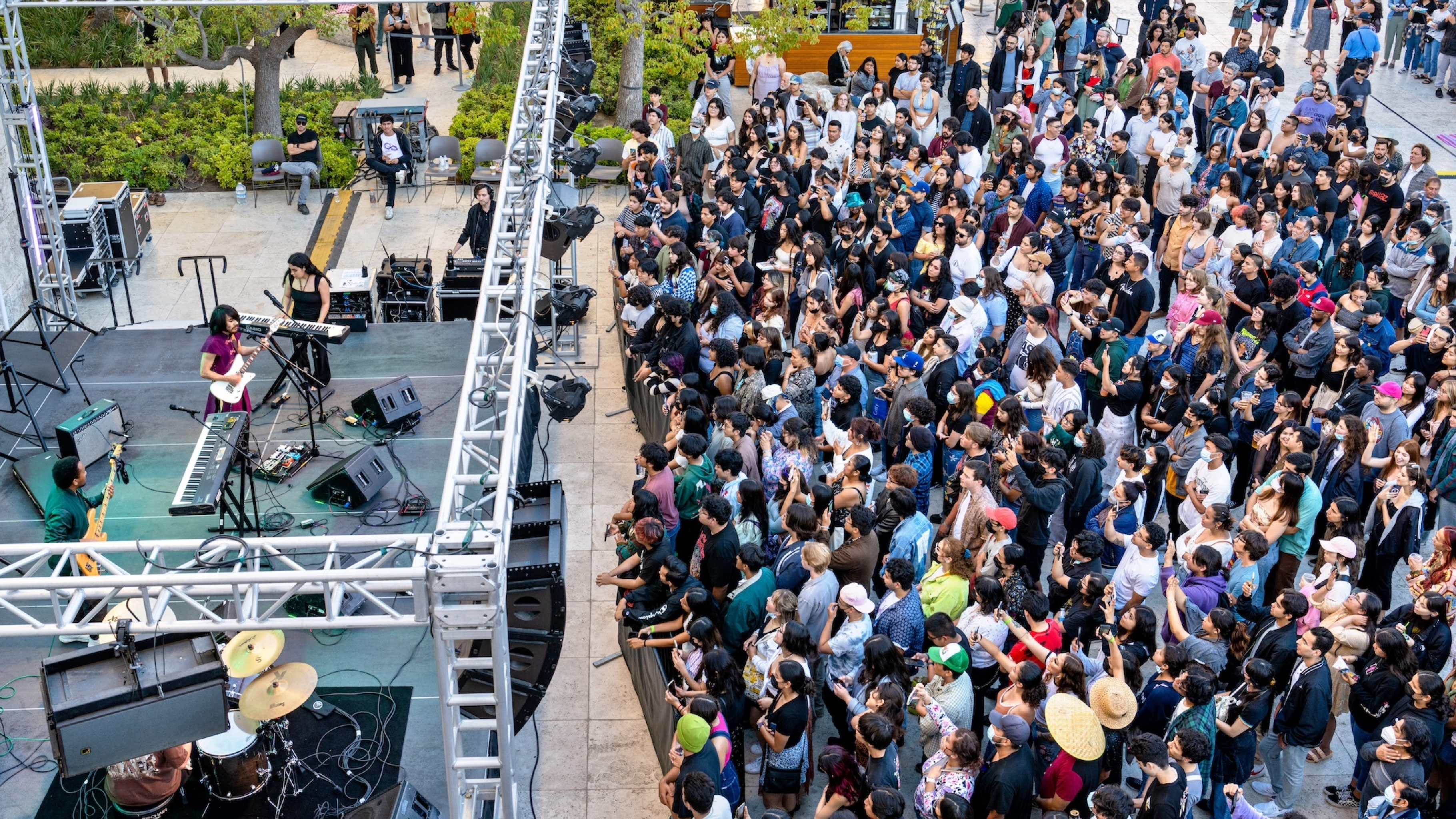
What: Spend a summer evening at the Getty Center during its popular Saturday Off the 405 concert series. Set against sweeping hilltop views, the free outdoor performances continue this season with sets from LEENALCHI, Horse Lords, and Laurel Halo. Arrive early to explore the Getty’s galleries, enjoy dinner with a view, and settle in for an unforgettable night of live music under the summer sky.

OC Fair

When: July 17 – August 16 

Where: Costa Mesa

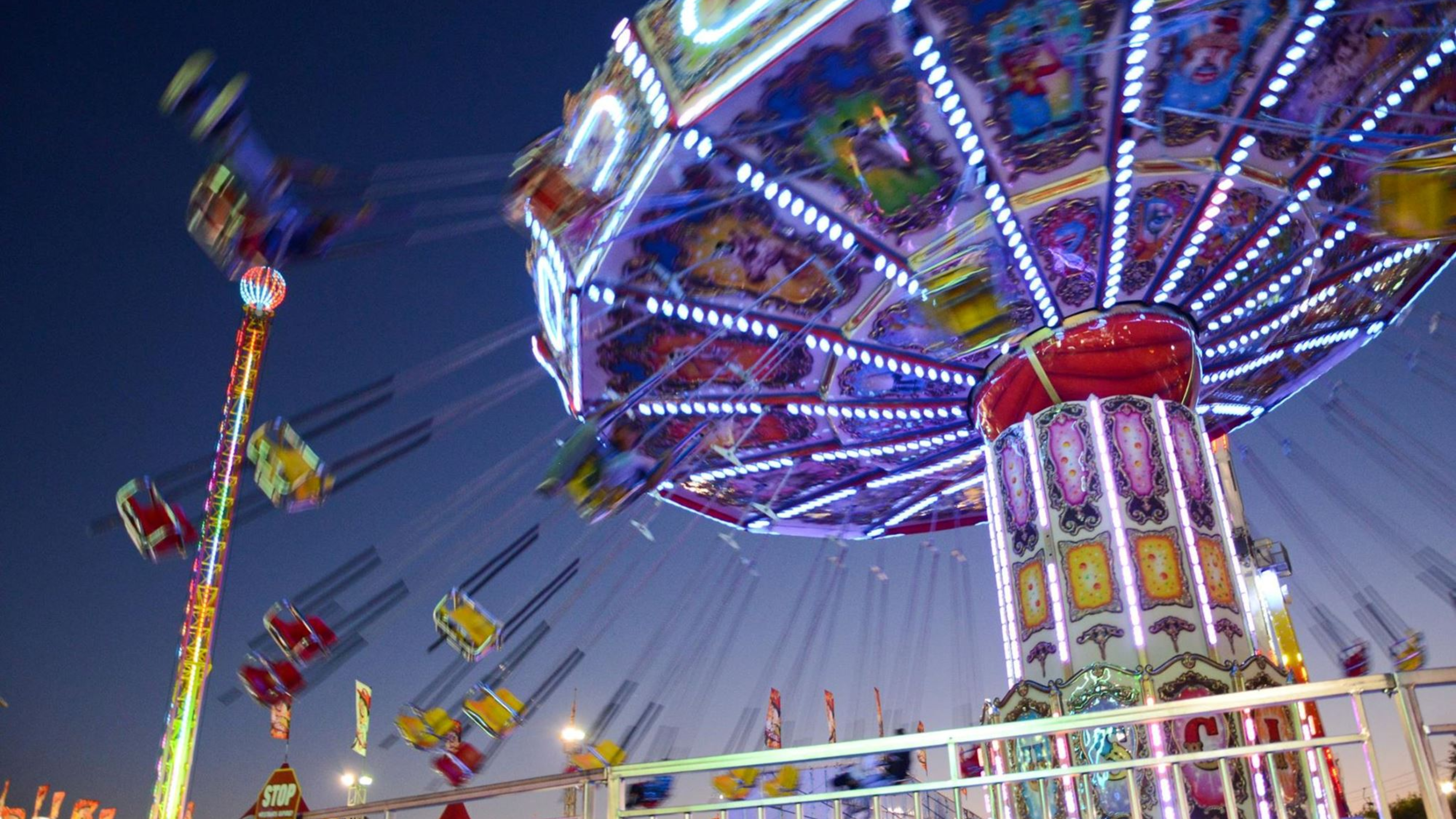
What: A Southern California tradition since 1889, the OC Fair returns with a month of carnival rides, fried food, rodeos, demolition derbies, and classic summertime fun. Beyond the midway, the fair features an impressive concert lineup with performances from Willie Nelson, Cypress Hill, Patti LaBelle, Diana Ross, Alison Krauss, Steve Aoki, Boy George, and more, plus a comedy set from Trevor Noah. It’s part county fair, part music festival, and one of the region’s biggest summer events.


San Fernando Valley Weekend Events | July 17 – July 19 

Brand Summer Concert Series

When: July 17 – August 28 

Where: Glendale

What: Pack a picnic and head to Brand Park for Glendale’s annual free summer concert series. Held on Friday evenings through the end of August, the outdoor performances feature an eclectic mix of genres, from retro jazz and soul to pop, Armenian folk, Congolese rumba, Cuban rhythms, and rock. Bring a blanket or lawn chair, settle onto the grassy hillside behind the library, and enjoy a relaxing evening of live music in one of Glendale’s most picturesque parks.

Bouquet Workshop

When: July 18 

Where: 9301 Tampa Avenue #Suite 1401, Northridge

What: Celebrate the grand reopening of the Ashley Store with a day of shopping, giveaways, and family-friendly fun. Guests can create a complimentary flower bouquet during a hands-on workshop hosted by Beyond Love Creations, enjoy music and refreshments, and take advantage of one-day-only furniture discounts. Early arrivals can score exciting prizes, including free Apple AirPods for the first guests in line, while hourly giveaways feature everything from home décor to an electric bike. It’s a festive way to explore the newly refreshed showroom and enjoy a fun community event.

Disney 00’s Skate Night

When: July 18 

Where: 5110 San Fernando Road | Glendale

What: Relive the magic of the 2000s during this Disney Channel-themed skate night at Moonlight Rollerway. Skate to nostalgic hits from favorites like High School Musical, Hannah Montana, Camp Rock, and The Cheetah Girls while dressed as your favorite Disney star or character. Open to all ages, this themed evening promises plenty of sing-alongs, throwback fun, and family-friendly skating, with skate rentals available on-site.


Conejo Valley Weekend Events | July 17 – July 19 

Camarillo Old Town Heritage Days Fiesta

When: July 15 – July 19 

Where: Old Town, Camarillo

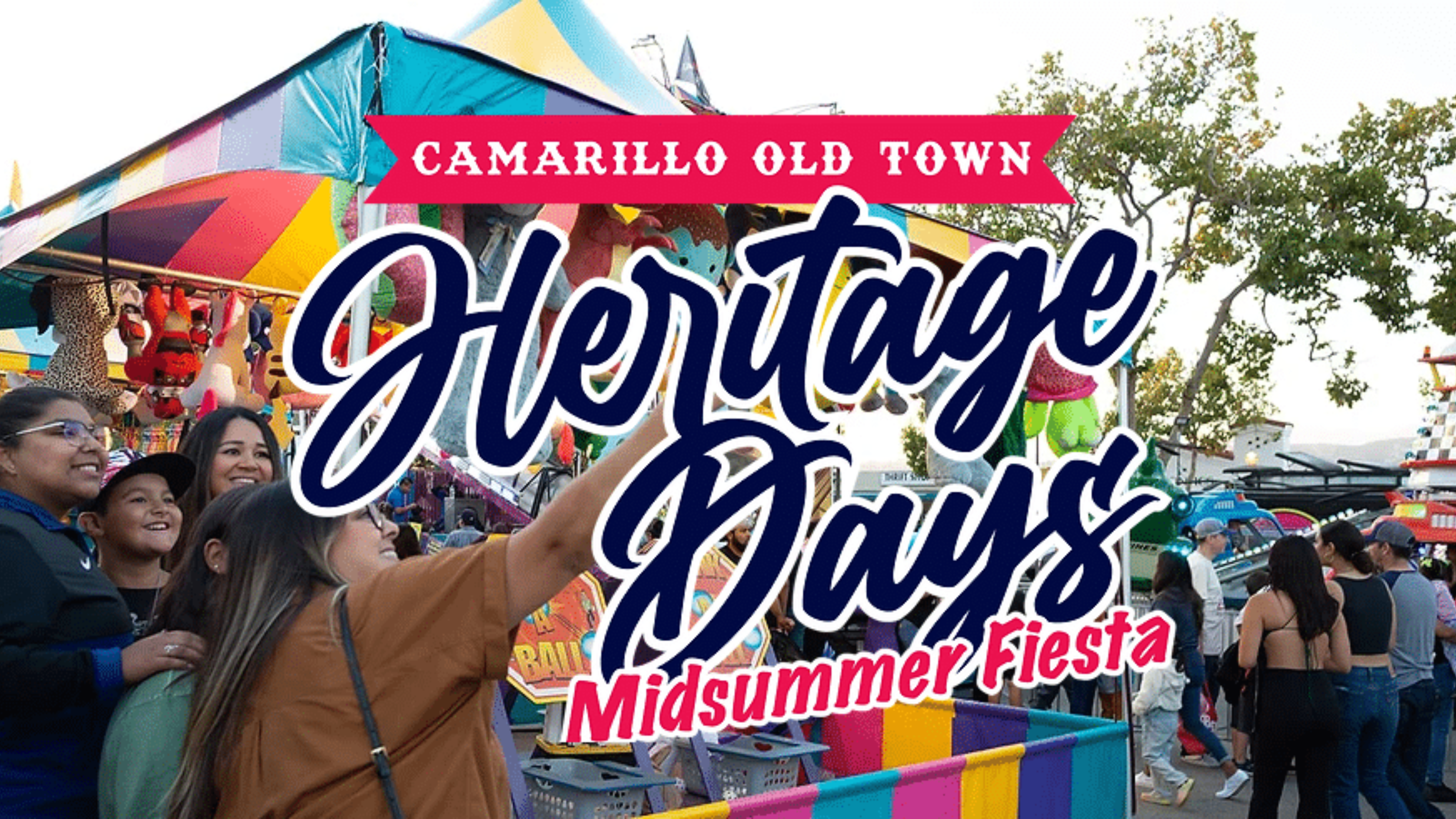
What: Celebrate community and summer fun at the Camarillo Old Town Heritage Days Fiesta, a five-day festival filled with entertainment for all ages. Held in the heart of Old Town Camarillo, the free event features carnival rides, food trucks, live music, local artisan vendors, live art demonstrations, a beer and wine garden, and a classic car show on Saturday. With festivities running from July 15–19, it’s one of Ventura County’s signature summer celebrations.

Music Under the Stars at the Olivas Adobe Ventura

When: Until August 29

Where: 4200 Olivas Park Drive, Ventura

What: Spend a summer evening at the historic Olivas Adobe during Ventura’s beloved Music Under the Stars concert series. Held on Saturday nights, the outdoor event combines live music, dancing, gourmet food trucks, and a picturesque setting with a spacious wooden dance floor under the stars. This season’s lineup features tribute performances celebrating the music of the ‘80s, Eagles, Creedence Clearwater Revival, Carlos Santana, Steely Dan, Traveling Wilburys, and Motown classics, making it one of Ventura’s signature summer traditions.

Moorpark College Theatre Arts Presents “The Importance of Being Earnest”

When: July 16, 17, 18, 23, 24, 25 at 8:00 pm, July 19 & 26

Where: 7075 Campus Rd, Moorpark

What: Enjoy an evening of classic comedy as the Moorpark College Theatre Arts presents The Importance of Being Earnest. Oscar Wilde’s beloved farce follows two gentlemen whose invented identities lead to a whirlwind of mistaken identities, witty romance, and clever satire. Performed at the Moorpark College Performing Arts Center, this timeless comedy delivers sharp humor, memorable characters, and plenty of laughs for audiences of all ages.

Trending Exterior Paint Colors Defining SoCal Homes | Home Tips

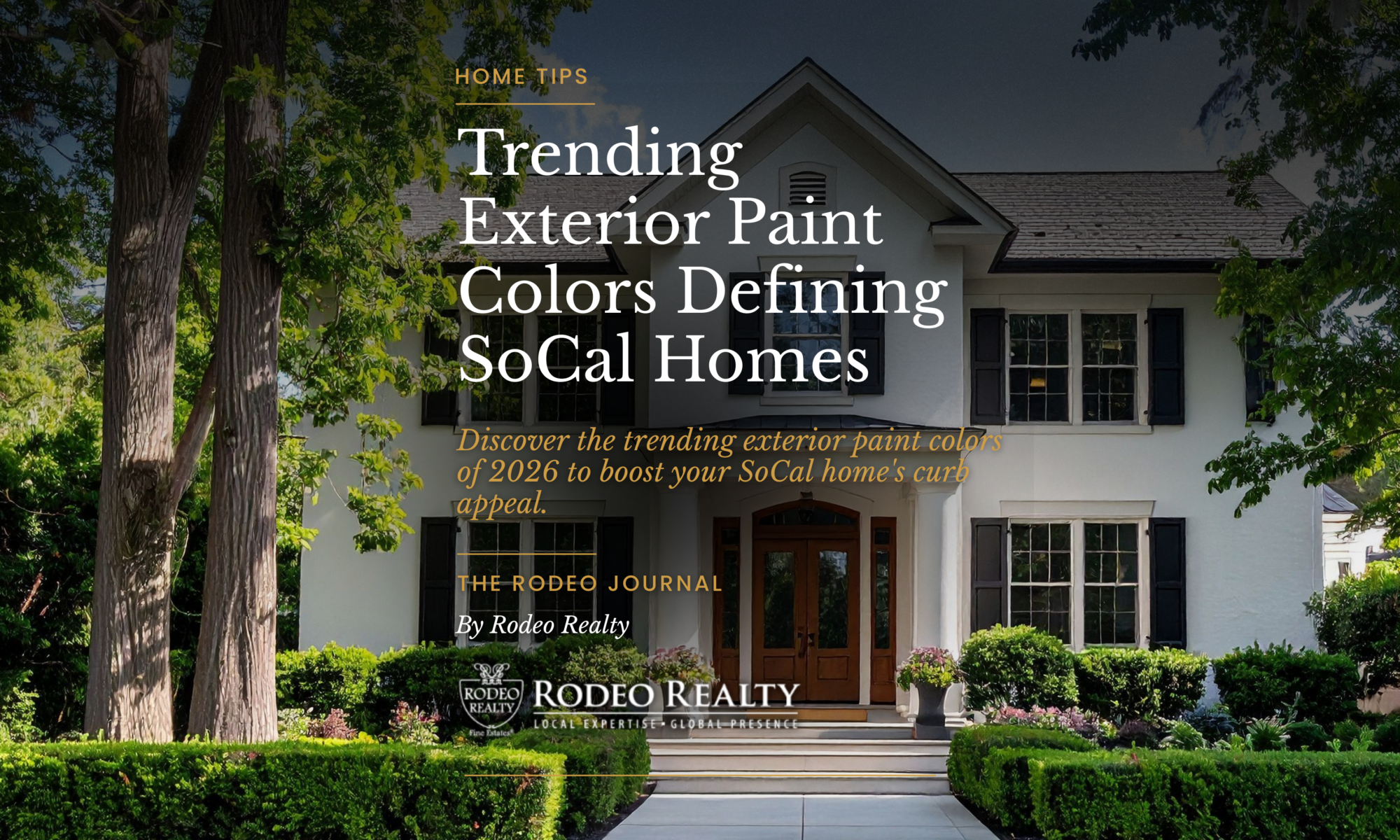
When it comes to selling a home in Southern California, first impressions are everything. The bright, relentless SoCal sun acts as a natural spotlight on your property’s exterior, meaning your choice of paint can either elevate your home’s equity or leave it looking dated.

According to a new 2026 Curb Appeal Report published by Thumbtack and shared by Martha Stewart Living, there is a massive nationwide shift in how homeowners approach their outdoor spaces.

Stark, cold minimalism is officially out. Instead, property owners are using warmer, more expressive palettes to inject personality and create a welcoming atmosphere.

For local buyers and sellers, alignment with these trending exterior paint colors is one of the easiest, most cost-effective ways to maximize a property’s market value. Here is how to apply the latest national color insights to the unique architectural landscape of Southern California.

Say Goodbye to Cold Grays and Stark White

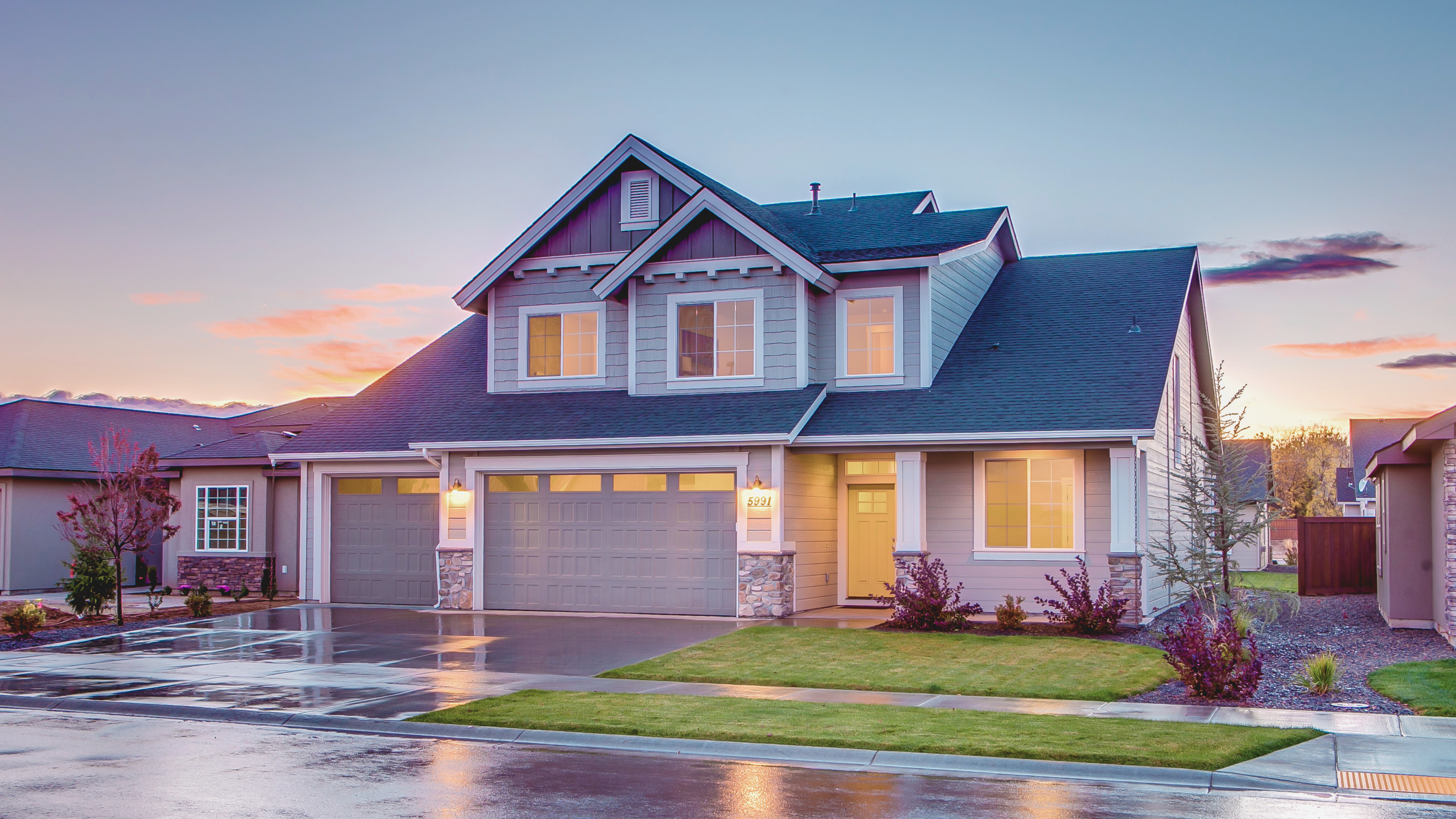
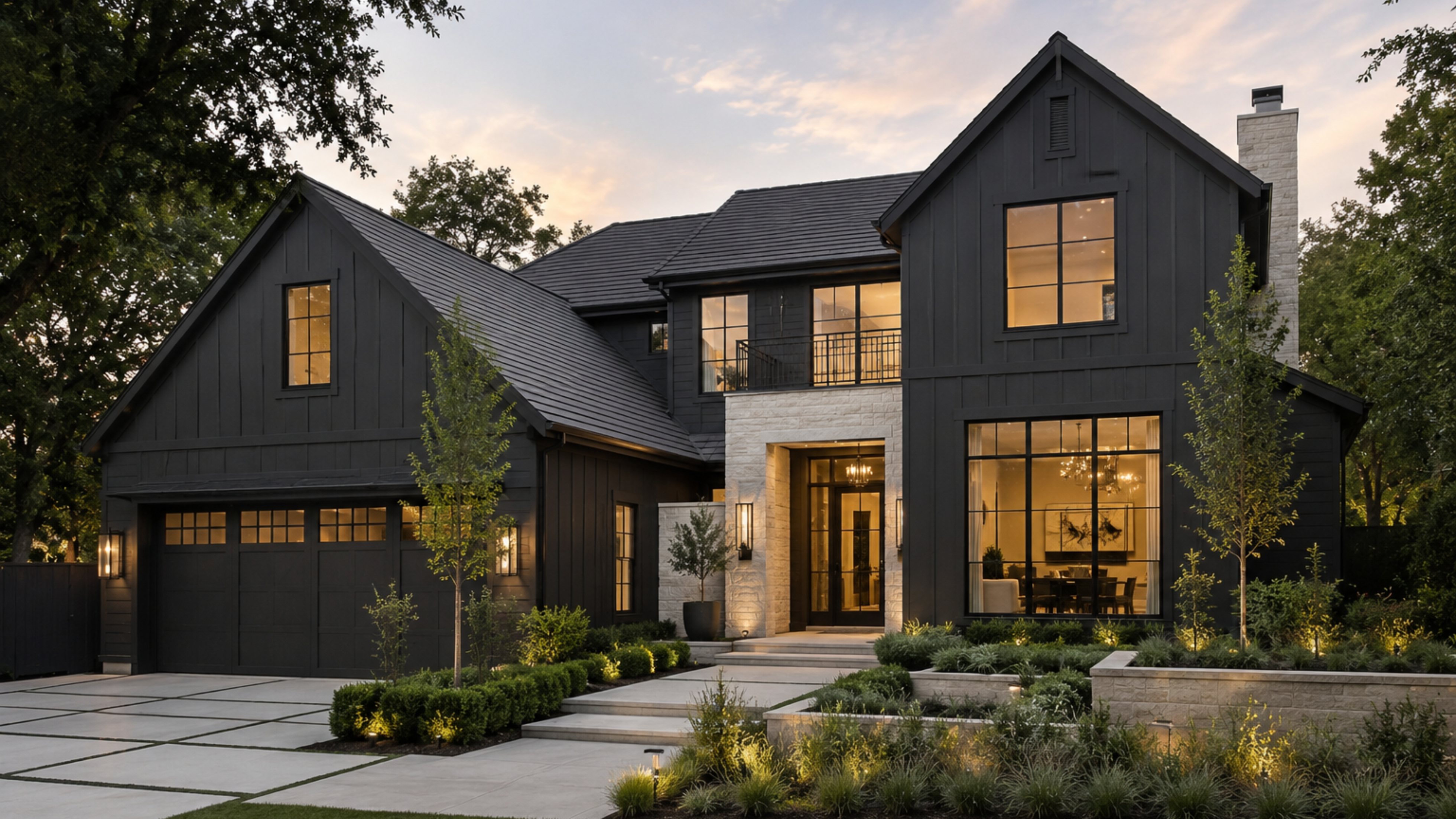
For the last several years, Southern California neighborhoods have been dominated by the modern farmhouse look: bright, blinding white stucco paired with jet-black trim. However, design experts note that homeowners are rapidly moving away from these high-contrast, stark combinations.

Instead, the trending exterior paint colors for home bodies are warm, creamy neutrals. Shades like Sherwin-Williams’ Greek Villa (a soft off-white with creamy undertones) and Natural Linen (a warm beige) are taking over. In Southern California, these tones are a dream for Spanish Colonial, Mediterranean, and Mid-Century Modern homes. Warm off-whites absorb the intense local sunlight beautifully without causing the harsh glare that stark whites produce, giving your property an instantly luxurious, inviting feel.

Embrace Earthy, Restorative Accents

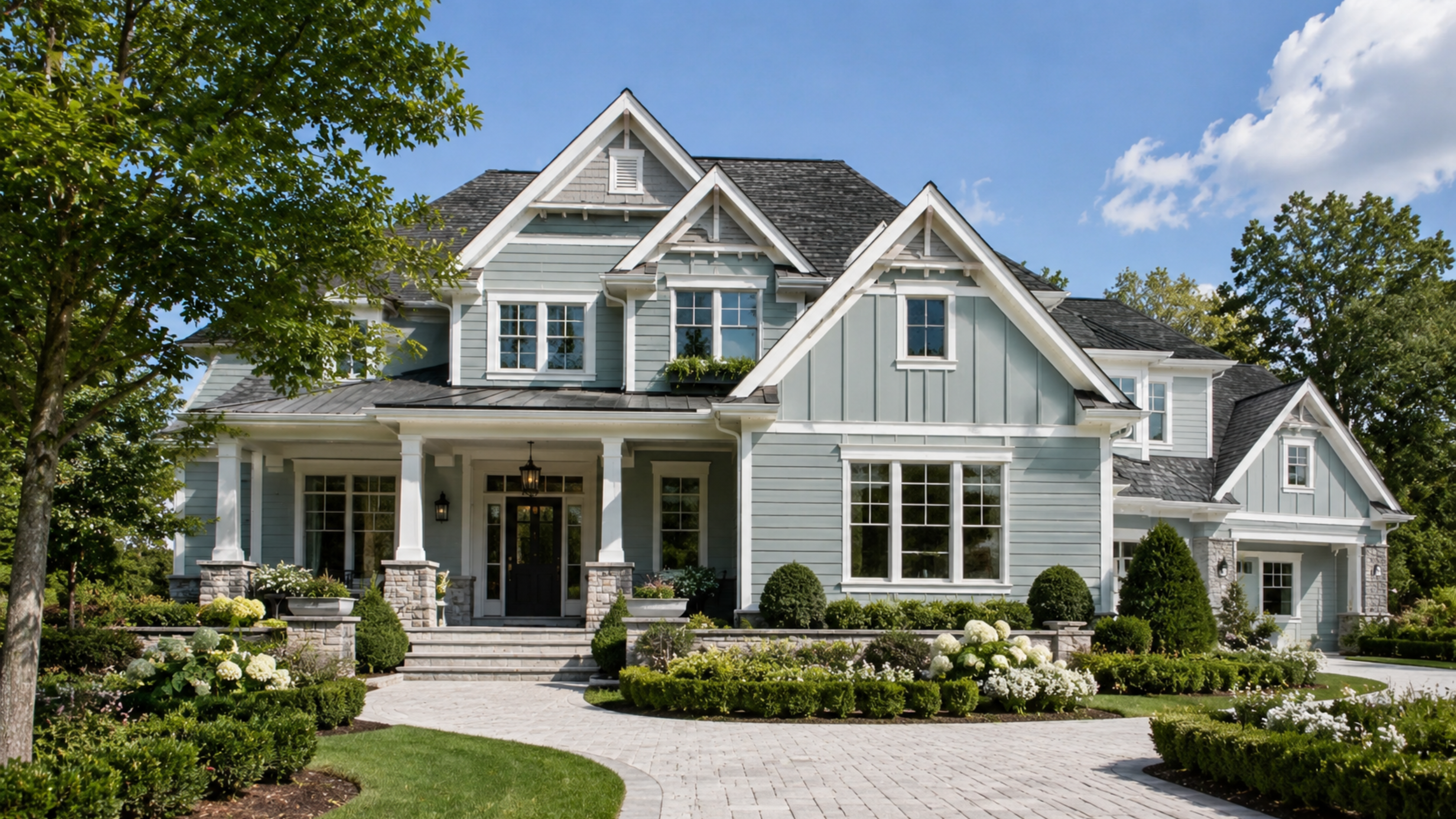
Buyers in today’s real estate market are looking for homes that feel like personal sanctuaries. The report reveals that nearly a third of homeowners are using color to establish a specific restorative mood.

To achieve this vibe, look to earthy, nature-inspired tones for your trim, front doors, and shutter accents. Muted green-grays like Retreat and tranquil blue-greens like Rainwashed are highly favored choices. These shades coordinate flawlessly with SoCal’s native landscaping—clashing less with drought-tolerant succulents, olive trees, and sage, and blending seamlessly into coastal or hillside environments.

Bring on the Drama with Sophisticated Contrast

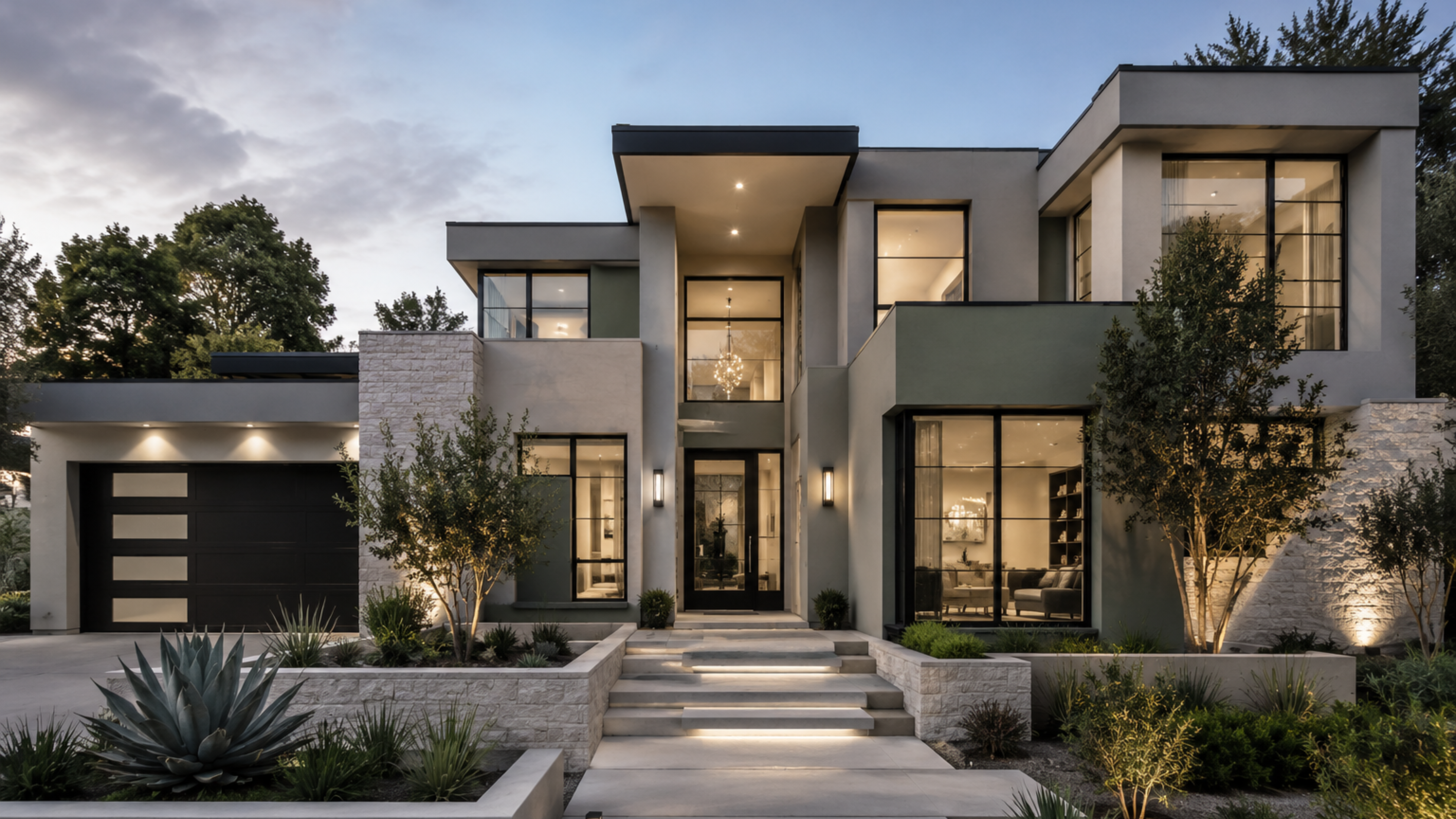
If you want your home to stand out in a competitive market, don’t be afraid of rich, moody accents. The 2026 data highlights a strong preference for sophisticated, deep colors on focal points like front doors or architectural alcoves.

Deep charcoal blacks like Iron Ore and rich navy blues like Naval offer a grounding effect without feeling as harsh as standard black. For a truly unique touch, consider mid-tone clay neutrals like Redend Point. Additionally, deep reds like Sommelier pay a beautiful homage to classic California terracotta. Likewise, both catch the eye of design-conscious buyers.

The Bottom Line for Sellers and Buyers

For potential sellers, updating your property with trending exterior paint colors is a strategic investment that directly translates to shorter days on the market and higher offers. For buyers, looking out for these warm, intentional color choices can lead you to homes designed with modern longevity in mind.


Los Angeles John Lautner Homes: The Ultimate Design Trophy

As the sun dips below the horizon of the Santa Monica Mountains, casting a golden hue over the ridges of Southern California, few sights arrest the eye quite like the historic inventory of Los Angeles John Lautner homes. Glass walls appear to dissolve entirely into the surrounding flora. Dramatic, sweeping rooflines of raw concrete hover with impossible lightness above the rugged terrain. Indoor living spaces project boldly out toward panoramic city vistas, erasing the traditional boundary between domestic shelter and the natural world. Decades after their mid-century completion, these structures do not merely look historic; they still feel distinctly futuristic.

That is the singular, enduring magic of John Lautner’s vision.

In a metropolis defined by rapid reinvention and fleeting architectural trends, Lautner’s residential creations have achieved an extraordinary milestone: they have remained utterly relevant through generations of shifting aesthetic tastes. While countless residential fads have risen and fallen, the global demand for Los Angeles John Lautner homes continues to intensify. Today, these homes are sought after by a highly competitive inner circle of fine art collectors, design purists, and ultra-high-net-worth buyers who recognize that a home can double as a timeless monument of cultural heritage.

Breaking the Box: The Evolution of Organic Modernism

To fully appreciate why these properties command such unmatched reverence in the modern luxury landscape, one must look at the radical philosophy of the man who drafted them. John Lautner arrived in Southern California after a formative, multi-year apprenticeship under Frank Lloyd Wright at Taliesin. While Wright’s core doctrine of organic architecture profoundly shaped the young architect’s worldview, Lautner rejected the temptation to simply mimic his mentor’s signature Prairie or Usonian styles. Instead, he forged an aggressive, space-age design language that was entirely his own.

Los Angeles John Lautner Homes

Rather than flattening a hillside to accommodate a standard residential footprint, Lautner insisted that architecture should adapt to, and emerge from, the natural topography. He viewed a house not as a static arrangement of orthogonal walls, but as a fluid, emotional experience dictated by gravity, shadow, and light.

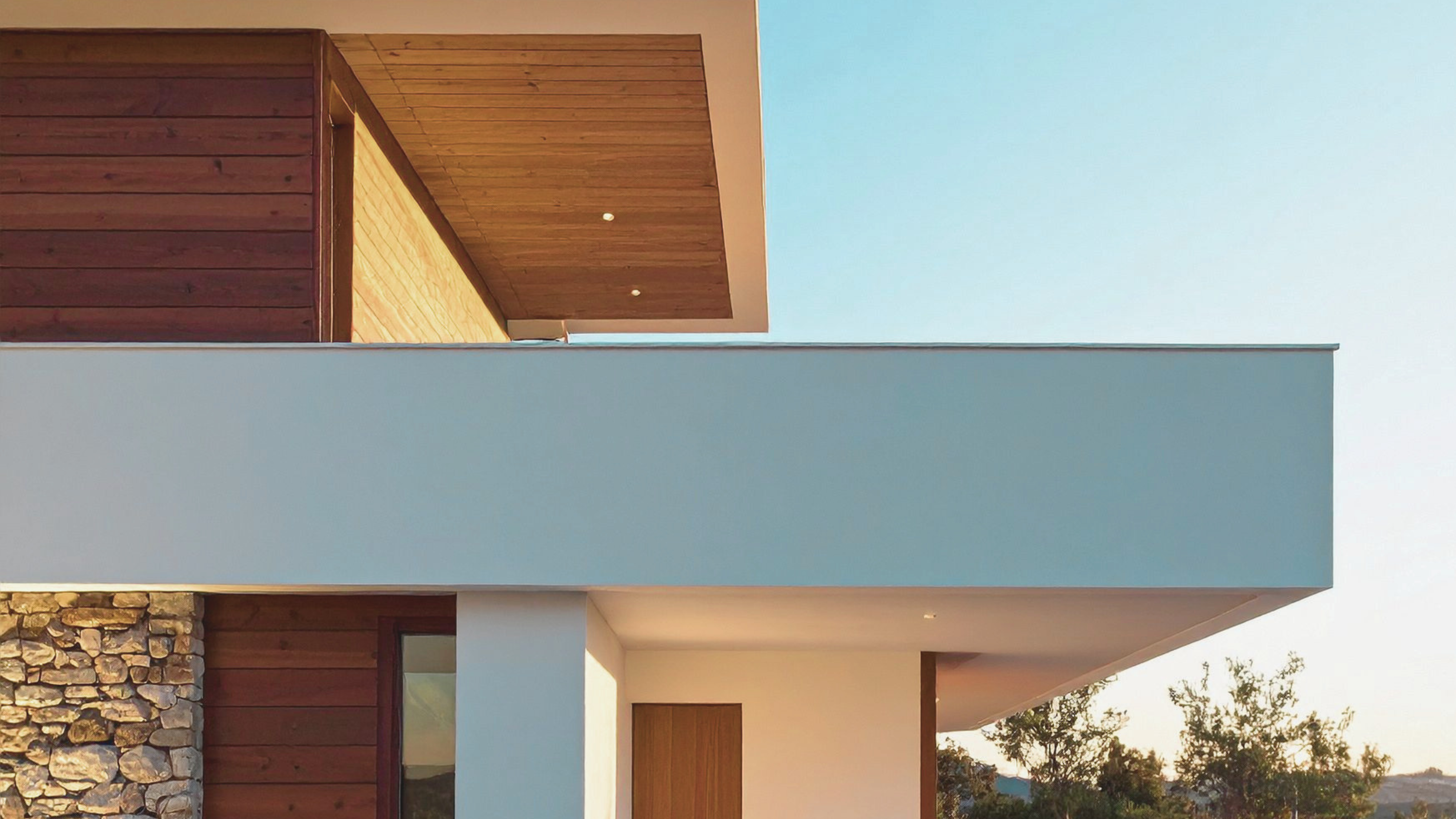
This philosophy found its ultimate canvas in the dramatic canyons, steep ridges, and expansive overlooks of the Westside and the Hollywood Hills. By utilizing advanced engineering techniques like prestressed concrete cantilevers and hyper-geometric rooflines, Lautner transformed seemingly unbuildable lots into gravity-defying residential masterworks that fundamentally re-engineered the California lifestyle.
The Finite Supply of Elite Architectural Masterpieces

In the upper echelons of the luxury housing market, absolute scarcity is the ultimate driver of long-term economic value. This reality underpins the incredible market performance of Los Angeles John Lautner homes. Unlike contemporary luxury developers who frequently replicate profitable, boxy floor plans across multiple speculative estates, Lautner approached every single project as a singular, deeply personal artistic commission.

Los Angeles John Lautner homes

He famously spent weeks studying the solar paths, wind patterns, and geological strata of a site before drawing a single line. Consequently, no two Lautner homes are alike.

To acquire one is to possess an irreplaceable piece of architectural history. Because his total residential output was strictly limited by the bespoke nature of his practice, the global supply of these homes is permanently fixed. With a finite number of authentic structures in existence, opportunities to acquire a Lautner estate occur only a handful of times in a generation, igniting intense international competition whenever a listing debuts.

Topography and Geometry: Mapping LA’s Mid-Century Masterworks

While Lautner’s radical designs are scattered across Southern California, ranging from the iconic, saucer-like Chemosphere perched on its city-approved concrete pedestal in the Hollywood Hills to the hidden architectural gems tucked into the canyons of Brentwood and Silver Lake, his footprint defines the visual landscape of elite LA.

Consider the world-renowned Sheats-Goldstein Residence in the hills bordering Beverly Crest. A concrete masterpiece defined by its coffered, waffle-patterned ceilings and integrated triangular skylights, the home has spent decades evolving. Under the meticulous stewardship of James Goldstein, and more recently through refined interventions by preservation architects Conner + Perry, the property has expanded to include Club James, which is a spectacular entertainment complex buried beneath an infinity-edge tennis court.

Los Angeles John Lautner homes

Further demonstrating the eternal demand for these properties, the iconic Wolff Residence overlooking the Sunset Strip, famed for its structural homage to Frank Lloyd Wright using stone, glass, and copper, recently entered a new chapter of preservation under Clive Wilkinson Architects for filmmakers and high-profile collectors. Even Lautner’s early works, like the brilliantly restored Jules Salkin House in Echo Park, which was carefully revived by architect Barbara Bestor, showcase how these homes anchor the neighborhoods they inhabit. When evaluating the landscape of Los Angeles John Lautner homes, the premium lies in this unrepeatable geography and structural brilliance. For buyers tracking active Los Angeles John Lautner homes inventory, these estates represent the absolute pinnacle of architectural expressionism.

Physical Assets as Blue-Chip Art

In recent years, the world’s most sophisticated real estate investors have fundamentally shifted how they categorize historically significant homes. As such, many are no longer evaluating an estate purely through traditional metrics. Think cost-per-square-foot or local neighborhood comps. In fact, many are treating these homes as collectible, blue-chip assets. Likewise, finding such investments comparable to an important canvas by Mark Rothko or Jean-Michel Basquiat.

An ordinary luxury estate can be built by anyone with a sufficient budget. A Lautner home, however, requires a pedigree of artistic genius that capital alone cannot recreate.

Los Angeles John Lautner homes

This conceptual evolution has decoupled iconic mid-century modern architecture from standard residential real estate market cycles. When a prominent Lautner home hits the market, the buyer pool is not restricted to local families looking to relocate within a specific zip code. 

Instead, the property draws intense scrutiny from international art patrons, institutional collectors, and design-minded investors hailing from London, Tokyo, New York, and Geneva. This vast, cross-border demand provides these unique structures with a level of long-term financial resilience that conventional luxury properties rarely match.

The Stewardship and Precision of Historic Restoration

Owning an architectural marvel of this caliber is an exercise in cultural stewardship. Because many of Lautner’s most prominent residences were constructed between the 1940s and the 1980s, preserving their structural integrity while adapting them to modern living standards requires specialized architectural expertise, master craftsmanship, and a significant financial commitment.

Los Angeles John Lautner homes

The most celebrated restoration projects are executed with extreme restraint. Top-tier preservation architects focus on updating vital mechanical systems. Additionally, they focus on enhancing energy efficiency and integrating discreet smart-home technology. Of course, this means leaving the original material palette and spatial flow entirely untouched.

When a property boasts a meticulously documented, historically accurate restoration, its value in the marketplace escalates dramatically. Discerning collectors appreciate estates where preservation has been handled with flawless precision. This, of course, ensures the home remains pristine for decades to come.

Capital Appreciation Outside the Traditional Market Cycle

It is a well-known axiom in high-end real estate that price does not automatically equate to permanent value. Architecturally significant Los Angeles John Lautner homes are structurally insulated from this type of functional obsolescence.

Los Angeles John Lautner homes

Several clear market dynamics drive their steady, multi-decade capital appreciation:

  • Zero Inventory Growth: The pool of authentic Lautner residences can never expand, ensuring that demand consistently outpaces supply.
  • Institutional Valuation: Ongoing exhibitions, academic scholarship, and museum-grade documentation continuously elevate Lautner’s status in the global art canon.
  • High Barrier to Entry: The sheer complexity of recreating his signature thin-shell concrete curves and cantilevered spans makes modern duplication cost-prohibitive.
  • Media and Cultural Provenance: These homes are frequently featured in fine-art publications, high-fashion editorials, and cinema, cementing their status as immortal icons of popular culture.

The Lasting Imprint on Contemporary Luxury Design

The sweeping influence of Lautner’s design principles can be seen across the entire landscape of modern luxury architecture. Even when contemporary buyers tour a newly built estate on the Westside without knowing the architect’s name, they are frequently admiring design elements that Lautner pioneered over half a century ago.

Los Angeles John Lautner homes

The floor-to-ceiling glass walls slide open at the touch of a button.  Seamless transition from indoor lounge spaces to outdoor infinity pools. The use of board-formed concrete as an elegant interior finish. Dramatic cantilevered room volumes that hover over steep hillsides. All of these features trace their lineage directly back to his mid-century masterpieces.

An original Lautner home possesses an organic authenticity and emotional resonance that cannot be manufactured by modern speculation developers.

The Immersive Experience of Daily Life

The financial metrics and architectural lineage of these properties dominate high-end real estate discussions. But, contrary to popular belief, the true value of a Lautner home is discovered in the quiet moments of daily occupancy. Living within one of these spaces is an active, evolving dialogue with nature.

Owners frequently recount how morning light filters through geometric openings in unexpected ways. Additionally, reflecting how changing seasons alter the mood of the main living spaces. As such, the landscaping provides an elegant shift outside the glass walls. The architecture is explicitly engineered to respond to the environment. Of course, such a design makes the home feel like a living, breathing organism rather than a static box. This profound emotional connection creates an intensely loyal network of owners. Likewise, many of whom rarely part with their properties willingly. This, of course, further limits the availability while increasing the value and demand of Los Angeles John Lautner homes.

Frequently Asked Questions

What makes Los Angeles John Lautner homes stand out from other mid-century properties?

Many mid-century architects utilized standard post-and-beam wood construction to create simple geometric structures. Lautner, however, pushed the boundaries of structural engineering. He combined raw, industrial materials like reinforced concrete, steel, and stone. This was done to form fluid, sculptural spaces that integrated seamlessly with the complex, steep topography of the local hillsides.

How does the historical designation of a Lautner home affect its ownership?

Many of Lautner’s residential projects are designated as City of Los Angeles Historic-Cultural Monuments. This prestigious status can grant owners substantial property tax benefits under California’s Mills Act. Of course, this comes in exchange for a strict commitment to preserving the historic authenticity of the structure. It also ensures that the home’s architectural legacy remains protected from unsympathetic modifications.

Are Lautner properties suitable for modern, tech-forward lifestyles?

Absolutely. When guided by expert preservation architects, a Lautner home can easily accommodate modern infrastructure. Think upgraded climate control and high-fidelity security. In addition, you can find seamless ways to blend premium smart-home automation into the home’s native geometric channels. This, of course, can be done without disrupting the historic aesthetic or damaging the original material fabrication.

The Best Mid-Summer Garden Plants for Your Home | Home Tips

By the last week of July, Southern California gardens are fully settled into summer. The days are long, the sun is strong, and outdoor spaces need plants that can handle heat while still looking fresh, colorful, and refined. For homeowners who want their garden to feel lush without constant upkeep, choosing the right mid-summer garden plants makes all the difference.

The best plants for this time of year are those that can tolerate warm temperatures, conserve water, and bring texture or color to your landscape. Whether you have a sprawling backyard, a hillside property, or a polished patio garden, these summer-ready selections can help your outdoor space stay beautiful through the hottest part of the season.

Lavender

Lavender is a Southern California classic for good reason. It thrives in full sun, prefers well-drained soil, and brings a soft, romantic quality to garden beds, walkways, and borders. Its silvery-green foliage and purple blooms add color without feeling overly bright, making it ideal for homeowners who prefer a more understated landscape.

Lavender is also wonderfully practical. It is drought-tolerant once established and brings a calming fragrance to outdoor seating areas. For a luxury garden, plant it along pathways or near patios where guests can enjoy its scent as they pass by.

Salvia

Salvia is one of the most reliable mid-summer garden plants for Southern California. It comes in a range of colors, including purple, blue, red, and pink, and attracts pollinators such as hummingbirds and butterflies.

This plant works beautifully in garden beds that need height, movement, and seasonal interest. Salvia is also low-maintenance and heat-tolerant, making it a smart choice for homeowners who want a landscape that feels lively without requiring constant attention.

Bougainvillea

For bold color, few plants can compete with bougainvillea. Its vibrant blooms make a striking statement against stucco walls, garden gates, pergolas, and hillside terraces. In Los Angeles and throughout Southern California, bougainvillea is especially appealing because it loves heat and thrives in full sun.

To keep the look polished, consider training bougainvillea along a trellis or using it to frame an outdoor living area. Its dramatic color can feel both Mediterranean and distinctly Southern California.

Agave

Agave is perfect for homeowners who want structure and sculptural beauty in the garden. Its architectural shape adds a modern, high-end look to outdoor spaces, especially when paired with gravel, stone, or decomposed granite.

Because agave requires very little water once established, it is one of the most practical mid-summer garden plants for drought-conscious landscaping. Use it as a focal point in planters, along entryways, or in minimalist garden beds.

Rosemary

Rosemary is both beautiful and useful, making it a favorite for Southern California gardens. It handles heat well, requires minimal watering, and can be shaped into hedges, borders, or informal shrubs.

Its soft blue flowers and fragrant leaves make it especially appealing near outdoor kitchens or dining areas. For homeowners who love to entertain, rosemary adds a subtle culinary touch to the landscape.

Lantana

Lantana brings cheerful color to the garden through the heat of summer. Its clusters of small blooms come in shades of yellow, orange, pink, and purple, offering a relaxed yet vibrant look.

This plant is especially useful for slopes, borders, and sunny garden beds. It is heat-tolerant, drought-resistant, and attractive to butterflies, making it a beautiful choice for a garden that feels alive and seasonal.

Creating a Heat-Ready Summer Garden

When selecting mid-summer garden plants, focus on varieties that can thrive in Southern California’s dry summer climate. Pair flowering plants with sculptural greenery, use mulch to help retain soil moisture, and consider drip irrigation for more efficient watering.

A well-designed summer garden does not need to feel overly manicured or high-maintenance. With plants like lavender, salvia, bougainvillea, agave, rosemary, and lantana, your outdoor space can remain colorful, elegant, and resilient through the final stretch of July and well into the season ahead.

The Million-Dollar Backyard: Why The LA Elite Are Obsessed with Luxury ADUs

The surging demand for LA luxury homes with ADUs isn’t merely a trend driven by a desire for extra square footage. Instead, it represents a fundamental pivot in how high-net-worth homeowners view privacy, spatial flexibility, and long-term asset preservation. Across neighborhoods like Beverly Hills, Brentwood, Bel Air, Hidden Hills, and the Pacific Palisades, these secondary residences have evolved far beyond their modest origins. They are no longer viewed as secondary structures; they are considered essential components of a modern luxury compound.

LA luxury homes with ADUs

In the upper echelons of the Los Angeles real estate market, the definition of a dream home is constantly shifting. A decade ago, securing a premier property meant chasing specific, predictable grand features: infinity-edge pools that blended into the Malibu coastline, subterranean garages built to showcase automobile collections, and sprawling indoor wellness centers. While those ultra-luxury amenities certainly haven’t lost their luster, a new structural feature has quietly climbed to the absolute top of elite wish lists. Today, the ultimate marker of a sophisticated estate is the architecturally significant, detached accessory dwelling unit (ADU).

These are a far cry from the utilitarian backyard cottages or converted garages that dominated early ADU conversations. Today’s high-end accessory dwelling units are custom-designed architectural showpieces. They feature soaring ceilings, floor-to-ceiling Fleetwood pocket doors, custom Italian cabinetry, and smart-home automation systems that mirror the primary mansion. In many instances, they rival boutique luxury hotel villas in both design execution and sheer functionality. As the priorities of affluent buyers continue to shift toward self-contained flexibility, the luxury ADU has cemented its place as one of the smartest additions an estate can feature.

From Guest House to High-Yield Luxury Asset

The core concept of detached guest quarters is woven into the history of Southern California’s historic estates. Classic properties from the Golden Age of Hollywood frequently featured detached quarters for caretakers, staff, or visiting dignitaries. However, what has changed dramatically in the current market is the sheer sophistication and intent behind these builds.

Modern buyers aren’t just looking for a place to put an occasional out-of-town guest; they want highly dynamic spaces that can seamlessly serve multiple distinct purposes over the lifespan of the property. A luxury ADU offers precisely that level of agility.

LA luxury homes with ADUs

In any given year, a single structure might shift through several identities. It may begin its life as a secure, high-tech executive office for a venture capitalist or entertainment executive. A few years later, it might transform into an ultra-private wellness pavilion, an independent residence for aging parents, or a sophisticated landing pad for adult children returning home after university. For creative professionals, it serves as an art studio, recording space, or screening room that feels completely removed from the daily rhythm and noise of the main household. This unmatched adaptability explains why the market for LA luxury homes with ADUs is seeing unprecedented competition among buyers who refuse to outgrow their properties.

Why Flexibility Is the New Luxury Currency

For generations, high-end real estate evaluation relied on static metrics: total square footage, the number of bedrooms, and the opulence of the finishes. Today’s affluent buyers are introducing a new metric into the equation: optionality. The ability to pivot a property’s footprint to meet unexpected lifestyle changes has become an incredibly powerful selling point.

Multi-generational living, once viewed through a purely practical lens, has re-emerged as a major lifestyle preference among ultra-high-net-worth families. Wealthy buyers are looking for elegant ways to keep their families close while maintaining completely non-negotiable boundaries of personal privacy.

A detached secondary residence solves this delicate equation beautifully. It allows parents to remain close to adult children or grandchildren without feeling like they are imposing on daily routines. Aging family members can enjoy complete autonomy, complete with their own private entrances and outdoor living spaces, while remaining just a short stroll away from the primary residence. Long-term visitors can stay for weeks or months at a time, entirely self-sufficient, preserving the natural flow of the main home.

Architectural Fluidity and Design Statements for LA luxury homes with ADUs

Perhaps the most outdated misconception about accessory dwelling units is that they are inherently secondary in visual appeal. In the luxury sector, that assumption has been entirely dismantled. Many of Los Angeles’ most visually striking new estates feature accessory units that are designed with the exact same architectural rigor as the main house. In fact, top-tier architects frequently use the ADU as an opportunity to introduce a compelling visual counterpoint to the estate’s main structure.

LA luxury homes with ADUsListing information: 22924 Erwin Street, Woodland Hills

For instance, a contemporary estate in the Hollywood Hills might feature a minimalist, glass-walled pavilion tucked into a hillside garden, offering sweeping views of the city basin while remaining hidden from the main house. Conversely, traditional estates in Brentwood or Pasadena often incorporate detached residences that mirror the classic architecture of the main home, utilizing matching slate roofs, custom brickwork, and identical trim details.

Rather than viewing the ADU as a boxy add-on, designers are treating these structures as integral elements of a property’s landscape design. The result is a seamless extension of the estate’s design language, where indoor-outdoor transitions are maximized via zero-edge dipping pools, private fire pits, and dedicated covered loggias built specifically for the accessory unit.

The Remote Executive and the Dedicated Workspace

The massive shift in how the global workforce operates has permanently altered the relationship between high-earning professionals and their homes. For corporate executives, fund managers, tech founders, and creative directors, the need for a highly functional, secure, and quiet workspace remains a permanent requirement. However, many homeowners quickly discovered that carving out an office inside the main house rarely provides true professional separation.

LA luxury homes with ADUs

A custom-built, detached ADU solves this modern dilemma with absolute precision. It allows a professional to start their workday with a brief walk across a beautifully landscaped courtyard or lawn, establishing a clear psychological and physical boundary between personal life and professional obligations.

These workspaces are frequently outfitted with commercial-grade Wi-Fi networks, dedicated server closets, soundproofing for confidential video calls, and private conference areas designed to welcome clients without introducing them into the main family home. This incredibly practical lifestyle advantage is a massive catalyst for the sustained interest in luxury homes with ADUs for sale in Los Angeles, which real estate agents are currently marketing.

Preserving the Structural Integrity of the Main Estate

One of the most overlooked benefits of acquiring a property with a pre-existing, detached ADU is that it expands the home’s overall utility without forcing a compromise on the architectural footprint of the main mansion.

Historically, when an affluent family required more space, their primary options were to embark on massive, invasive home additions or to look for a completely new property. Home additions are notoriously complex, often requiring homeowners to vacate the premises for months while risking the disruption of the original home’s architectural flow and balance.

LA luxury homes with ADUsListing Details: 5241 Twin Oaks, Hidden Hills

A beautifully executed ADU completely sidesteps this headache. Because it stands entirely separate from the main house, it adds immense square footage and functional capability while leaving the primary residence completely untouched. The main house maintains its original layout, light exposure, and structural integrity, while the broader property gains a massive boost in versatility. For buyers who possess a deep appreciation for architectural purism, this distinction is incredibly valuable.
Appraised Value and Financial Resilience

Sophisticated real estate investors recognize that a primary residence should always double as a highly resilient financial asset. Data from the Federal Housing Finance Agency (FHFA.gov) and local market reports consistently indicate that properties featuring legal, high-quality accessory units command a distinct premium in competitive markets.

While no singular feature can entirely insulate a property from macro-economic shifts, the sheer versatility of an ADU makes a luxury estate far more attractive to a wider pool of prospective buyers down the road. If market conditions shift, an estate that offers independent living spaces, private workspace options, and potential rental streams stands out significantly against traditional single-family homes. When evaluating LA luxury homes with ADUs, buyers recognize that they are purchasing built-in market resilience wrapped in a high-end package.
What Savvy Buyers Must Look For in LA luxury homes with ADUs

LA luxury homes with ADUsListing information: 5064 Encino Avenue, Encino

Not all accessory structures are built equally, and a poorly executed unit can actually detract from an estate’s overall marketability. When navigating the market for LA luxury homes with ADUs, discerning buyers must evaluate several critical technical and aesthetic markers:
  • Architectural Synergy: The secondary structure must not look like an afterthought. The materials, color palettes, and structural proportions should feel like an intentional continuation of the primary residence’s design narrative.
  • True Visual Privacy: A well-designed compound utilizes clever landscaping, strategic window placement, and distinct circulation pathways to ensure that occupants of both the main house and the ADU can enjoy their spaces without looking directly into each other’s living areas.
  • Independent Infrastructure: The finest luxury ADUs feature completely separate utility sub-meters, independent HVAC systems, and dedicated smart-home hubs. This ensures that a mechanical issue or internet outage in one structure does not impact the other.
  • Zoning and Permitting Compliance: Given California’s strict building codes, verifying that the ADU was constructed with full municipal permits and holds a valid Certificate of Occupancy is an absolute necessity during due diligence.

LA Luxury Homes with ADUs are the Future Blueprint of Elite Living

Ultimately, top-tier real estate is about creating an environment that elevates the daily human experience. The ongoing obsession with high-end ADUs among Los Angeles’ elite isn’t a passing real estate fad. It is a logical response to a modern world that demands greater privacy, better work-life boundaries, and homes that can seamlessly adapt to changing family dynamics.

By offering a perfect marriage of architectural elegance and immense day-to-day practicality, these properties represent the true future of estate design. The million-dollar backyard has officially arrived, and for the modern luxury buyer, it is an absolute necessity.

Frequently Asked Questions

What legal criteria define an ADU in Los Angeles?

An Accessory Dwelling Unit (ADU) is a secondary residential structure located on the same parcel of land as a primary single-family or multi-family home. To be classified as a legal ADU, the structure must feature entirely independent living facilities. In addition, it must include its own permanent provisions for sleeping, eating, cooking, and sanitation.

Do luxury properties with ADUs command a higher resale price?

Yes. While exact valuations depend on location and finishes, LA luxury homes with ADUs consistently command premium pricing. Appraisers and buyers value the independent square footage and the flexibility of use. Additionally, the substantial cost and time savings of avoiding the modern permitting and construction process in LA.

What are the most popular uses for a high-end ADU?

While traditionally used as a guest house, elite buyers frequently utilize these high-end spaces for so much more. Consider detached executive offices, private fitness and yoga sanctuaries, professional recording or art studios. Likewise, there is also the potential for independent multi-generational family suites, or dedicated housing for private security and estate staff.