Carving pumpkins is one of autumn’s most cherished traditions. However, in Southern California, warm October afternoons and dry conditions can cause intricate jack-o’-lanterns to wilt, mold, or shrivel long before Halloween night. Luxury homeowners in Los Angeles who want to keep front porch displays fresh and vibrant need to take proactive steps. Learning how to preserve carved pumpkins allows your seasonal artwork to remain a welcoming centerpiece for neighbors and guests throughout the spooky season.
Clean and Sanitize the Pumpkin Thoroughly
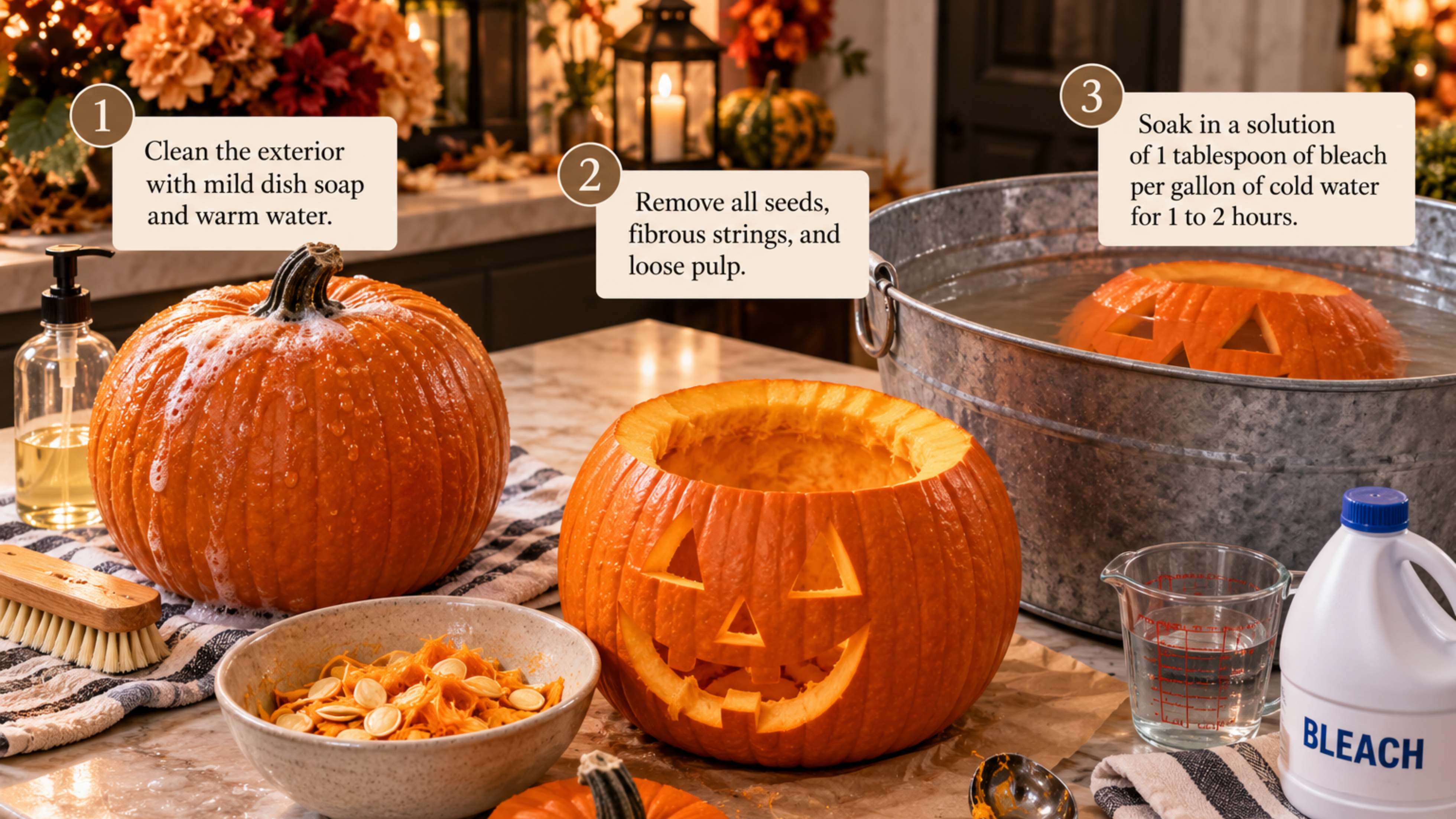
Start the preservation process before you carve your first design. Bacteria and fungal spores are the primary causes of premature pumpkin decay. To extend your display’s life, wash the exterior of the uncarved pumpkin with mild dish soap and warm water to remove surface dirt.
After hollowing out the interior, remove all seeds, fibrous strings, and loose pulp. Trapped moisture accelerates rot. After scraping the inner walls clean, submerge the carved pumpkin in a large bucket of cold water mixed with one tablespoon of bleach per gallon. Soaking the pumpkin for one to two hours sterilizes the flesh and kills microorganisms. This crucial sanitizing step is the most effective technique when learning how to preserve carved pumpkins for an extended display.
Seal Carved Edges to Retain Essential Moisture
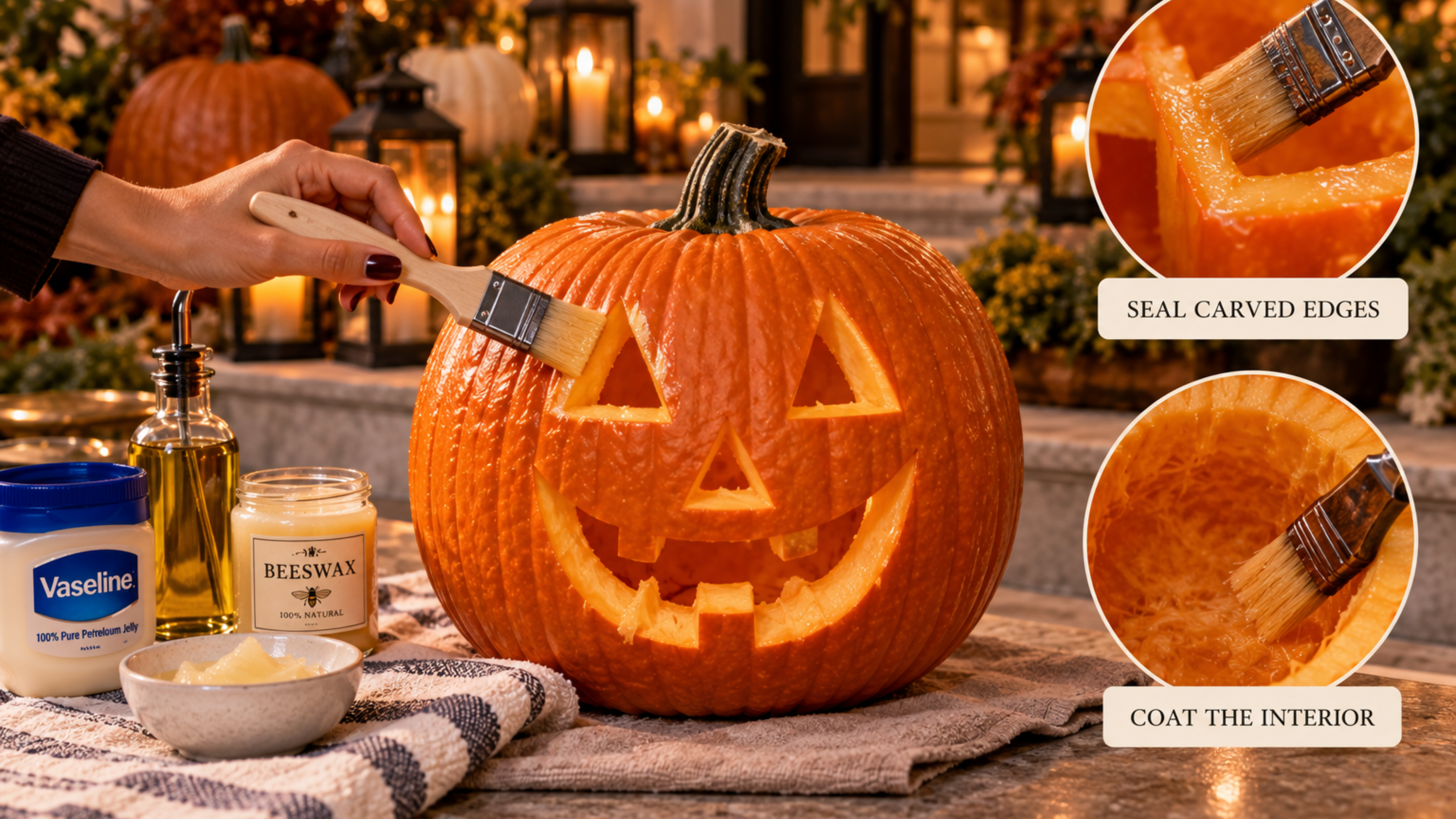
Once your pumpkin dries completely after its bath, the next challenge is dehydration. Sun exposure and dry autumn air pull moisture directly from the exposed inner flesh, causing delicate carved details to warp. Sealing these open cuts traps internal hydration and prevents premature shrinking.
Apply a light coating of petroleum jelly, vegetable oil, or natural beeswax along all carved edges and throughout the interior cavity. This protective barrier seals in moisture while repelling airborne mold spores. For a non-greasy alternative, spray the exposed surfaces with a commercial pumpkin preserver or a diluted peppermint oil solution in water to keep the skin firm. Mastering these sealing methods shows you how to preserve carved pumpkins without losing fine artistic details.
Control Temperature and Sunlight Exposure
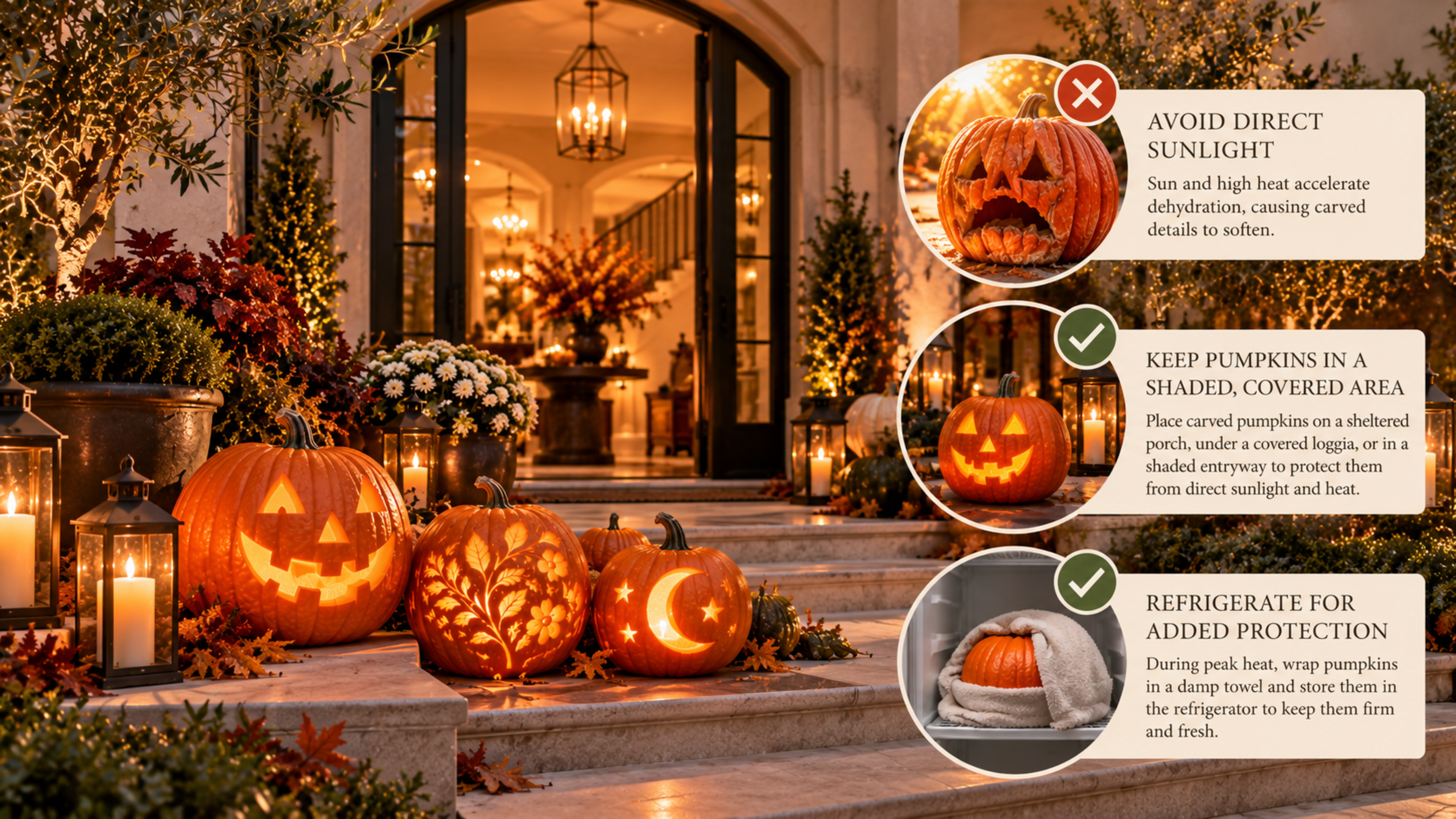
Location plays a pivotal role in maintaining your fall decor’s structural integrity. Direct sunlight and high heat accelerate dehydration, turning a crisp carving soft within a day or two. Place your carved pumpkins in a shaded entryway, under a covered loggia, or on a sheltered porch out of direct sunlight.
During particularly warm Los Angeles days, bring your jack-o’-lanterns indoors to a cool, air-conditioned room, or place them in a garage overnight. You can even wrap them in a damp towel and store them in a refrigerator during peak afternoon heat. Knowing how to preserve carved pumpkins requires shielding them from environmental stress so they stay crisp and sturdy.
Use Flameless Lighting Alternatives
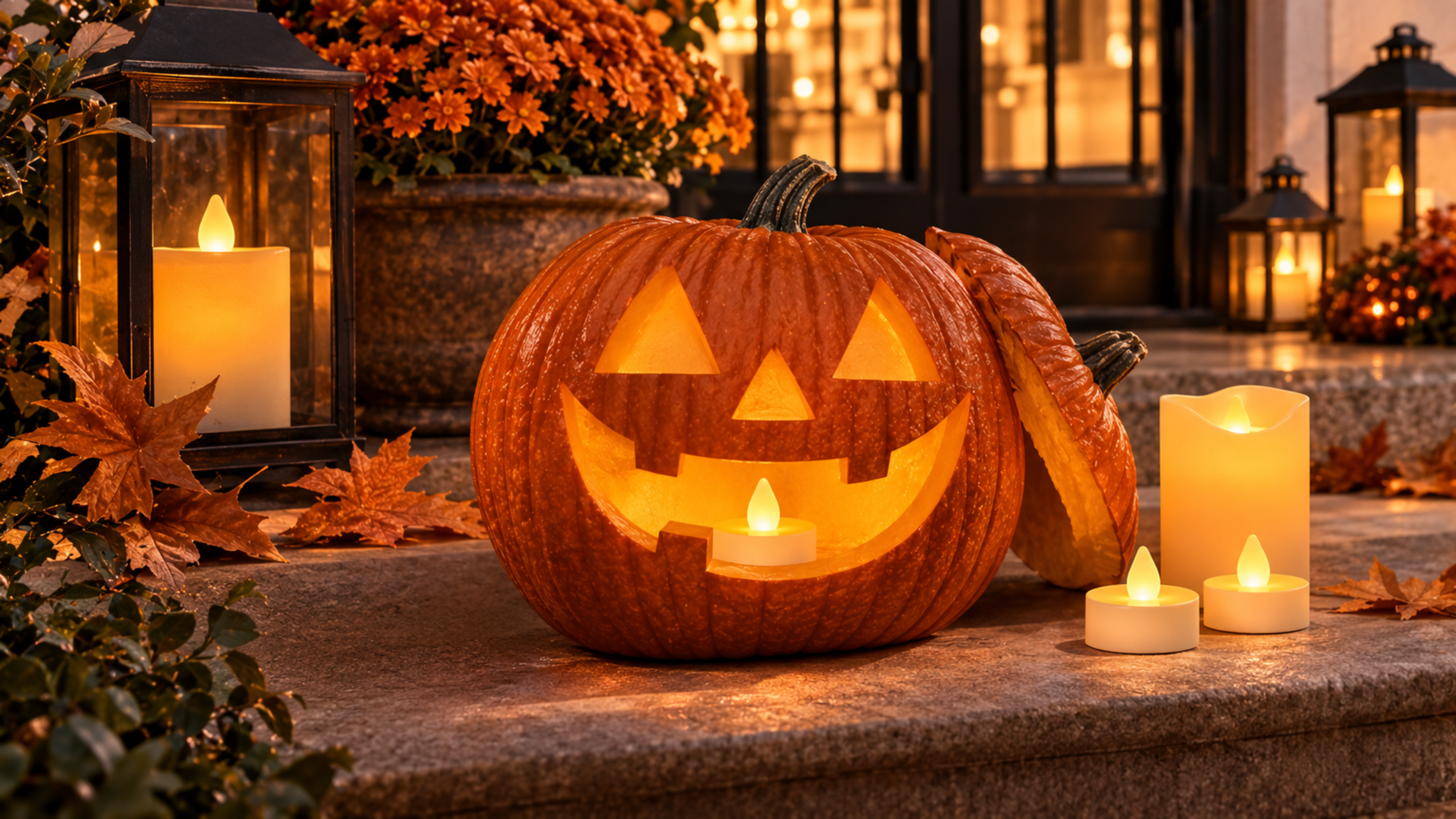
Traditional wax candles generate internal heat that cooks the pumpkin’s inside and causes rapid sagging. Consider replacing real candles with battery-operated LED tealights or remote-controlled flameless candles. This eliminates heat damage entirely while offering a safe, consistent glow.
If you prefer a daily hydration boost, mist the inside of your pumpkin with a mixture of water and a few drops of peppermint oil. Peppermint acts as a natural antifungal agent and keeps the pumpkin smelling fresh. With these simple habits, you will master how to preserve carved pumpkins and enjoy a pristine, host-ready Halloween entryway all month long.


