
As December breezes on by, it’s time to dial into what’s happening in the world of tech. From verified profiles on Reddit to Figma’s latest AI tools and more, we have you covered. Check out the top news from the week in today’s blog!
Reddit tests verified profiles

Reddit has begun a limited verification test that adds a subtle gray checkmark to the usernames of selected public figures and trusted partners who opt in and remain in good standing. The company says the test is voluntary, focused on clarity rather than status, and designed to help moderators and users quickly identify authentic profiles without changing Reddit’s pseudonymous core. Currently, there’s no public request flow — verification is by invite for the initial alpha — and existing “Official” labels will be replaced by the new checkmark where applicable. Expect moderation teams to appreciate the reduced verification overhead, while some users may debate what verification means for a platform that’s historically prized for anonymity. Watch for a careful, slow rollout as Reddit balances authenticity signals with community norms.
Meta’s Avocado signals a future paid model for AI research & products

Meta teased Avocado, an upcoming AI model that the company hinted might carry a price tag rather than being fully free — a shift that would signal Meta moving from purely open research releases toward hybrid commercial models. The hint reflects an industry trend where foundational models and the compute they require are increasingly seen as monetizable assets, not just open scientific contributions. Meta’s messaging frames any charge as a way to sustain advanced research and infrastructure, though the balance between openness and revenue will spark debate among developers and academics. If Meta does commercialize Avocado features, expect new pricing tiers, access controls, and possibly premium tooling that sits alongside open research releases. The move is another example of big AI labs testing business models as costs and demand scale rapidly.
Figma brings Photoshop-style AI edits
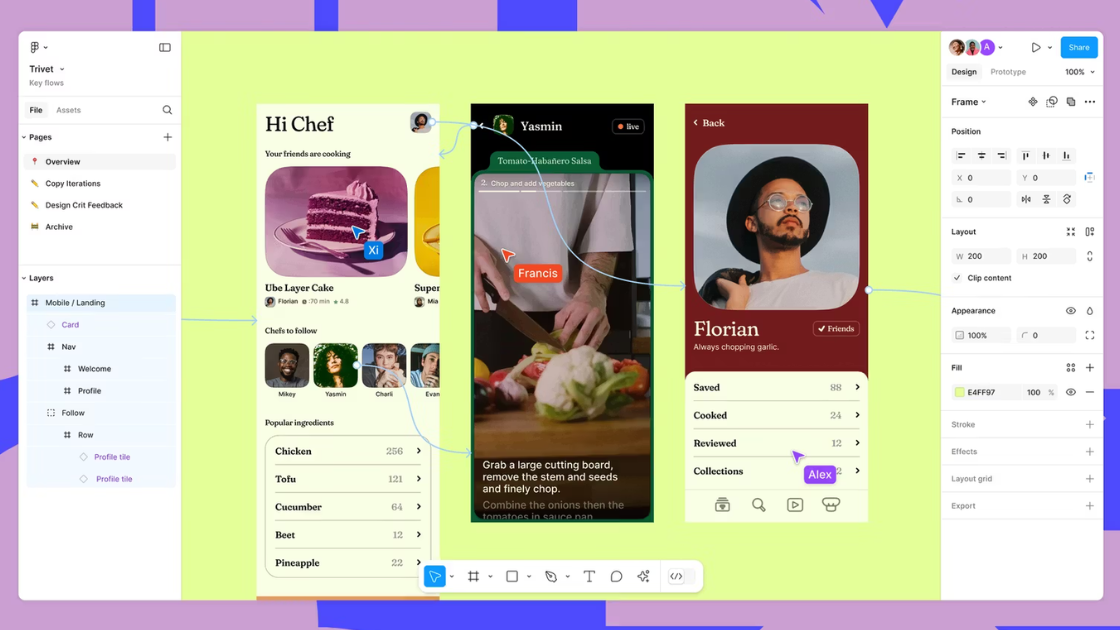
Figma added more advanced image-editing AI tools that let designers erase objects, isolate elements, and perform Photoshop-style edits without leaving the vector workspace, effectively narrowing the gap between pixel and vector workflows. The features speed iterative mockups and let product and marketing teams prototype composited imagery faster — perfect for landing-page visuals, ad creative, or quick social assets. By embedding content-aware tools directly into Figma, teams can keep versioning, components, and collaboration unified instead of juggling multiple apps. That consolidation shortens creative cycles and reduces handoffs between designers and editors, but power users will still rely on heavyweight tools for fine-grain retouching. Overall, it’s a practical productivity push that respects modern creative workflows.
Aurora’s CEO: hundreds of autonomous trucks by the end of 2026

Aurora’s CEO said the company expects “hundreds” of driverless trucks on the road by the end of 2026. This comes as the company scales its commercial operations, signaling a serious push from pilots toward fleet-level logistics deployment. The plan combines hardware, software, and operations learnings gathered during earlier pilots. In addition, it emphasizes safety validation, route selection, and fleet management tooling. If Aurora meets that goal, shippers and fleets could see meaningful capacity for long-haul or regional routes that reduce driver hours while offering predictable, scheduled transit windows. The timeline still depends on regulatory green lights, insurer comfort, and continued reliability in varied road conditions — all levers Aurora is actively working on. For supply-chain leaders, Aurora’s cadence is the clearest signal yet that autonomous trucking is moving from R&D into commercial-scale trials.
ChatGPT apps plug into Adobe

OpenAI’s ChatGPT apps now let users call Adobe Photoshop, Acrobat, and other creative tools directly from chat. Of course, this means you can ask the assistant to apply edits, annotate PDFs, or perform quick design tweaks. The integration is engineered to keep creators in a single, conversational flow. For teams, it lowers the friction between ideation and execution. Likewise, a PM or marketer can request a composited asset in plain language and get a near-final result. Adobe and OpenAI emphasize user control and the need for human oversight, especially for production work. Likewise, the convenience factor for routine tasks is massive. Expect these conversational toolchains to reshape internal workflows where speed and iteration beat perfect single-pass production.
Facebook’s redesign borrows Instagram’s visual rhythms

Meta is reshaping Facebook’s feed to favor photo-forward layouts and Instagram-style visual algorithms. Likewise, the change makes image posts more prominent and nudges the network toward discovery patterns that work for visual content. The redesign is less about copying features and more about aligning user behavior across Meta’s properties. Of course, this is geared towards people who enjoy scrollable visual streams. For brands and creators that rely on strong imagery, the change increases the payoff for polished visual storytelling. Meta is calibrating algorithmic signals to blend familiarity with fresh surface areas for creators to be discovered. The update is a reminder that platforms constantly repivot UI to chase attention patterns that favor rich media.