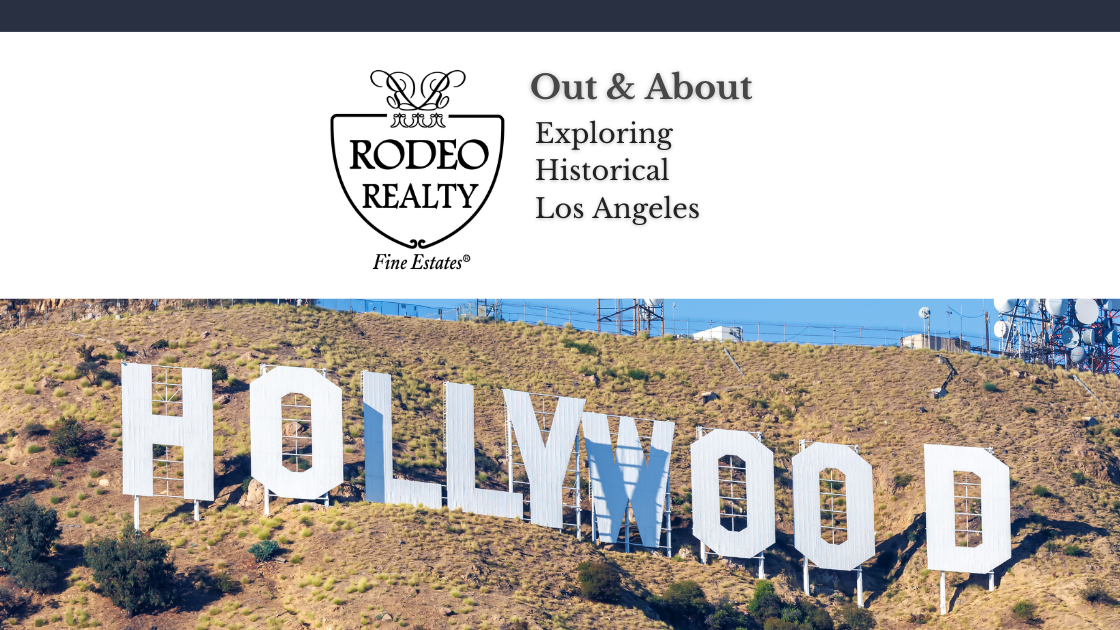
Los Angeles may be synonymous with Hollywood lights and red carpets, but beneath the glitz lies a city layered with stories. From early Spanish roots to architectural movements and cultural revolutions, L.A.’s past is woven into its streets, facades, and public spaces. Its historic landmarks and enduring institutions offer a window into the people and moments that shaped the City of Angels. Whether you’re a devoted history buff or simply looking to see a different side of the city, exploring these sites reveals a deeper, more textured Los Angeles.
The Getty Villa (Pacific Palisades)
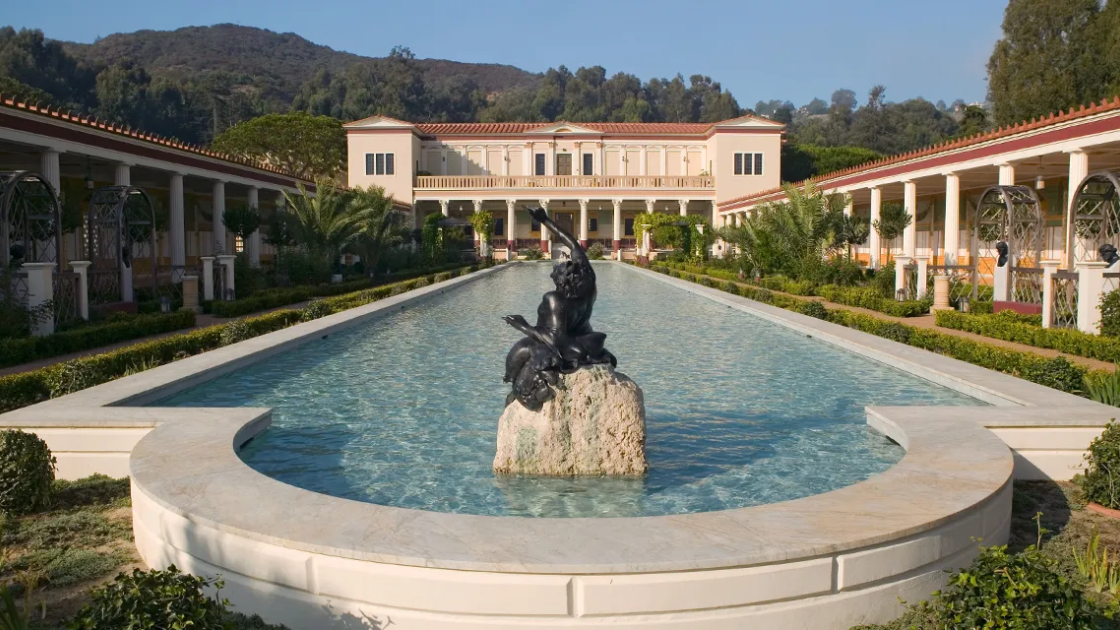
Perched above the Pacific, the Getty Villa transports visitors back to the ancient world with its meticulous re-creation of a Roman country estate. Home to the J. Paul Getty Museum’s collection of Greek, Roman, and Etruscan antiquities, the space feels as immersive as it is educational. Marble corridors, tranquil reflecting pools, and manicured gardens frame the experience, while sweeping ocean views complete the sense of escape. It’s a destination where history, art, and landscape converge in unforgettable fashion.
The Griffith Observatory (Griffith Park)
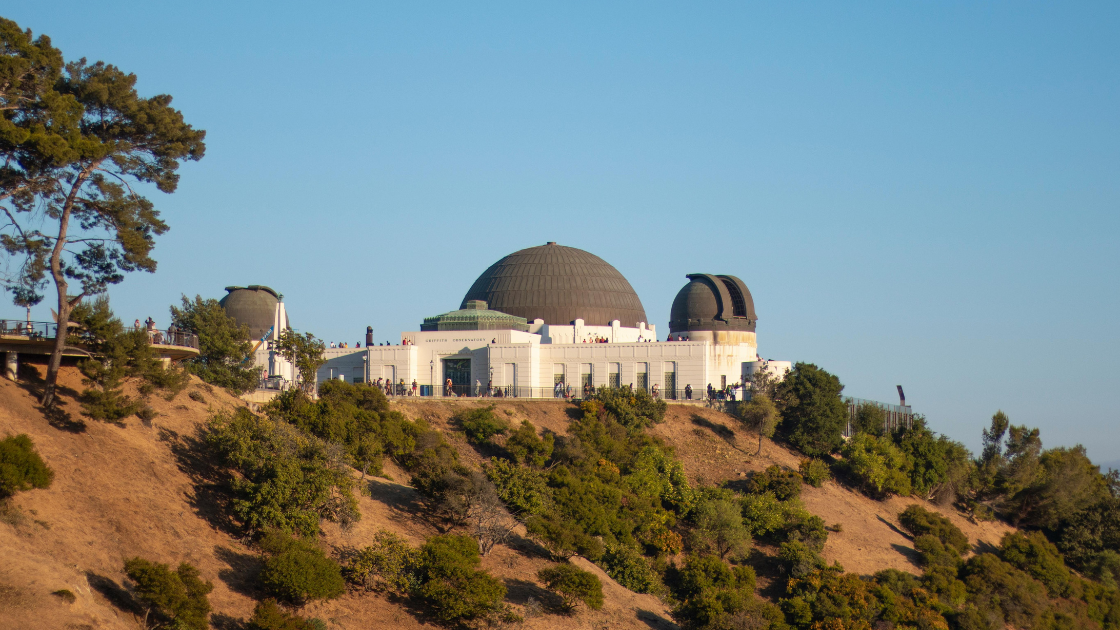
Since opening in 1935, the Griffith Observatory has invited Angelenos to look both outward and inward, toward the stars and toward a deeper understanding of science. Set high in Griffith Park, the Art Deco landmark pairs hands-on exhibits and public telescope viewings with some of the most sweeping vistas in the city. By day, visitors can take in panoramic views stretching from downtown to the Pacific; by night, the focus shifts skyward to constellations and distant planets. It remains one of Los Angeles’s most beloved cultural and scientific treasures.
Olvera Street (Downtown)
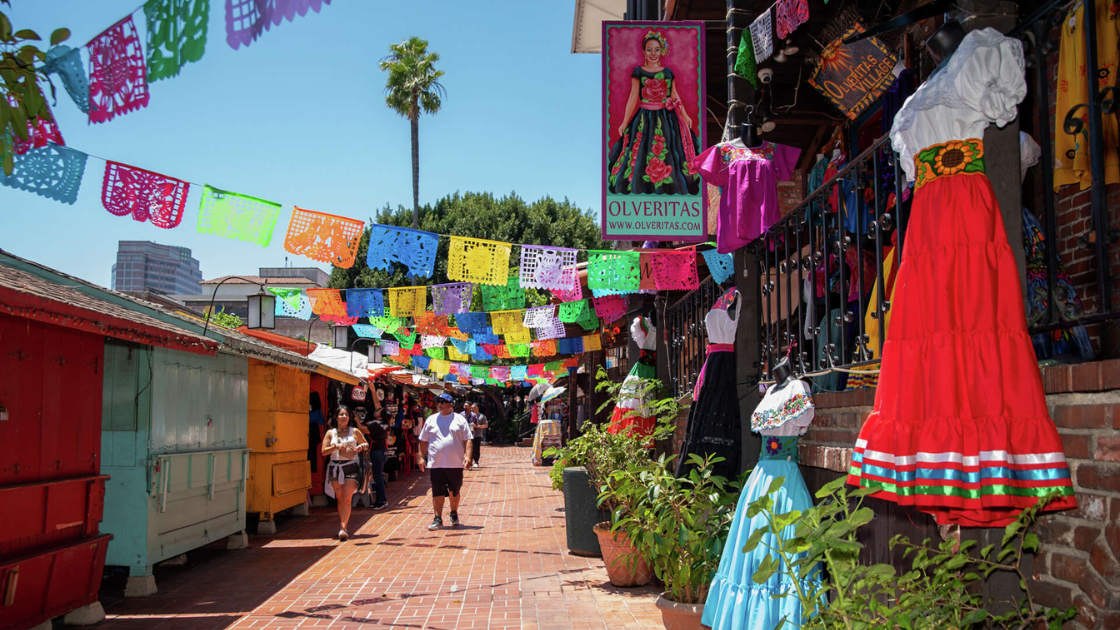
Often referred to as the birthplace of Los Angeles, Olvera Street pulses with the spirit of the city’s Mexican roots. This colorful corridor is lined with historic adobe structures, lively marketplaces, and family-run restaurants that keep tradition alive through food, music, and craft. More than just a shopping destination, it feels like stepping into a living timeline, one that honors generations of cultural influence and community pride. It’s a place where heritage isn’t just preserved, but celebrated every day.
The Bradbury Building (Downtown)
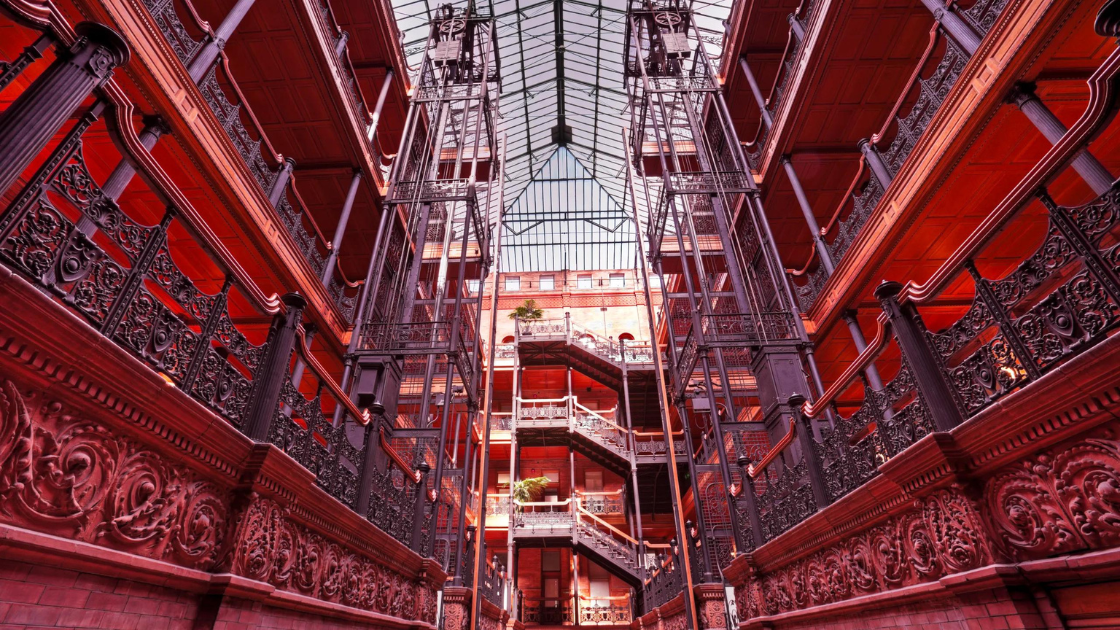 Completed in 1893, the Bradbury Building stands as one of Los Angeles’s most striking architectural landmarks. Its luminous interior, defined by intricate wrought-iron railings, marble staircases, and vintage open-cage elevators, feels suspended in time. Sunlight filters through the glass ceiling, casting dramatic shadows that have made it a sought-after filming location, including a memorable appearance in Blade Runner. Even today, stepping inside feels like entering a different era of the city’s design history.
The Hollywood Walk of Fame (Hollywood)

Stretching along Hollywood Boulevard, the Hollywood Walk of Fame celebrates Los Angeles’s enduring influence on the entertainment world. More than 2,600 terrazzo-and-brass stars line the sidewalks, honoring icons across film, television, music, radio, and theater. Each name embedded in the pavement tells a story of ambition, artistry, and cultural impact. Together, they form a living tribute to the talent and dreams that have defined Hollywood for generations.
The Watts Towers (Watts)
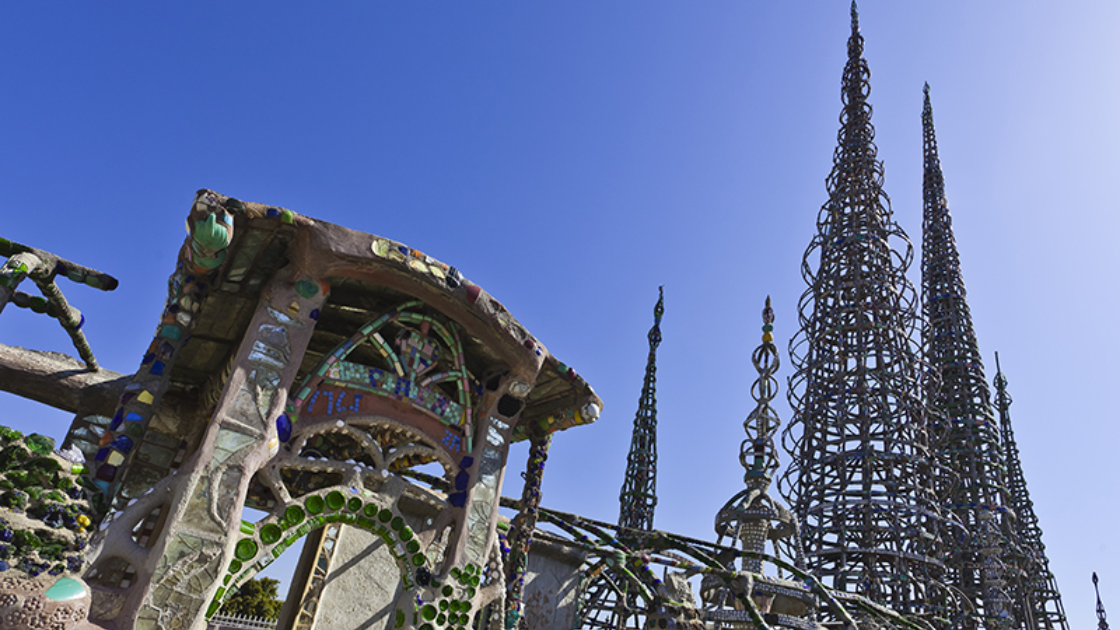
Comprising 17 interwoven spires and sculptural forms, the Watts Towers stand as one of Los Angeles’s most distinctive landmarks. Created by Italian immigrant Simon Rodia over more than three decades, the structures reflect a singular vision brought to life through persistence and imagination. Built from steel and adorned with mosaics of glass shards, seashells, and ceramic tiles, the towers shimmer with handcrafted detail. The result is an extraordinary achievement in folk art and self-taught architecture that continues to inspire visitors from around the world.
Union Station (Downtown)
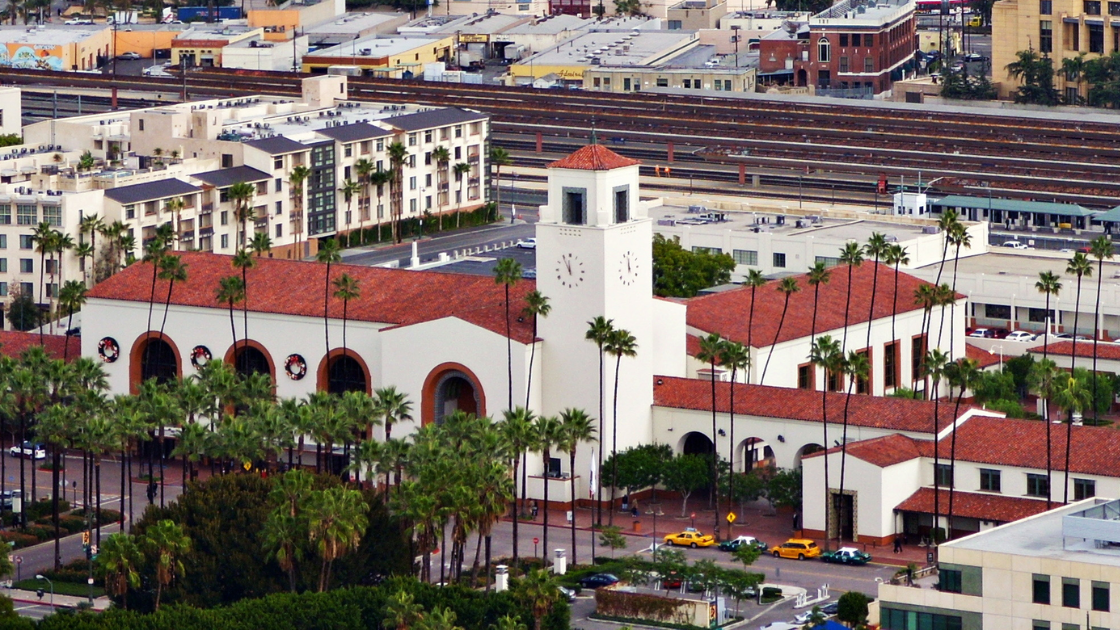
Opened in 1939, Union Station stands as one of the final grand railway terminals built during America’s golden age of train travel. Its soaring ceilings, hand-painted tiles, and leather seating reflect a seamless blend of Spanish Colonial, Mission Revival, and Art Deco design. Even today, the station feels cinematic, both a transportation hub and a preserved piece of architectural history.
From ancient art treasures to storied film locations and cultural corridors, Los Angeles’s historic landmarks reveal the many layers that shape the city. Exploring these sites offers more than beautiful backdrops; it provides a deeper appreciation for the people, movements, and moments that continue to define L.A.’s evolving story.